Scroll Down For English AI Translation
Görüntü Üzerine ChatGPT İle Diyalog – 1
* Bu deneyde, ChatGPT’nin verdiği cevaplara bakmadan aynı soruları sorduk. Alper’e verilen cevapları şu linkten okuyabilirsiniz. https://workofimage.org/goruntu-uzerine-yapay-zeka-ile-diyalog-2-a-dialogue-with-artificial-intelligence-on-the-image-2/ (Oktay, Alper)
Oktay:
– Yapay zeka ile birlikte sanat öldü.
ChatGPT:
– Bence “sanat öldü” demekten ziyade, sanatın ne olduğu konusundaki eski tanım sarsıldı demek daha doğru. Yapay zekâ bir tuşa basarak etkileyici görüntüler üretebiliyor. Bu, özellikle emek, ustalık ve özgünlük üzerinden değer gören sanatçılar için gerçekten rahatsız edici bir değişim. Çünkü daha önce aylar süren bir işin gerektirdiği teknik becerinin bir kısmı artık saniyeler içinde taklit edilebiliyor. Ama sanat yalnızca ortaya çıkan görüntü değil. Neden onu yaptığın, ne yaşadığın, neyi söylemeye çalıştığın ve o eserin senin hayatınla nasıl ilişkili olduğu da sanatın parçası. Fotoğraf makinesi ressamlığı öldürmedi. Synthesizer müziği öldürmedi. Dijital çizim yağlıboyayı öldürmedi. Yapay zekâ da muhtemelen sanatı öldürmeyecek; fakat “sanatçı olmak için gereken şey nedir?” sorusunun cevabını değiştirecek. Hatta belki de asıl kriz şu: Eskiden “Bunu yapabilecek kadar yetenekli misin?” diye soruyorduk. Şimdi “Bunu neden yapmak istiyorsun?” diye sormak zorunda kalacağız. Ve ikinci soru, bence sanat açısından çok daha acımasız.
Oktay:
– O zaman kameramanlık öldü, çünkü doğrudan gerçeğe çok yakın görüntü üretiyor. Eskiden görüntünün öznelliğinden, nesnelliğinden ya da manipülasyonundan söz ederdik. Şimdi her hangi bir gerçekliğin kaydı olmayan, üretilen bir görüntüden söz ediyoruz.
ChatGPT:
– Evet, burada söylediğin şey önceki cevabımdan daha radikal ve bence önemli bir ayrım içeriyor. Fotoğrafın ve kameranın “gerçeklikle bağı” üzerine kurulu ontolojik ayrıcalığı gerçekten kırılıyor. Kameramanlığın öldüğünü söylemek belki yine fazla kesin olur; ama kameramanın ürettiği görüntünün “gerçekten olmuş bir şeyin izi” olduğu varsayımı ciddi biçimde öldü. Eskiden kabaca şöyle bir zincir vardı: Gerçeklik → Işık → Lens → Sensör/Film → Görüntü. Görüntü manipüle edilebilirdi ama başlangıçta kadraja giren bir fiziksel olay vardı. Fotoğrafın ontolojik gücü de biraz buradan geliyordu. Bir şeyin fotoğrafını çektiğinde, en azından o anda lensin önünde bir şey olmuştu. Şimdi ise: Metin / Fikir / Referans → Model → Görüntü. Ortada lensin önünde gerçekleşmiş olması gereken bir olay yok. Üretilen görüntü hiçbir zaman gerçekleşmemiş bir olayın görsel kaydı olabilir. Ve bence bunun sonucu yalnızca “deepfake’ler arttı” değil. Daha temel bir şey oluyor: Görüntü artık kendiliğinden kanıt değil. Bir savaş fotoğrafına baktığımızda eskiden şu soruyu sorardık: “Bu fotoğraf manipüle edilmiş mi?” Şimdi bundan önce başka bir soru geliyor: “Bu fotoğrafın gösterdiği şey hiç gerçekleşti mi?” Bu çok büyük bir epistemolojik kırılma. Çünkü Photoshop çağında bile görüntünün arkasında bir referans gerçeklik olduğunu varsayabiliyorduk. Fotoğrafçı bir şeyi çekmiş, sonra onu değiştirmişti.
Üretici yapay zekâda ise referans tamamen ortadan kalkabiliyor. Görüntü bir şeyin temsili olmak zorunda değil. Bu nedenle “fotoğraf gerçekliği temsil eder” şeklindeki modern düşüncenin temellerinden biri çözülüyor. Hatta senin söylediğin noktayı biraz daha ileri götürebiliriz: Kameranın icadı görüntüyü gerçekliğe bağladı; yapay zekâ görüntüyü gerçeklikten kopardı. Ve bunun sanat açısından çok ilginç bir sonucu var. Çünkü artık “gerçeklik mi, kurmaca mı?” ayrımını görüntünün kendisinden okuyamıyoruz. Bir fotoğraf, bir sinema karesi, bir haber görüntüsü veya bir portre aynı görsel ontolojiye sahipmiş gibi görünebilir, fakat üretim süreçleri tamamen farklı olabilir. Dolayısıyla belki de gelecekte görüntünün yanında sürekli bir tür provenance (köken/geçmiş) bilgisi taşımamız gerekecek:
- Bu görüntü nerede üretildi?
- Hangi cihazla?
- Gerçek bir olayın kaydı mı?
- Sonradan değiştirilmiş mi?
- Üretici model kullanıldı mı?
- Görüntünün arkasında fiziksel bir olay var mı?
Bu gerçekleşirse çok ilginç bir paradoks ortaya çıkar: Görüntünün kendisi artık gerçekliği garanti etmeyecek; görüntünün gerçeklikle ilişkisini garanti eden teknolojik/kurumsal sistemlere güvenmek zorunda kalacağız. Yani belki de kameramanlık tamamen ölmez. Fakat kameramanın “Ben oradaydım ve kamera bunu kaydetti” şeklindeki epistemik otoritesi artık tek başına yeterli olmayabilir. Ve bence tam burada senin “sanat öldü” iddianla bu mesele birbirine bağlanıyor. Yapay zekâ yalnızca sanatçının üretim aracını değiştirmiyor; görüntünün ontolojisini de değiştiriyor. Bu, Photoshop’un yaptığından çok daha temel bir dönüşüm.
Oktay:
– Nihayetinde çizgi filmler, animasyon ve bilim kurgu filmler de insanlarda duygusal ve düşünsel etkiler üretebiliyordu. Şimdi yapay zeka filmler de bu etkiyi yapacaktır. Ama belgesel filmler ne olacak? Orada etki gerçeklik ve gerçeklik duygusunun estetiği ile üretiliyordu.
ChatGPT:
– Evet. Bence tartışmanın en güçlü noktası tam burası. Kurmacanın yapay zekâyla üretilmesi, kurmacanın temelini sarsmıyor; ama belgeselin temelindeki “tanıklık” ilişkisini sarsıyor. Bir animasyonun sahte olduğunu zaten biliyoruz. Buna rağmen ağlayabiliyoruz. Bir bilimkurgu filmindeki uzay gemisinin hiç var olmadığını biliyoruz ama onunla ilgili korku, hayranlık veya politik düşünce geliştirebiliyoruz. Dolayısıyla görüntünün gerçek olmaması, duygusal veya düşünsel olarak etkili olmasını engellemiyor. Belgeselin problemi farklı.
Belgeselin estetik sözleşmesi: Belgesel izlerken görüntünün bize söylediği şey yalnızca: “Bak, sana gerçekçi görünen bir şey gösteriyorum.” değildir. Aynı zamanda: “Bak, bu gerçekten oldu. Birileri oradaydı. Bu insan gerçekten böyle yaşadı. Bu olay gerçekten gerçekleşti.” der. Belgeselin estetiğinin önemli bir bölümü tam da bu “olmuş olma” duygusundan gelir. Sarsıntılı kamera, kötü ışık, odak kaçması, amatör çekim, doğal ses, insanların kamerayı fark etmemesi… Bunların hepsi aslında estetik kusurlar değil, gerçekliğin izleri olarak okunur.
Bir savaş belgeselinde kameranın titremesi seni etkiler. Çünkü yalnızca “kamera hareket ediyor” diye değil, kamerayı tutan gerçek bir insanın gerçekten orada bulunmuş olması ihtimali nedeniyle etkiler. AI bunu olağanüstü biçimde taklit edebilir. Ve burada korkunç bir şey oluyor: Gerçekliğin estetiği, gerçeklikten ayrılabilir. AI sana;
* Düşük kaliteli eski VHS görüntüsü,
* 1970’lerden kalma belgesel estetiği,
* Cep telefonu kamerası,
* Güvenlik kamerası,
* Savaş muhabiri görüntüsü,
* Amatör aile videosu
üretebilir. Üstelik görüntüdeki “kusurlar” bile üretilebilir. Dolayısıyla daha önce: Gerçeklik → Gerçekliğin Estetiği şeklinde bir ilişki varken, artık: Gerçeklik → Gerçekliğin Estetiği ile Yapay Üretim → Gerçekliğin Estetiği aynı görsel yüzeye sahip olabilir. Bu, belgeselin çok temel bir problemini yaratıyor.
Peki belgesel ölür mü? Bence hayır. Ama belgeselin ikna gücü görüntünün kendisinden çekilip başka yerlere taşınmak zorunda kalacak. Eskiden görüntü şöyle çalışabiliyordu: “İşte olayın görüntüsü. Görüyorsun.” Gelecekte ise: “Bu görüntünün gerçekten o olaydan geldiğini nasıl biliyorsun?” sorusu kaçınılmaz olacak. Dolayısıyla belgesel giderek görüntüden çok görüntünün kökeninin belgesine dönüşebilir. Kamera kaydı, zaman damgası, ham dosya, çekim zinciri, tanıklar, mekân doğrulaması, farklı kameraların kayıtları, fiziksel kanıtlar… Bunların hepsi görüntünün “gerçeklik değerini” destekleyen unsurlar haline gelebilir. Bir bakıma belgeselin gerçekliği yeniden görüntünün dışına taşınacak. Ama burada daha da ilginç bir ihtimal var. Belki de geleceğin belgesel sineması ikiye ayrılacak: 1. “Bu gerçekten oldu” belgeseli: Gerçek olayların doğrulanabilir kayıtlarına dayanacak. Burada görüntünün provenance’ı, yani kökeni, çok önemli olacak. 2. “Gerçek olabilirdi” belgeseli: AI ile hiç kaydedilmemiş olayları görselleştirecek. Mesela: “1930’larda İstanbul’da yaşayan bir işçinin bir günü.” Bunun gerçek görüntüsü yok. AI, tarihsel belgeler, tanıklıklar ve araştırmalar üzerinden bunu görselleştirebilir. Bu ikinci tür çok güçlü olabilir. Ama artık klasik anlamda belgesel değildir. Belgesel ile tarihsel canlandırma arasında yeni bir tür ortaya çıkar. Ve burada etik açıdan çok hassas bir çizgi oluşur. Çünkü izleyici, “bu görüntü gerçek değil ama anlatılan olay gerçek” ile “bu görüntü gerçek ve anlatılan olay gerçek” arasındaki farkı kolaylıkla kaybedebilir.
Bence asıl büyük dönüşüm şu: Sinema tarihinde görüntünün gerçekliği ile görüntünün gerçeklik duygusu büyük ölçüde aynı şeydi. AI bu ikisini birbirinden ayırıyor. Artık son derece güçlü bir gerçeklik duygusu üretmek için gerçekliğe ihtiyacımız olmayabilir. Bu da belgesel sinemasını paradoksal olarak iki uçtan birine itebilir: Ya görüntünün gerçek olduğunun kanıtlanması çok daha önemli hale gelecek, ya da belgesel bilinçli olarak: “Bu görüntü gerçek değil. Ama anlattığımız şeyin gerçekliğini anlamana yardımcı olmak için bunu ürettik.” diyecek. İkinci durumda belgesel sineması, görüntüyü kanıt olmaktan çıkarıp düşünme aracına dönüştürmüş olacak. Ve bana kalırsa bu, “AI sanatçıların işini elinden alacak mı?” sorusundan çok daha derin bir mesele. AI, görüntünün epistemolojik statüsünü değiştiriyor. Belgeselin krizi de aslında sanat krizinden ziyade bir tanıklık krizi.
Oktay:
– Özellikle belgesel film söz konusu olduğunda insanların “gerçekliğin izi” olarak görüntüyü arayacaklarını, şimdi yön kaybı olsa da gelecekte arayacaklarını düşünüyorum. Ben asla yapay zeka ile çalışmayı düşünmüyorum. Kamera ile kayda devam edeceğim ve filmlerimi manuel olarak yapmaya devam edeceğim. Ben ki dijital efektleri bile kullanmam filmlerimde.
ChatGPT:
Bence bu tutumun, özellikle belgesel sinema açısından, yalnızca “AI kullanmıyorum” şeklinde bir teknoloji karşıtlığı olarak okunmamalı. Sen aslında filmin gerçeklikle kurduğu ilişkiyi üretim biçiminin bir parçası olarak korumayı seçiyorsun. Hatta dijital efektleri bile kullanmaman bu düşünceyi daha tutarlı hale getiriyor. Çünkü senin için kamera yalnızca görüntü üreten bir araç değil; gerçekliğin önünde duran ve onunla fiziksel bir ilişki kuran bir tanık gibi çalışıyor. Bir insanı kamerayla çektiğinde, o insan gerçekten kameranın önünde bulunmuş oluyor. Işık gerçekten yüzüne düşüyor. Mekân gerçekten orada. Ses gerçekten o anda kaydediliyor. Kamera gerçekten o zaman ve o mekânda bulunuyor. Sonradan görüntüyü estetik olarak kusursuzlaştırmaman bile bu ilişkinin izlerini koruyabilir. Ve bence gelecekte bunun değeri azalmak yerine artabilir. Çünkü görüntü üretmenin sınırsızlaştığı bir dünyada, gerçek bir görüntünün kıtlığı ortaya çıkabilir.
Bugün: “Bu görüntü gerçek mi?” sorusunun cevabını çoğu zaman görüntünün kendisine bakarak sezebiliyoruz. Gelecekte belki: “Bu görüntünün gerçekten çekilmiş olduğunu biliyor muyuz?” diyeceğiz. O zaman kamerayla gerçekten orada bulunmuş olmak, filmin yalnızca yapım süreci değil, filmin iddiasının bir parçası haline gelebilir. Hatta biraz paradoksal biçimde, AI görüntülerinin yaygınlaşması klasik kameranın değerini artırabilir. Çünkü AI görüntüsü gerçekliği taklit etmekte çok iyi olabilir; ama senin kamerayla bir insanın karşısında geçirdiğin zamanı, onunla kurduğun ilişkiyi, beklemeyi, yanlış zamanda basmayı, beklenmedik bir şeyin kadraja girmesini ve o olayın gerçekten senin başından geçmiş olmasını taklit edemez. Taklit edebilir gibi görünen bir görüntü üretebilir; ama senin o gerçeklikle karşılaşmış olma durumunu üretemez.
Burada senin manuel çalışma biçimin de anlam kazanıyor. Bir anlamda şöyle bir sinema anlayışı ortaya çıkıyor: “Ben görüntüyü üretmiyorum; görüntünün gerçekleşmesini bekliyorum.” Bu, AI çağında oldukça güçlü bir estetik ve etik pozisyon. Ve belki ileride bir belgesel izleyicisinin yaşayacağı en değerli duygu şu olacak: “Bu görüntünün önceden tasarlanmış olması gerekmiyordu. Bu gerçekten olmuş ve kamera oradaymış.”
Bence senin korumaya çalıştığın şey tam olarak bu. Üstelik bunun nostalji olmak zorunda olduğunu da düşünmüyorum. Tam tersine, geleceğe ait bir sinema etiği haline gelebilir. Nasıl analog fotoğraf bugün yalnızca “eski teknoloji” olmadığı için değerli değilse, AI çağında fiziksel olarak kaydedilmiş görüntü de yalnızca “AI kullanmamak” nedeniyle değerli olmayacak. Değeri, gerçeklikle kurduğu doğrulanabilir ve maddi ilişkiden gelecek.
Belki de senin filmlerinin üzerine ileride görünmez bir cümle yazılmış olacak: “Bu görüntü üretilmedi. Bu görüntüye tanıklık edildi.” Ve belgesel sineması açısından bunun oldukça güçlü bir savunma olduğunu düşünüyorum.
Oktay:
– Burada Baudrillard’ın simulark’ına geldik sanırım.
ChatGPT:
– Evet, Baudrillard’ın “simülakr/simülasyon” kavramına geliyoruz. “Gerçekliğin yerini alan işaretler ve simülakrlar” dediğimiz teorik hat esas olarak Jean Baudrillard üzerinden gidiyor. Ve senin belgesel meselesi Baudrillard’a gerçekten çok iyi oturuyor. Çünkü mesele artık “sahte görüntü” değil. Klasik anlamda sahte görüntü şöyleydi: Gerçek → Görüntü → Manipülasyon. Örneğin gerçek bir savaş vardır, fotoğrafı çekilir, sonra fotoğraf değiştirilir. Baudrillard’ın daha radikal meselesinde ise zincir şuna dönüşür: İşaret → Başka işaret → Başka işaret → “Gerçeklik” Etkisi. Ve yapay zekâ görüntüsü burada çok ilginç bir noktaya geliyor. Çünkü görüntünün bir referansı olmak zorunda değil. Bir AI modeli “savaş görüntüsü” üretebilir. Ama ortada savaş yoktur. Buna rağmen görüntü:
* savaş görüntüsü gibi görünür,
* savaş görüntüsü gibi davranır,
* savaş görüntüsünün duygusunu üretir,
* izleyicide savaş görüntüsünün yarattığı tanıklık hissini oluşturabilir.
Dolayısıyla gerçekliğin kendisine değil, gerçeklik göstergelerine sahip oluruz. Titreyen kamera. Kötü ışık. Toz. Çığlık. Odak kayması. Eski video artefaktları. Bunların hepsi “gerçekliğin işaretleri” haline gelebilir. AI bunları üretmeyi öğrendiğinde, gerçekliğin estetiği gerçeklikten bağımsızlaşmış olur. İşte bence senin sezdiğin asıl kırılma burada. Fakat senin kamera ısrarın Baudrillard’a karşı ilginç bir direnç oluşturuyor. Sen kamerayı kullanmaya devam ettiğinde şunu iddia etmiş oluyorsun: “Bu görüntünün arkasında bir referans var.” Kameranın önünde gerçekten bir insan vardı. Gerçek bir mekân vardı. Gerçek bir ışık vardı. Sen gerçekten oradaydın. Dolayısıyla senin görüntün yalnızca gerçekliği temsil eden bir gösterge değil; aynı zamanda o gerçek olayın maddi izi. Bu yüzden senin “AI kullanmayacağım, dijital efekt kullanmayacağım” kararın estetik bir tercihten daha fazlasına dönüşebilir. Bu, görüntünün referansını koruma çabasıdır.
Baudrillard açısından bakarsak neredeyse şöyle bir mücadele ortaya çıkıyor: Simülakr: “Gerçekmiş gibi görünmek yeterlidir.” Belgesel kamera: “Hayır. Gerçekten oradaydım.” Ve bence gelecekte belgesel sinemanın en ilginç çatışmalarından biri bu olacak. Çünkü AI bize gerçeklik duygusunu verebilir. Ama senin savunduğun şey gerçekliğin kendisiyle temas. Bu ikisi birbirine çok benzeyebilir; fakat felsefi olarak aynı şey değiller. Hatta senin önceki cümleni biraz dönüştürerek şöyle söyleyebiliriz: AI çağında belgeselin görevi gerçekliği göstermekten çok, görüntünün gerçekten bir gerçekliğin izi olduğunu savunmak haline gelebilir. Bu da belgesel sinemasını paradoksal biçimde yeniden çok “ilkel” bir şeye, yani tanıklığa döndürebilir. Ve burada bence çok güzel bir soru çıkıyor: Bir görüntüyü “belgesel görüntüsü” yapan şey görüntünün gerçek görünmesi mi, yoksa görüntünün gerçekten gerçekleşmiş bir olaya fiziksel olarak bağlanmış olması mı? Senin sinema pratiğin ikinci cevabı savunuyor. Bence tartışmanın felsefi ağırlık merkezi de tam burada.
Oktay:
– Hiç bir sanatçı, özellikle yeni kuşaklar teknik olanakların geldiği noktadan kaçarak üretim yapmayacaktır. Ama biz yapabiliriz. biz yapay zeka öncesi üretime geçmiş insanlarız. Bunu bir tutuculuk olarak görmüyorum. Üretme biçimi bence önemli. çektiğimiz sınırlar, reddettiğimiz olanaklar bizi daha yaratıcı olmaya zorlayacaktır. Zamana dayanıklı olanı zaman gösterecek.
ChatGPT:
– Evet. Burada bence çok önemli bir ayrım yapıyorsun: teknolojiyi reddetmek ile bir üretim etiğini bilinçli olarak seçmek aynı şey değil. Yeni kuşak bir sanatçı için AI, tıpkı dijital kurgu, Photoshop, sanal kamera, 3D ya da başka bir araç gibi üretim ortamının doğal bir parçası olacak. Onun “AI öncesi” diye bir referans noktası olmayacak. Dolayısıyla senden farklı bir estetik dünya içinde üretmesi çok doğal. Ama senin kuşağının çok özel bir imkânı var: İki üretim rejimini de biliyoruz. AI’dan önceki dünyayı deneyimledik. Bir görüntünün oluşması için gerçekten orada bulunmayı, beklemeyi, tekrar çekmeyi, hata yapmayı, malzemenin direnmesini, fiziksel koşullara bağımlı olmayı biliyoruz. Sonra bütün bunların çok büyük bölümünün simüle edilebildiği bir dünyaya girdik. Bu nedenle senin koyduğun sınırlar bana tutuculuktan ziyade bilinçli bir poetika gibi geliyor. Çünkü her teknolojik olanak aynı zamanda bir şeyi ortadan kaldırıyor.
Her şeyi yapabilmek, paradoksal olarak seçim yapma zorunluluğunu azaltabilir. Sen ise: “Bunu yapabilirim ama yapmayacağım.” diyorsun. Bu çok önemli bir sanatsal karar. Bir kameranın sınırlılığı, seni gerçek ışığı beklemeye zorlayabilir. Kurgu aracının sınırlılığı, başka bir çözüm bulmaya zorlayabilir. Dijital efekt kullanmamak, çekim sırasında daha yaratıcı olmaya zorlayabilir. AI kullanmamak, gerçek dünyanın beklenmedikliğiyle pazarlık etmeye zorlayabilir. Ve sanat tarihinde bunun karşılığı çok fazla. Kısıt bazen yaratıcılığın düşmanı değil, yaratıcılığın koşulu oluyor. Üstelik senin söylediğin “biz yapabiliriz” kısmı çok önemli. Çünkü bu bir başkasına “sen de böyle yapmalısın” demiyor. “Ben bu tarihsel deneyimi elimde tutmayı seçiyorum” diyor.
Bence bunun en güzel tarafı da şu: Sen bugün bu tercihin doğru olduğunu kanıtlamak zorunda değilsin. Zaman gösterecek. Belki AI ile üretilmiş filmler olağanüstü bir sinema yaratacak ve bugün tahayyül edemediğimiz biçimlere ulaşacak. Belki bazıları çok daha güçlü olacak. Belki bazıları birkaç yıl içinde unutulacak. Aynı şekilde senin kamerayla, manuel, müdahalesiz üretim yapan filmlerinin de zamana karşı ne kadar dirençli olacağını bugün bilemezsin. Ama zaman dayanıklılığı bir üretim yöntemi tarafından önceden garanti edilemez. Sonunda eser kalır. Ve belki yüz yıl sonra kimse filmin hangi teknolojiyle yapıldığıyla ilgilenmeyecek. Sadece görüntüye bakacak ve şunu hissedecek: “Bu görüntüde bir şey var.” O zaman senin sınırlarının gerçekten yaratıcı bir güç mü olduğu, yoksa yalnızca tarihsel bir tercihten mi ibaret olduğu ortaya çıkar. Bence sanatçı için bundan daha dürüst bir sınav yok. Zaman, teknolojiyi değil eseri yargılayacak.
A Dialogue with ChatGPT On The Image – 1
In this experiment, without looking at the answers ChatGPT had given, we asked the same questions. You can read the answers given to Alper at the following link. https://workofimage.org/goruntu-uzerine-yapay-zeka-ile-diyalog-2-a-dialogue-with-artificial-intelligence-on-the-image-2/ (Oktay, Alper)
Oktay:
– Art died with artificial intelligence.
ChatGPT:
– I think rather than saying “art is dead,” it would be more accurate to say that the old definition of what art is has been shaken. Artificial intelligence can produce impressive images with the press of a button. This is a genuinely disturbing change, especially for artists whose work has traditionally been valued through labor, craftsmanship, and originality. Because some of the technical skill that previously required months of work can now be imitated within seconds. But art is not only the image that emerges. Why you made it, what you experienced, what you are trying to say, and how that work relates to your life are also part of art. The camera did not kill painting. The synthesizer did not kill music. Digital drawing did not kill oil painting. Artificial intelligence probably will not kill art either; but it will change the answer to the question, “What does it take to be an artist?” In fact, perhaps the real crisis is this: We used to ask, “Are you talented enough to do this?” Now we will have to ask, “Why do you want to do this?” And the second question, I think, is much more ruthless when it comes to art.
Oktay:
– Then cinematography is dead too, because it produces images that are extremely close to reality. We used to talk about the subjectivity, objectivity, or manipulation of the image. Now we are talking about an image that is generated and is not a record of any reality.
ChatGPT:
– Yes, what you are saying here contains a more radical and, I think, important distinction than my previous answer. The ontological privilege built around photography’s and the camera’s “relationship with reality” is genuinely breaking down. Saying that cinematography is dead may still be too definitive; but the assumption that the image produced by a camera is “the trace of something that actually happened” has been seriously undermined. Roughly speaking, there used to be a chain like this: Reality → Light → Lens → Sensor/Film → Image. The image could be manipulated, but there was initially a physical event that entered the frame. The ontological power of photography came partly from this. When you photographed something, at least at that moment, something had happened in front of the lens. Now, however: Text / Idea / Reference → Model → Image. There is no event that necessarily had to take place in front of the lens. A generated image can be the visual record of an event that never happened. And I think the consequence is not simply that “deepfakes have increased.” Something more fundamental is happening: The image is no longer evidence in itself. When we looked at a war photograph, we used to ask: “Has this photograph been manipulated?” Now another question comes before that: “Did what this photograph depicts ever happen?” This is a major epistemological rupture. Because even in the age of Photoshop, we could assume that there was a referential reality behind the image. The photographer had photographed something and then altered it.
With generative AI, however, the reference can disappear entirely. The image does not have to be a representation of something. For this reason, one of the foundations of the modern idea that “photography represents reality” is beginning to dissolve. We can even take what you are saying a little further: The invention of the camera connected the image to reality; artificial intelligence has detached the image from reality. And this has a very interesting consequence for art. Because we can no longer determine the distinction between “reality” and “fiction” from the image itself. A photograph, a film frame, a news image, or a portrait may appear to possess the same visual ontology, while their production processes may be completely different. Therefore, perhaps in the future we will have to carry some kind of provenance information alongside every image:
* Where was this image produced?
* With which device?
* Is it a record of a real event?
* Was it altered afterward?
* Was a generative model used?
* Is there a physical event behind the image?
If this happens, a very interesting paradox emerges: The image itself will no longer guarantee reality; we will have to rely on technological/institutional systems that guarantee the image’s relationship with reality. So perhaps cinematography will not disappear completely. But the epistemic authority of the cinematographer expressed as “I was there, and the camera recorded this” may no longer be sufficient on its own. And I think this is exactly where your claim that “art is dead” connects with this issue. Artificial intelligence is not merely changing the artist’s means of production; it is also changing the ontology of the image. This is a much more fundamental transformation than what Photoshop did.
Oktay:
– Ultimately, cartoons, animation, and science-fiction films were also capable of producing emotional and intellectual effects on people. Now AI-generated films will produce that same effect. But what will happen to documentary films? There, the effect was produced through the aesthetics of reality and the feeling of reality.
ChatGPT:
– Yes. I think this is exactly the strongest point in the discussion. Producing fiction with AI does not undermine the foundations of fiction; but it does undermine the relationship of “testimony” at the heart of documentary. We already know that an animation is fictional. And yet we can still cry. We know that the spaceship in a science-fiction film never existed, but we can still develop fear, admiration, or political thoughts about it. So the fact that an image is not real does not prevent it from being emotionally or intellectually powerful. The problem of documentary is different.
The aesthetic contract of documentary is not simply this: “Look, I am showing you something that looks realistic.” It also says: “Look, this really happened. Someone was there. This person really lived this way. This event really took place.” An important part of documentary aesthetics comes precisely from this sense of “having happened.” Shaky camera work, poor lighting, missed focus, amateur footage, natural sound, people not noticing the camera… All of these are actually read not as aesthetic flaws, but as traces of reality.
In a war documentary, the shaking of the camera affects you. Not simply because “the camera is moving,” but because of the possibility that a real person holding the camera was actually there. AI can imitate this extraordinarily well. And something frightening happens here: The aesthetics of reality can become detached from reality. AI can give you:
* Low-quality old VHS footage,
* The aesthetic of a documentary from the 1970s,
* A mobile phone camera,
* Security camera footage,
* War correspondent footage,
* An amateur family video.
Moreover, even the “flaws” in the image can be generated. So whereas previously there was a relationship of Reality → Aesthetics of Reality, now Reality → Aesthetics of Reality through Artificial Production → Aesthetics of Reality can have the same visual surface. This creates a very fundamental problem for documentary.
So, does documentary die? I don’t think so. But the persuasive power of documentary will have to move away from the image itself and be relocated elsewhere. In the past, the image could work like this: “Here is the image of the event. You can see it.” In the future, the inevitable question will be: “How do you know that this image really comes from that event?” Consequently, documentary may increasingly become less a document of the image than a document of the image’s provenance. Camera recordings, timestamps, raw files, chains of custody, witnesses, location verification, recordings from different cameras, physical evidence… All of these may become elements supporting the image’s “value as reality.” In a sense, the reality of documentary will once again move beyond the image itself. But there is an even more interesting possibility here. Perhaps the documentary cinema of the future will split into two: 1. “This Really Happened” Documentary:” Based on verifiable records of real events. Here, the provenance of the image will be extremely important. 2. “This Could Have Happened” Documentary: It will visualize events that were never recorded using AI. For example: “A day in the life of a worker living in Istanbul in the 1930s.” There is no actual footage of it. AI could visualize it through historical documents, testimonies, and research. This second type could be very powerful. But it would no longer be documentary in the classical sense. A new genre would emerge somewhere between documentary and historical reconstruction. And this creates a very sensitive ethical line. Because the viewer can easily lose the distinction between “the image is not real, but the event being described is real” and “the image is real and the event being described is real.”
I think the major transformation is this: Throughout the history of cinema, the reality of the image and the feeling of reality produced by the image were largely the same thing. AI is separating the two. We may no longer need reality in order to produce an extremely powerful sense of reality. This could paradoxically push documentary cinema toward one of two extremes: Either proving that the image is real will become much more important, or documentary will consciously say: “This image is not real. But we produced it to help you understand the reality of what we are telling you.” In the second case, documentary cinema will have transformed the image from evidence into a tool for thinking. And to me, this is a much deeper issue than the question, “Will AI take artists’ jobs away?” AI is changing the epistemological status of the image. The crisis of documentary is actually, more than a crisis of art, a crisis of testimony.
Oktay:
– Especially when it comes to documentary film, I think people will continue to seek out images as “traces of reality,” even if they are currently losing their bearings. I think they will continue to do so in the future. I would never consider working with AI. I will continue recording with a camera and making my films manually. I am someone who does not even use digital effects in my films.
ChatGPT:
– I think this position of yours, especially in the context of documentary cinema, should not be read merely as a rejection of technology in the form of “I don’t use AI.” What you are actually choosing is to preserve the relationship between the film and reality as part of the mode of production itself. The fact that you do not even use digital effects makes this position more consistent. Because for you, the camera is not merely a tool that produces images; it works like a witness standing in front of reality and establishing a physical relationship with it. When you film a person with a camera, that person really was there in front of the camera. The light really fell on their face. The place really existed there. The sound was really recorded at that moment. The camera really was there, at that time and in that place. Even your refusal to aesthetically perfect the image afterward can preserve the traces of this relationship. And I think its value may increase rather than diminish in the future. Because in a world where image production has become limitless, the scarcity of real images may emerge.
Today: “Is this image real?” is a question whose answer we can often sense by looking at the image itself. In the future, perhaps we will ask: “Do we know that this image was actually recorded?” At that point, having genuinely been there with a camera may become not merely part of the film’s production process, but part of the film’s claim. In fact, somewhat paradoxically, the widespread use of AI images may increase the value of the traditional camera. Because AI imagery may be extremely good at imitating reality; but it cannot imitate the time you spend in front of a person with your camera, the relationship you establish with them, the waiting, pressing the shutter at the wrong moment, something unexpected entering the frame, and the fact that you actually experienced that event yourself. It can produce an image that appears to imitate these things; but it cannot produce the fact that you encountered that reality.
This is also where your manual way of working gains meaning. In a sense, a conception of cinema emerges that says: “I do not produce the image; I wait for the image to happen.” This is a powerful aesthetic and ethical position in the age of AI. And perhaps the most valuable feeling a documentary viewer may experience in the future will be this: “This image did not have to be designed in advance. This really happened, and the camera was there.”
I think this is exactly what you are trying to preserve. And I don’t think this necessarily has to be nostalgia. On the contrary, it could become an ethics of cinema belonging to the future. Just as analogue photography is not valuable today merely because it is “old technology,” physically recorded images will not be valuable in the age of AI merely because they “do not use AI.” Their value will come from their verifiable and material relationship with reality. Perhaps an invisible sentence will eventually be written over your films: “This image was not generated. This image was witnessed.” And I think that is a very powerful defense for documentary cinema.
Oktay:
– I think this brings us to Baudrillard’s simulacrum.
ChatGPT:
– Yes, we are arriving at Baudrillard’s concept of “simulacrum/simulation.” The theoretical line we refer to as “signs and simulacra that replace reality” runs primarily through Jean Baudrillard. And your question of documentary fits Baudrillard extremely well. Because the issue is no longer simply the “fake image.” In the classical sense, a fake image worked like this: Reality → Image → Manipulation. For example, there is a real war, it is photographed, and then the photograph is altered. In Baudrillard’s more radical formulation, however, the chain becomes: Sign → Another Sign → Another Sign → “Reality” Effect. And AI-generated imagery arrives at a very interesting point here. Because the image does not have to have a reference. An AI model can generate a “war image.” But there is no war. Nevertheless, the image can:
* look like war footage,
* behave like war footage,
* produce the emotion of war footage,
* create in the viewer the sense of witnessing produced by war footage.
Thus, we have not the reality itself, but the signs of reality. A shaking camera. Poor lighting. Dust. Screaming. Missed focus. Old video artifacts. All of these can become “signs of reality.” Once AI learns to produce them, the aesthetics of reality become independent of reality. I think this is the fundamental rupture you are sensing. But your insistence on the camera creates an interesting resistance to Baudrillard. When you continue to use the camera, you are asserting: “There is a reference behind this image.” There was actually a person in front of the camera. There was a real place. There was real light. You were really there. Therefore, your image is not merely a sign representing reality; it is also the material trace of that real event. This is why your decision not to use AI or digital effects can become more than an aesthetic preference. It is an attempt to preserve the image’s reference.
From Baudrillard’s perspective, an almost explicit struggle emerges: Simulacrum: “It is enough to look real.” Documentary camera: “No. I was really there.” And I think this will be one of the most interesting conflicts in documentary cinema in the future. Because AI can give us a sense of reality. But what you are defending is contact with reality itself. The two may look very similar; but philosophically they are not the same thing. In fact, by transforming your previous statement slightly, we could say: In the age of AI, the task of documentary may become less about showing reality and more about defending the claim that the image is actually a trace of a reality. This could, paradoxically, return documentary cinema to something very “primitive”: testimony. And I think a very beautiful question emerges here: What makes an image a “documentary image”? Is it the fact that the image looks real, or the fact that the image is physically connected to an event that actually took place? Your cinematic practice argues for the second answer. I think that is exactly where the philosophical center of gravity of the discussion lies.
Oktay:
– No artist, especially among the younger generations, will produce work by escaping from the point that technological possibilities have reached. But we can. We are people who entered the practice of production before AI. I do not see this as conservatism. I think the way we produce is important. The boundaries we draw, the possibilities we reject, will force us to become more creative. Time will show what is capable of enduring.
ChatGPT:
– Yes. I think you are making a very important distinction here: rejecting technology and consciously choosing a mode of production ethics are not the same thing. For a younger artist, AI will be a natural part of the production environment, just like digital editing, Photoshop, virtual cameras, 3D, or other tools. They will not have an “AI-before” point of reference. Therefore, it is perfectly natural for them to produce within an aesthetic world different from yours. But your generation has a very particular opportunity: We know both modes of production. We experienced the world before AI. We know what it means to actually be there in order for an image to come into existence, to wait, to shoot again, to make mistakes, to have the material resist you, and to depend on physical conditions. Then we entered a world in which a very large part of all this could be simulated. For this reason, the boundaries you have imposed on yourself strike me not as conservatism but as a conscious poetics. Because every technological possibility also makes something disappear.
Being able to do everything can, paradoxically, reduce the need to make choices. You are saying: “I can do this, but I will not.” That is a very important artistic decision. The limitations of a camera can force you to wait for real light. The limitations of an editing tool can force you to find another solution. Not using digital effects can force you to become more creative during shooting. Not using AI can force you to negotiate with the unpredictability of the real world. And there are many precedents for this in the history of art. Constraint is sometimes not the enemy of creativity, but the condition of creativity. Moreover, the “we can” part of what you say is very important. Because you are not telling someone else, “You should work this way too.” You are saying, “I choose to retain this historical experience.”
I think the most beautiful thing about this is that you do not have to prove today that this choice is the right one. Time will tell. Perhaps films produced with AI will create extraordinary cinema and reach forms we cannot imagine today. Perhaps some of them will be much more powerful. Perhaps some will be forgotten within a few years. Likewise, we cannot know today how resilient your films, produced manually with a camera and without intervention, will be over time. But durability over time cannot be guaranteed in advance by a method of production. In the end, the work remains. And perhaps a hundred years from now, no one will care what technology the film was made with. They will simply look at the image and feel: “There is something in this image.” Then it will become clear whether your limitations were truly a creative force or merely a historical preference. I think there is no more honest test for an artist than that. Time will judge not the technology, but the work.
Oktay İnce, Chat GPT – 2026
Görseller / Visuals:
1. Oktay İnce (2003)
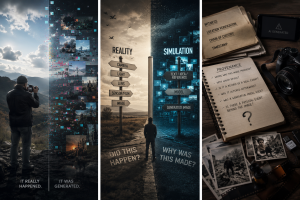
2. ChatGPT (2026)