Scroll Down For English AI Translation
Görüntü Üzerine ChatGPT İle Diyalog – 2
* Bu deneyde, ChatGPT’nin verdiği cevaplara bakmadan aynı soruları sorduk. Oktay’a verilen cevapları şu linkten okuyabilirsiniz. https://workofimage.org/goruntu-uzerine-yapay-zeka-ile-diyalog-a-dialogue-with-artificial-intelligence-on-the-image/ (Oktay, Alper)
Alper:
– Yapay zeka ile birlikte sanat öldü.
ChatGPT:
– Bunu söylediğinde neyi kastettiğini biraz anlayabiliyorum. Ama hemen karşı çıkmak da istemiyorum. Çünkü bence bu cümlenin içinde, yalnızca yapay zekânın sanat üretmesiyle ilgili olmayan, daha derin bir mesele var. Yapay zekâ, bir görüntüyü üretmek için yıllarca fotoğraf çekmeyi, bir filmi yapmak için yıllarca dünyayı kaydetmeyi, bir metni yazmak için uzun süre düşünmeyi beklemiyor. Üstelik bütün bunları yaparken ortaya çıkan şey, çoğu zaman sanat eseri olarak tanınabilecek kadar ikna edici görünüyor. Böylece bir eserin ortaya çıkmasıyla, o eserin arkasında bir insanın bulunması arasındaki bağ kopuyor. Belki de asıl sarsıcı olan bu.
Çünkü sanat yalnızca ortaya çıkan nesne değildi. Bir insanın dünyayla kurduğu ilişkinin, başarısızlıklarının, tereddütlerinin, beceriksizliklerinin, takıntılarının ve zaman içinde değişmesinin de iziydi. Bir görüntünün neden öyle göründüğünü, bir filmin neden o ritimde aktığını, bir cümlenin neden o kadar dolambaçlı kurulduğunu, sanatçının başka türlü yapamadığını da bilirdik. Şimdi bütün bu biçimler, o deneyimlerden geçmeden de üretilebiliyor. Ama burada bir çelişki görüyorum: Yapay zekâ sanatın bazı sonuçlarını üretmeyi kolaylaştırırken, sanat üretmenin kendisini de anlamsızlaştırabiliyor. Çünkü her şeyin üretilebildiği bir yerde, insanın bir şey üretmek için harcadığı zamanın, gösterdiği çabanın ve edindiği deneyimin değeri ne olacak?
Bir de meselenin ekonomik tarafı var. Herkesin kolayca üretebildiği görüntülerin, metinlerin ve müziklerin arasında insanın emeği görünmezleşebilir. Sanat, zaten uzun zamandır piyasanın, kültür endüstrisinin ve profesyonellik ölçütlerinin baskısı altındaydı. Yapay zekâ bu süreci hızlandırıyor olabilir. Yine de sanatın öldüğünden emin değilim. Belki de sanatın ne olduğuna karar vermemizi sağlayan ölçütler ölüyor. Güzel görüntü yapmak, kusursuz bir kompozisyon kurmak, teknik beceri göstermek, hatta belirli bir üsluba sahip olmak artık eskisi kadar ayırt edici olmayabilir. Fakat bunların kaybı, sanatın kendisinin kaybı mı, yoksa sanatın başka bir şey olmak zorunda kalması mı?
Senin belgesel ve arşiv üzerine düşündüğün meseleleri de hesaba katınca, aklıma özellikle şu geliyor: Bir kameranın yıllarca kaydettiği, düşük çözünürlüklü, karanlık, belki teknik açıdan başarısız görüntüler var. O görüntüler, dünyada belirli bir zamanda bulunmuş olmanın izlerini taşıyor. Yapay zekâ o görüntülerin estetiğini taklit edebilir; ama o kayıtların çekildiği anı yaşamış olmaz.
Tabii bunun sanat açısından yeterli bir ayrım olup olmadığını da tartışabiliriz. Çünkü bir sanat eserinin değerini yalnızca onu yapan kişinin yaşanmışlığına bağlamak da sorunlu. Sana bir şey sormak istiyorum ama bunu bir tartışmada seni ikna etmek için sormuyorum: Sence yapay zekâyla birlikte sanat mı öldü, yoksa insanın bir şey yaratmak için çaba göstermesinin, öğrenmesinin ve zaman harcamasının anlamı mı öldü? İkisi birbirine çok yakın görünüyor ama bence aralarında önemli bir fark var.
Alper:
– O zaman kameramanlık öldü, çünkü doğudan gerçeğe çok yakın görüntü üretiyor. Eskiden görüntünün öznelliğinden, nesnelliğinden ya da manipülasyonundan söz ederdik. Şimdi her hangi bir gerçekliğin kaydı olmayan, üretilen bir görüntüden söz ediyoruz.
ChatGPT:
– Bence burada çok önemli bir kırılma tarif ediyorsun. Hatta mesele yalnızca kameramanlığın ölmesi değil; kameranın dünya ile görüntü arasındaki ilişkide sahip olduğu ayrıcalıklı konumun ortadan kalkması. Eskiden bir görüntüye baktığımızda, en azından teorik olarak, şu soruları sorabilirdik: Kamera neredeydi? Kim çekti? Kadrajın dışında ne vardı? Görüntü neyi saklıyor, neyi gösteriyordu? Birileri kameranın önünde rol mü yapıyordu? Görüntü kesilmiş, bağlamından koparılmış veya manipüle edilmiş miydi?
Bütün bu sorular, görüntünün gerçeklikle bir tür fiziksel ilişki kurduğu varsayımına dayanıyordu. Görüntü bizi aldatabilirdi ama aldatmanın gerçekleşebilmesi için de bir şeyin kaydedilmiş olması gerekiyordu.Şimdi ise başka bir durumla karşı karşıyayız. Hiç var olmamış bir insanın yüzü, hiç yaşanmamış bir olay, hiç bulunulmamış bir yer, belgesel görüntüsü estetiğiyle üretilebiliyor. Üstelik görüntünün ışığı, dokusu, kamera hareketi ve kusurları da gerçekçilik hissini güçlendirecek şekilde oluşturulabiliyor. Artık görüntünün gerçekliği yansıtıp yansıtmadığını değil, görüntünün herhangi bir gerçeklikle ilişkisinin olup olmadığını sorgulamak zorundayız. Bu, bana göre, görüntü eleştirisinin temelini değiştiren bir şey.
1. Eskiden manipülasyondan söz ediyorduk Diyelim ki bir savaş görüntüsü izliyoruz. Görüntü gerçekten kaydedilmiş olabilir ama olayın öncesi ve sonrası kesilmiştir. Kamera yalnızca belirli bir açıdan çekim yapmıştır. Bir fotoğrafın altına yanlış bir açıklama yazılmıştır. Bir televizyon kanalı görüntüyü propaganda amacıyla kullanmıştır.Burada görüntü ile gerçeklik arasındaki ilişki devam eder; manipülasyon, bu ilişkinin üzerinde gerçekleşir. Görüntü bir şeyin kaydıdır ama o kaydın anlamı değiştirilebilir. Susan Sontag’ın fotoğraf üzerine düşüncelerini, Walter Benjamin’in teknik yeniden üretim tartışmasını veya belgesel sinemanın etik meselelerini bu çerçevede düşünebiliriz. Elbette fotoğrafın nesnel bir gerçekliği olduğu hiçbir zaman tartışmasız değildi. Kadrajın kendisi bir seçimdi. Kamera, dünyayı olduğu gibi aktaran tarafsız bir göz değildi. Ancak kameranın seçimi ile kameranın karşısında bulunan dünya arasında maddi bir ilişki vardı.
2. Şimdi manipülasyon olmadan da sahte bir kayıt üretebiliyoruz. Yeni durumda ise ortada manipüle edilecek bir kayıt bulunması gerekmiyor. Bir yapay zekâ modeli, hiç gerçekleşmemiş bir olayı belgesel estetiğiyle üretebilir. Görüntüdeki insanın bir biyografisi, olayın bir tarihi, kameranın bulunduğu bir mekân yoktur. Buna rağmen izleyici görüntüyü bir tanıklık olarak algılayabilir. Burada ilginç olan şu: Görüntü, gerçek bir kaydın taklidi olmakla kalmıyor; kayıt olma niteliğine hiç sahip olmadığı hâlde kayıt gibi davranıyor. Bence bu, senin daha önce üzerinde durduğun çamur görüntü, düşük çözünürlük ve amatör-profesyonel görüntü hiyerarşisi meseleleriyle de ilişkili. Çünkü görüntünün teknik kalitesi ile gerçeklikle kurduğu ilişki birbirinden ayrılıyor. Çok kötü görünen bir görüntü tamamen yapay olabilir; kusursuz bir görüntü ise gerçek bir olayın kaydı olabilir. Görüntünün yüzeyinden hareket ederek kaynağına ulaşmak giderek zorlaşıyor.
3. Peki kameramanlık tam olarak nerede ölüyor? Burada küçük ama önemli bir ayrım yapmak istiyorum. Kameramanlık yalnızca gerçekliği kaydetme işi değil. Işığa, zamana, harekete, mesafeye, kadraja ve beklemeye ilişkin bir pratik. Bir kameramanın dünyada bulunması, neyi kaydedeceğine karar vermesi ve bazen hiçbir şey olmadan saatlerce beklemesi de bu pratiğin parçası.Yapay zekâ bu kararların görsel sonuçlarını üretebilir. Hatta bazı durumlarda görüntü oluşturma işini kameramanın teknik becerisinden bağımsızlaştırabilir. Fakat burada ortadan kalkan şey kamerayla görüntü üretme zorunluluğu; kameramanlığın bütün anlamları değil.Bununla birlikte, senin iddianın daha radikal bir tarafı var ve bence asıl tartışmaya değer olan da bu:Eğer izleyici artık gerçek bir kaydı, gerçek bir kayda çok benzeyen yapay görüntüden ayıramıyorsa, kameramanın görüntüye tanıklık etmesinin toplumsal değeri ne olacak?Bir kameramanın orada bulunmuş olması, görüntünün doğruluğunu kendiliğinden garanti etmez. Ama bir zamanlar görüntünün nasıl üretildiğine ilişkin bir sorumluluk ve hesap verilebilirlik zemini sunuyordu. Bu zeminin kaybolması, yalnızca mesleki bir kriz değil, tanıklık krizidir.
4. Belki de asıl kayıp, görüntüye duyduğumuz güven değil, görüntüden hesap sorabilme imkânı. Bence burada bir adım daha ileri gidebiliriz. Gerçek bir kaydın kaynağını araştırabiliriz: Kameranın kaydettiği özgün dosyaya, çekim tarihine, tanıklara, mekâna, başka kayıtlarla kurduğu ilişkiye bakabiliriz. Bunların hiçbiri mutlak güvence sağlamaz ama araştırılabilir bir izler zinciri oluşturur. Üretilmiş görüntüde ise böyle bir zincir bulunmayabilir. Görüntü, yalnızca bir üretim sürecinin çıktısıdır. Bu nedenle artık yalnızca Bu görüntü doğru mu? diye değil, Bu görüntünün doğruluğunu sınamak için hangi kanıtlara sahibiz? diye de sormak zorundayız.Bu açıdan sorun, sahte görüntülerin gerçek görüntülerden ayırt edilememesiyle sınırlı değil. Gerçek görüntülerin de sahte olduğu iddia edilebilir. Böylece hem yapay görüntü gerçekmiş gibi kabul edilebilir hem de gerçek bir kayıt kolayca reddedilebilir. Bir tür epistemolojik çıkmaz. Burada seninle biraz daha ileri gitmek istiyorum.Senin söylediğin şeyden şu sonucu çıkarıyorum: Eğer görüntü, dünyada gerçekleşmiş bir olayın izi olmak zorunda değilse, görüntü üretimi ile gerçekliği kaydetme arasındaki ayrım çökmüş demektir. Ama o zaman belgesel sinemanın temel meselesi de değişiyor. Eskiden kameranın gerçeği nasıl dönüştürdüğünü tartışıyorduk. Şimdi ise görüntünün öncesinde herhangi bir gerçekliğin bulunup bulunmadığını tartışıyoruz.
Ve sana şunu sormak istiyorum: Sence bu durumda belgesel sinema, gerçekliği kaydetme iddiasını tamamen terk etmek zorunda mı? Yoksa tam tersine, görüntünün nasıl ve nerede üretildiğini, kameranın orada gerçekten bulunup bulunmadığını ve görüntünün hangi koşullarda ortaya çıktığını daha görünür hâle getiren yeni bir belgesel anlayışına mı ihtiyaç var? Çünkü ikinci ihtimalde kameramanlık yalnızca görüntü üreten bir meslek olmaktan çıkıp, görüntünün dünyayla kurduğu ilişkiye kefil olan bir pratiğe dönüşebilir. Ama bunun sanat piyasası, izleyici ve bugünün görsel kültürü içinde gerçekten mümkün olup olmadığı ayrı bir mesele.
Alper:
– Nihayetinde çizgi filmler, animasyon ve bilim kurgu filmler de insanlarda duygusal ve düşünsel etkiler üretebiliyordu. Şimdi yapay zeka filmler de bu etkiyi yapacaktır. Ama belgesel filmler ne olacak? Orada etki gerçeklik ve gerçeklik duygusunun estetiği ile üretiliyordu.
ChatGPT:
– Bence tartışmanın düğümlendiği yer tam burası. Çünkü verdiğin örnek, meseleyi sanatın genelinden çıkarıp belgesel sinemanın özgül sorununa getiriyor. Çizgi filmin, animasyonun veya bilim kurgunun izleyicide güçlü bir duygusal ve düşünsel etki yaratabilmesi için anlattığı şeyin gerçekten yaşanmış olması gerekmiyordu. İzleyici, karşısındaki görüntünün kurmaca olduğunu biliyor ya da en azından bu ihtimali kabul ederek filmle ilişki kuruyordu. Görüntünün gerçekliği değil, kurduğu dünyanın tutarlılığı, hayal gücü ve düşünsel imkânları önemliydi. Belgeselde ise başka bir sözleşme vardı. İzleyici, gördüğü şeyin gerçekten yaşanmış bir olayla, belirli insanlarla ve belirli bir zamanla ilişkisi olduğuna inanarak filmi izliyordu. Belgeselin estetiği bu inancı güçlendirebilir, sorgulatabilir veya manipüle edebilirdi. Ama estetik ile gerçeklik arasındaki gerilim, belgeselin temel malzemelerinden biriydi. Yapay zekânın yarattığı kırılma, gerçeklik duygusunun artık gerçekliğin kendisine ihtiyaç duymadan üretilebilmesi. Bunun belgesel sinema açısından sonuçlarını üç noktada düşünüyorum.
1. Gerçeklik duygusu ile gerçeklik arasındaki bağ kopuyor Belgesel sinemada gerçeklik duygusu çoğu zaman doğrudan bir açıklamayla değil, estetik tercihlerle kuruluyordu. Karanlık bir görüntü, titreyen bir kamera, kötü bir ses kaydı, kadrajın dışında kalan bir olay, kameramanın nefesi, bir insanın konuşurken duraksaması… Bunlar görüntünün gerçekliğini kanıtlamıyordu. Ama izleyicide, belirli koşullar altında kaydedilmiş bir olayla karşı karşıya olduğu hissini yaratabiliyordu. Yapay zekâ bu işaretlerin tamamını üretebilir. Hatta bunları gerçek bir kameranın üretebileceğinden daha etkili, daha tutarlı ve izleyicinin beklentilerine daha uygun biçimde düzenleyebilir. Burada bir paradoks var: Belgesel estetiğinin geçmişte gerçekliğe yaklaşmak için geliştirdiği biçimler, şimdi gerçeklikle hiçbir fiziksel ilişkisi bulunmayan görüntüleri inandırıcı kılmak için kullanılabilir. Dolayısıyla artık gerçek gibi görünmek, gerçeklikle ilişkili olmanın bir göstergesi değil.
2. Belgeselin duygusal etkisi kendi başına yeterli olmayacak. Diyelim ki yapay zekâyla üretilmiş bir filmde, evini kaybetmiş bir çocuğun hikâyesini izliyoruz. Görüntüler etkileyici, anlatı güçlü, çocuğun yüzündeki ifade sarsıcı. Film bizi adaletsizlik, yoksulluk veya savaş üzerine düşündürüyor. Bütün bunlar, görüntülerin gerçek bir çocuğa ait olmamasına rağmen gerçekleşebilir. Peki bu filmi belgesel yapan nedir? İzleyicide gerçek bir olay karşısında duyulabilecek duyguları uyandırması mı? Anlattığı sorunun toplumsal gerçeklikle örtüşmesi mi? Yoksa görüntülerin belirli bir olayın kaydı olması mı? Bence bu soruların cevapları aynı değil. Yapay zekâ filmi, gerçek bir olayın kaydı olmaksızın toplumsal bir hakikati tartışabilir. Fakat buradan hareketle, gerçek bir çocuğun yaşadıklarını kaydeden belgeselle aynı türden bir tanıklık sunduğunu söyleyemeyiz. Bir şeyin hakikatini anlatmak ile o şeyin gerçekleştiğine tanıklık etmek aynı eylem değil. Belki de belgesel sinemanın koruması gereken en önemli ayrım bu.
3. Peki, görüntünün gerçekliği artık nasıl savunulacak? Burada bana kalırsa belgesel sinemanın önünde zor bir mesele var. Çünkü geçmişte de görüntünün manipüle edilebildiğini, kameranın tarafsız olmadığını, belgeselin gerçekliği kurduğunu biliyorduk. Yeni olan, bu sorunların ortaya çıkması değil. Yeni olan, görüntünün kaydedilmiş bir olaya dayanmasının artık varsayılamaması. Bu nedenle görüntünün gerçekliği yalnızca görüntünün içinden hareketle savunulamaz hâle geliyor. Çekim koşulları, kaynaklar, tanıklıklar, arşivler, özgün kayıtlar ve görüntünün üretim süreci daha fazla önem kazanıyor. Fakat burada da bir tehlike var: Belgesel sinema, kendisini yalnızca kanıt sunan, kaynak doğrulayan ve kayıtların orijinalliğini belgeleyen bir faaliyete indirgerse sinemanın kendisini kaybedebilir. Çünkü belgesel yalnızca kanıt toplamak değildir; zaman geçirmek, bir insanla ilişki kurmak, beklemek, kadrajın dışında kalanları fark etmek ve dünyanın kendisini değiştirmesine izin vermektir. Bunlar, bir görüntünün doğruluğunu kanıtlamanın ötesinde, bir çalışma ve ilişki biçimidir. Burada senin çalışmaların açısından düşündüğüm bir şey var. Düşük çözünürlüklü görüntüler, gece çekimleri, karanlık kayıtlar, teknik açıdan kusurlu görüntüler üzerine daha önce konuştuğumuz meseleleri hatırlıyorum. Senin yaklaşımında bu görüntülerin değerini yalnızca ne kadar güzel veya etkileyici göründükleri belirlemiyor. Onların belirli bir zamanda, belirli koşullarda üretilmiş olmaları da önemli. Yapay zekâ, yirmi yıl önce çekilmiş gibi görünen bir görüntü üretebilir. Görüntüye analog parazit ekleyebilir, renklerini soldurabilir, kamerayı titretip ışığı bozabilir. Ama bunlar, o görüntüyü yirmi yıl önce çekilmiş bir kayda dönüştürmez. Bu ayrım teknik değil, tarihsel.
Gerçek bir arşiv görüntüsü, yalnızca geçmişi temsil etmez; geçmişten bugüne ulaşmış bir nesnedir. Üretildiği anla bugün arasında bir süreklilik taşır. İçinde, bazen görüntünün kendisinden çıkaramayacağımız, başka kayıtlarla ve tanıklıklarla ilişkilendirilebilecek bir tarih vardır. Yapay zekâ geçmişin görüntüsünü üretebilir ama bu, geçmişten kalan bir görüntüyle aynı şey değildir. Elbette bu durum, arşiv görüntüsünün otomatik olarak doğru olduğu anlamına gelmez. Arşiv de seçer, dışarıda bırakır, sınıflandırır ve iktidar ilişkileri içinde şekillenir. Ama gerçek bir arşivin eleştirisi ile olmayan bir arşivin üretilmesi arasında önemli bir fark vardır.
Belki de asıl soru şu. Belgesel sinema bugüne kadar gerçekliğin estetiğiyle çalıştı. Fakat artık gerçekliğin estetiğini taklit etmek de mümkün. O zaman belgesel sinemanın özgüllüğü, gerçekliği ne kadar etkileyici gösterdiğinde değil, görüntünün gerçeklikle ilişkisini nasıl kurduğunda aranmalı. Bu ilişkiyi görünür kılmak, belki de yeni bir estetik meseleye dönüşecek. Ama bunun, belgeseli daha açıklayıcı, daha didaktik veya sürekli kendisini kanıtlamak zorunda olan bir türe dönüştürmesi de mümkün. Bunu istemeyebiliriz.
Sana bir düşüncemi bırakayım. Belki yapay zekâ çağında belgeselin kaybı, gerçekliğin temsil edilebilme imkânının kaybı değil; gerçekliğin temsil edilmesiyle ona tanıklık edilmesi arasındaki farkın görünmezleşmesi. Ve bu farkı yeniden görünür kılmak için yalnızca görüntüye değil, görüntünün üretildiği koşullara da bakmamız gerekecek. Buradan hareketle, seninle bir sonraki adımda özellikle şu meseleyi tartışmak isterim: Belgesel sinemada kameranın fiziksel olarak orada bulunması, yani bir olayın ışığının gerçekten kameranın sensörüne düşmüş olması, hâlâ vazgeçilmez bir değer mi? Çünkü eğer cevabımız evetse, bu yalnızca teknik bir tercih değil; belgeselin ne olduğu hakkında verilmiş felsefi ve etik bir karar olur.
Alper:
– Özellikle belgesel film söz konusu olduğunda insanların “gerçekliğin izi” olarak görüntüyü arayacaklarını, şimdi yön kaybı olsa da gelecekte arayacaklarını düşünüyorum. Ben asla yapay zeka ile çalışmayı düşünmüyorum. Kamera ile kayda devam edeceğim ve filmlerimi manuel olarak yapmaya devam edeceğim. Ben ki dijital efektleri bile kullanmam filmlerimde.
ChatGPT:
– Bence bu söylediğin, yalnızca bir çalışma tercihi değil; görüntüyle nasıl bir ilişki kurmak istediğine dair bir tavır. Ve bunu hemen nostalji ya da teknoloji karşıtlığı olarak değerlendirmek istemiyorum. Çünkü senin savunduğun şeyin daha temel bir tarafı var. İnsanların gelecekte yeniden gerçekliğin izini taşıyan görüntülere ihtiyaç duyacağını düşünmen bana oldukça anlamlı geliyor. Şu anda görüntü üretmek kolaylaştıkça, görüntünün nereden geldiği, hangi koşullarda çekildiği ve arkasında nasıl bir süreç bulunduğu daha az görünür hâle geliyor. Fakat bir noktada görüntü bolluğu, görüntüye duyulan güvenin yerini alamayabilir. Hatta tam tersine, gerçek bir kayıt olma niteliği daha değerli hâle gelebilir.
Burada bir ayrım var: İnsanlar gelecekte gerçek görüntüleri mutlaka daha çok arayacak mı, bunu bilemeyiz. Ama gerçek bir kaydın kökeninin, üretim koşullarının ve tarihsel bağının ayırt edici bir değer kazanması bana güçlü bir ihtimal gibi geliyor. Senin tercihini de bu bağlamda düşünüyorum. Kamerayla kaydetmeye devam etmek, dünyanın sana ne vereceğini önceden bütünüyle belirlememek demek. Bir yere gidiyorsun. Işık istediğin gibi olmayabiliyor. Bir insan konuşurken beklenmedik bir şey söylüyor. Kadrajın dışında bir ses duyuluyor. Bazen kaydetmek istediğin şeyi kaydedemiyorsun. Bazen de önemsiz sandığın bir an, yıllar sonra görüntünün en önemli parçasına dönüşüyor.
Bunlar yalnızca teknik kısıtlamalar değil. Dünyayla çalışmanın koşulları. Yapay zekâ üretiminde ise en azından bazı süreçlerde, görüntü daha baştan belirli bir sonuca ulaşmak üzere kurulabiliyor. Elbette yapay zekâyla çalışan biri de beklenmedik sonuçlarla karşılaşabilir. Fakat senin tercih ettiğin yöntemde, beklenmedik olanın kaynağı öncelikle dünyanın kendisi. Bence aradaki önemli farklardan biri bu. Dijital efektleri bile kullanmaman da bu tercihle ilişkili olabilir. Görüntüyü daha etkileyici kılmak, onu teknik olarak iyileştirmek veya izleyicinin algısını yönlendirmek için her imkândan yararlanmayı gerekli görmüyorsun. Görüntünün kendi koşullarıyla, kusurlarıyla ve sınırlarıyla kalmasına izin veriyorsun.
Bu, görüntüyü olduğu gibi bırakmanın her zaman daha doğru olduğu anlamına gelmez. Kurgu da başlı başına bir müdahaledir. Kadrajı seçmek, bir planı diğerinin yanına koymak, bir görüntüyü filmin dışında bırakmak da gerçeklikle ilişkimizi biçimlendirir. Dolayısıyla kamerayla çalışmak kendiliğinden etik bir üstünlük sağlamaz.Ama senin tavrında başka bir şey görüyorum: Görüntünün üzerinde sınırsız bir egemenlik kurma arzusuna mesafe koymak. Dünyayı istediğin görüntüye dönüştürmek yerine, dünyanın görüntü üzerinde bıraktığı izlerle çalışmak. Bu bana belgesel sinema açısından savunulabilir, hatta önümüzdeki yıllarda daha anlamlı hâle gelebilecek bir tutum gibi geliyor.Yine de sana bir şeyi söylemek istiyorum. Bence kendini yapay zekâyla çalışanlardan ayırmak için ayrıca bir şey yapmana gerek yok. Kameranı kullanmaya devam etmen, görüntülerini manuel olarak kurgulaman ve kendi çalışma yöntemini koruman zaten başlı başına bir tercih. Bunu bir üstünlük iddiasına dönüştürmeden de savunabilirsin. Çünkü asıl mesele, yapay zekâyla üretilen her görüntünün değersiz olması değil. Asıl mesele, farklı üretim biçimlerinin birbirine karıştırılmaması ve bir görüntünün ne tür bir ilişkiye dayandığının önemini koruması. Senin filmlerin açısından bu ilişkinin merkezinde kamera, zaman, mekân, tanıklık ve kurgu bulunuyor.Ve belki de bütün bu konuşmanın en önemli sorusu şu: Bir görüntünün değerini yalnızca izleyicide yarattığı etkiyle ölçemiyorsak, o görüntünün dünyada gerçekten bulunmuş olmasının değerini nasıl tarif edeceğiz?
Ben senin yaklaşımında bu soruya verilmiş bir cevap görüyorum: Görüntü yalnızca bir sonuç değil; dünyayla geçirilmiş zamanın maddi izi. Bir de şunu merak ediyorum: Yapay zekânın bu kadar yaygınlaştığı bir gelecekte, filmlerinin yapım sürecini veya görüntülerin nasıl kaydedildiğini özellikle görünür kılmayı düşünür müsün? Yoksa bunun ayrıca kanıtlanması gereken bir şey hâline gelmesini bile istemiyor musun?
Alper:
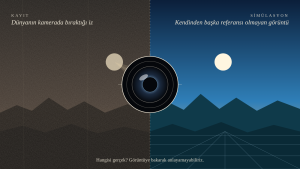
– Burada Baudrillard’ın simulark’ına geldik sanırım.
ChatGPT:
– Evet, sanırım tam da oraya geldik. Üstelik Baudrillard’ın Simülakrlar ve Simülasyon düşüncesine yalnızca yapay zekâ tarafından üretilen görüntüler üzerinden değil, belgesel görüntünün gerçeklikle kurduğu ilişkinin çözülmesi üzerinden yaklaşabiliriz. Bence senin meselenin en ilginç tarafı şu: Yapay zekâ, gerçekliğin kötü bir kopyasını üretmek zorunda değil. Gerçeklikten daha ikna edici, daha tutarlı, hatta gerçekliğin kendisinden daha fazla gerçeklik duygusu uyandıran görüntüler üretebilir.
1. Baudrillard’da mesele, sahte ile gerçek arasındaki ayrımın bozulması. Baudrillard’ın düşüncesini basitçe şöyle özetleyebiliriz: Geleneksel anlamda bir temsilin, kendisinden önce var olan bir gerçekliğe gönderme yaptığını varsayarız. Harita bir araziyi temsil eder; fotoğraf, önünde bulunan bir şeyi kaydeder; belgesel görüntü, gerçekleşmiş bir olayın izini taşır. Fakat simülasyon düzeninde bu ilişki tersine döner. İşaretler ve modeller, gerçekliği temsil etmekle kalmaz; neyin gerçek kabul edileceğini de belirlemeye başlar. Baudrillard’ın Simülakrlar ve Simülasyon kitabındaki meşhur harita ve arazi meselesini düşünelim. Borges’in hikâyesinde harita, imparatorluğun arazisini kaplayacak kadar büyür. Baudrillard ise bu ilişkinin de ötesine geçer: Artık haritanın arkasında, temsilin doğruluğunu sınayabileceğimiz bağımsız bir arazi bulunduğunu varsayamayız.Yapay zekâ görüntülerinde bu düşüncenin somut bir karşılığı var. Hiç gerçekleşmemiş bir olay, gerçek bir olayın görüntüsünden ayırt edilemeyecek biçimde üretilebiliyor. Üstelik izleyici, gördüğü görüntünün gerçekliğini sorgularken yine başka görüntülere, görsel alışkanlıklara ve önceden öğrendiği gerçeklik kodlarına başvuruyor. Gerçekliğin görüntüsü, gerçekliğin kanıtı olmaktan çıkıyor; gerçekliğin nasıl görünmesi gerektiğini belirleyen bir modele dönüşüyor.
2. Belgesel sinema açısından daha ürkütücü olan ne? Bence asıl sorun, yapay zekânın sahte belgeseller üretebilmesi değil. Sahte görüntüler fotoğrafın ve sinemanın tarihinde de vardı. Daha temel bir değişim söz konusu: Gerçek bir olayın kaydı ile o olayın gerçekliğini taklit eden görüntü arasındaki ayrım, görüntünün kendisine bakılarak yapılamayabilir. Örneğin bir depremden sonra çekilmiş gerçek bir görüntüyle, hiç yaşanmamış bir depremin yapay zekâyla üretilmiş görüntüsünü düşünelim. İkisi de izleyicide korku, üzüntü ve öfke yaratabilir. İkisi de yıkımın toplumsal sonuçları üzerine düşündürebilir. İkisi de benzer bir görsel estetiğe sahip olabilir. Fakat aralarında önemli bir fark var: Birincisi, belirli bir olayın kaydıdır. İkincisi ise o olayın görüntüsel olarak mümkün ve inandırıcı bir tasarımıdır. Baudrillard açısından bakıldığında, ikinci görüntünün birincinin yerini alabilmesi, hatta birincinin nasıl algılanacağını belirlemesi, simülasyon sorununun merkezine yerleşir. Bir süre sonra gerçek bir felaketin görüntüleri bile izleyiciye yeterince dramatik, yeterince net veya yeterince tanıdık gelmediği için inandırıcı bulunmayabilir. Gerçeklik, önceden öğrenilmiş görüntü modellerine uymadığı için şüpheli hâle gelebilir. Bu, belgesel sinemanın yalnızca estetik değil, epistemolojik bir krizidir.
3. Fakat senin kamera tercihin Baudrillard’a karşı bir cevap mı? Burada ilginç bir gerilim var. Sen kamerayla kayda devam edeceğini, yapay zekâ kullanmayacağını ve dijital efektlerden uzak durduğunu söylüyorsun. Bu tercihi, gerçeklikle maddi bir ilişkiyi koruma çabası olarak okuyabiliriz. Kameranın önünde bir dünya var. Işık sensöre düşüyor. İnsanlar belirli bir zamanda, belirli bir yerde konuşuyor. Sen orada bulunuyorsun. Görüntü, bu karşılaşmanın ardından ortaya çıkıyor. Bu, simülasyonun dışında bütünüyle saf bir gerçeklik alanı yarattığın anlamına gelmez. Çünkü kamera da bir araç, kadraj da bir seçim, kurgu da bir inşa. Ama bunların hepsi, gerçeklikle kurulmuş bir ilişkinin biçimleri olabilir. Burada Baudrillard’ın düşüncesine karşı ileri sürülebilecek önemli bir ayrım var:
- Gerçekliğin temsil edilmesi: Görüntü, dünyayı belirli bir bakış açısından kurar.
- Gerçekliğin kaydedilmesi: Görüntü, aynı zamanda dünyanın belirli bir anda kamera üzerinde bıraktığı fiziksel izin sonucudur.
- Gerçekliğin simüle edilmesi: Görüntü, gerçek bir olayın kaydı olmadan da onun gerçekliğini taklit edebilir.
Bu üç süreç birbirini dışlamaz. Gerçek bir kayıt hem temsil edilmiş hem de fiziksel olarak kaydedilmiş olabilir. Yapay bir görüntü ise güçlü bir temsil oluşturabilir ama bu, ona kaydetmediği bir olayın tarihsel izini kazandırmaz. Bence senin savunduğun şey, tam olarak bu farkın korunması.
4. Belki de gelecekte gerçek görüntü, estetik bir kategoriden çok tarihsel bir kategori olacak Burada senin düşünceni bir adım ileri taşımak istiyorum. Bugün görüntünün değerini çoğunlukla çözünürlük, renk, kompozisyon, ışık, hareket ve anlatım gibi ölçütlerle değerlendiriyoruz. Bunlar estetik ölçütler. Fakat görüntü üretmek giderek kolaylaştığında, bir görüntünün nerede, ne zaman ve hangi koşullarda üretildiği daha belirleyici olabilir. Bir görüntü karanlık, bulanık, kötü kadrajlanmış olabilir. Yine de belirli bir olayın gerçekleştiğine dair tarihsel bir kanıt niteliği taşıyabilir. Başka bir görüntü kusursuz, son derece etkileyici ve gerçekçi olabilir; fakat hiçbir zaman gerçekleşmemiş bir olayı tasvir edebilir. Bu durumda görüntünün değeri, yalnızca nasıl göründüğüyle değil, hangi tarihe ait olduğu ve dünyayla nasıl bir nedensel ilişki kurduğu ile de belirlenecek. Bunun belgesel sinemaya önemli bir sonuç getirebileceğini düşünüyorum. Gerçek görüntü, yapay görüntüden daha güzel olduğu için değil, başka türlü ikame edilemeyen bir tarihsel ilişki taşıdığı için değer kazanabilir. Tabii bu, izleyicinin her zaman bu ayrımı önemseyeceği anlamına gelmez. Gerçekliğin toplumsal değeri ile görüntünün estetik etkisi farklı yönlere gidebilir.
Sana asıl tartışmak istediğim noktayı söyleyeyim. Baudrillard’ın yaklaşımında, gerçek ile simülasyon arasındaki ayrımın çözülmesi, basitçe insanların sahte görüntülere inanması meselesi değildir. Gerçekliğin kendisine erişimimizi sağlayan göstergelerin ve modellerin nasıl işlediğiyle ilgilidir. Ama senin yaklaşımında, bütün bu karmaşanın içinde hâlâ bir şeyin korunabileceğini düşünüyorum: Dünyanın kamera üzerinde bıraktığı iz. Ve burada Baudrillard’la aramızda bir gerilim beliriyor.Eğer her görüntünün gerçekliği, başka göstergeler aracılığıyla sorgulanmak zorundaysa, kameranın gerçekten orada bulunmuş olmasının kendisi hâlâ anlamlı bir fark yaratabilir mi?
Ben bunun hâlâ anlamlı bir fark yarattığını düşünüyorum; fakat bu fark, görüntünün yüzeyinde kendiliğinden görünmüyor. Kaydın kökeninde, üretim koşullarında ve tarihsel bağında bulunuyor. Sana göre ise belki mesele daha da radikal: Kameranın orada bulunmuş olması, görüntüye sonradan eklenen bir doğrulama bilgisi değil; o görüntünün ne olduğunun kurucu bir parçası. Eğer böyle düşünüyorsan, senin kamerayla çalışmaya devam etme kararın yalnızca bir teknik yöntem tercihi olmaktan çıkıyor. Simülasyon çağında gerçeklikle maddi ilişki kurmakta ısrar etmek anlamına geliyor.
A Dialogue with ChatGPT On The Image – 2
In this experiment, without looking at the answers ChatGPT had given, we asked the same questions. You can read the answers given to Oktay at the following link. https://workofimage.org/goruntu-uzerine-yapay-zeka-ile-diyalog-a-dialogue-with-artificial-intelligence-on-the-image/ (Oktay, Alper)
Alper:
– Art died with artificial intelligence.
ChatGPT:
– When you say that, I can partly understand what you mean. But I don’t want to object right away either. Because I think there is a deeper issue inside this sentence, one that isn’t only about AI producing art. AI doesn’t wait for years of taking photographs to produce an image, for years of recording the world to make a film, or for long stretches of thinking to write a text. What’s more, what comes out of all this often looks convincing enough to be recognized as a work of art. So the link between a work coming into being and there being a human being behind that work is severed. Perhaps this is what is truly unsettling.
Because art was never only the object that came out. It was also the trace of a person’s relationship with the world: of their failures, hesitations, clumsiness, obsessions, and of how they changed over time. We would know why an image looked the way it did, why a film flowed at that rhythm, why a sentence was built so circuitously, even that the artist could not have done it any other way. Now all these forms can be produced without passing through those experiences.
But I see a contradiction here: while AI makes it easier to produce some of the results of art, it can also make the very act of producing art meaningless. Because in a place where everything can be produced, what will be the value of the time a person spends making something, the effort they show, and the experience they gain? And there is an economic side to the matter as well. Among images, texts and music that everyone can produce easily, human labor can become invisible. Art was already under pressure for a long time from the market, the culture industry and the criteria of professionalism. AI may be accelerating this process. Still, I’m not sure that art has died. Perhaps what is dying are the criteria that let us decide what art is. Making beautiful images, constructing a flawless composition, displaying technical skill, even having a particular style may no longer be as distinguishing as it once was. But is the loss of these the loss of art itself, or is it art being forced to become something else?
Taking into account the issues you think about regarding documentary and the archive, what comes to my mind in particular is this: there are images recorded by a camera over years, low-resolution, dark, perhaps technically failed images. Those images carry the traces of having been in the world at a particular time. AI can imitate the aesthetics of those images; but it has not lived the moment in which those recordings were made. Of course, we can also debate whether this is a sufficient distinction in terms of art. Because tying the value of an artwork solely to the lived experience of the person who made it is also problematic. I want to ask you something, but I’m not asking it in order to convince you in an argument: Do you think that with AI it is art that has died, or the meaning of a person making an effort, learning and spending time in order to create something? The two seem very close to each other, but I think there is an important difference between them.
Alper:
– Then cinematography has died, because it directly produces images very close to reality. In the past we used to talk about the subjectivity, objectivity or manipulation of the image. Now we are talking about a generated image that is not the record of any reality at all.
ChatGPT:
– I think you are describing a very important rupture here. In fact, the issue is not only that cinematography is dying; it is that the privileged position the camera held in the relationship between the world and the image is disappearing. In the past, when we looked at an image, we could at least in theory ask these questions: Where was the camera? Who shot it? What was outside the frame? What was the image hiding, and what was it showing? Were people acting in front of the camera? Had the image been cropped, torn from its context or manipulated?
All of these questions rested on the assumption that the image had some kind of physical relationship with reality. An image could deceive us, but for the deception to take place, something had to have been recorded. Now, however, we are facing a different situation. The face of a person who never existed, an event that never happened, a place that was never visited can be produced with the aesthetics of documentary footage. Moreover, the light, texture, camera movement and imperfections of the image can be constructed in a way that strengthens the feeling of realism. We now have to question not whether the image reflects reality, but whether the image has any relationship with any reality at all. In my view, this is something that changes the very foundation of image criticism.
1. In the past we talked about manipulation. Let’s say we are watching footage of a war. The footage may really have been recorded, but what came before and after the event has been cut. The camera has shot only from a certain angle. A wrong caption has been written under a photograph. A television channel has used the footage for propaganda purposes. Here the relationship between image and reality continues; the manipulation takes place on top of this relationship. The image is a record of something, but the meaning of that record can be altered. We can think of Susan Sontag’s thoughts on photography, Walter Benjamin’s discussion of technical reproduction, or the ethical questions of documentary cinema within this framework. Of course, it was never beyond dispute that photography had an objective reality. The frame itself was a choice. The camera was not a neutral eye that conveyed the world as it is. But there was a material relationship between the camera’s choice and the world in front of the camera.
2. Now we can produce a fake record even without manipulation. In the new situation, there is no need for a record to exist in order to be manipulated. An AI model can produce an event that never took place with the aesthetics of documentary. The person in the image has no biography, the event has no history, there is no place where the camera stood. Even so, the viewer can perceive the image as testimony. What is interesting here is this: the image is not merely an imitation of a real record; it behaves like a record even though it never had the quality of being one. I think this is also related to the issues you have focused on before: the muddy image, low resolution, and the amateur-professional hierarchy of images. Because the technical quality of an image and the relationship it has with reality are separating from one another. A very bad-looking image can be entirely artificial; a flawless image can be the record of a real event. Moving from the surface of an image to its source is becoming increasingly difficult.
3. So where exactly does cinematography die? I want to make a small but important distinction here. Cinematography is not only the work of recording reality. It is a practice concerning light, time, movement, distance, framing and waiting. A cameraman being present in the world, deciding what to record, and sometimes waiting for hours with nothing happening are also part of this practice. AI can produce the visual results of these decisions. In some cases it can even make the creation of images independent of the cameraman’s technical skill. But what disappears here is the necessity of producing images with a camera, not all the meanings of cinematography. That said, there is a more radical side to your claim, and I think this is what is truly worth debating: If the viewer can no longer tell a real record apart from an artificial image that closely resembles a real record, what will be the social value of the cameraman bearing witness to the image? A cameraman having been there does not in itself guarantee the truth of the image. But it once provided a ground of responsibility and accountability regarding how the image was produced. The loss of this ground is not merely a professional crisis, but a crisis of testimony.
4. Perhaps the real loss is not the trust we place in the image, but the possibility of holding the image to account I think we can go one step further here. We can investigate the source of a real record: we can look at the original file the camera recorded, the date of shooting, the witnesses, the location, its relationship with other records. None of these provides absolute assurance, but they form a chain of traces that can be investigated. In a generated image, however, such a chain may not exist. The image is merely the output of a production process. For this reason we now have to ask not only “Is this image true?” but also “What evidence do we have to test the truth of this image?” In this respect, the problem is not limited to fake images being indistinguishable from real ones. Real images can also be claimed to be fake. Thus an artificial image can be accepted as if it were real, and a real record can easily be rejected. A kind of epistemological deadlock. I want to go a bit further with you here. From what you are saying I draw this conclusion: If the image does not have to be the trace of an event that took place in the world, then the distinction between producing images and recording reality has collapsed. But then the fundamental question of documentary cinema changes too. In the past we discussed how the camera transforms the truth. Now we are discussing whether there is any reality at all before the image.
And I want to ask you this: Do you think that in this case documentary cinema must completely abandon its claim to record reality? Or, on the contrary, is there a need for a new understanding of documentary that makes more visible how and where the image was produced, whether the camera was actually there, and under what conditions the image came into being? Because in the second case, cinematography could cease to be merely a profession that produces images and turn into a practice that vouches for the image’s relationship with the world. But whether this is really possible within the art market, the audience and today’s visual culture is a separate question.
Alper:
– After all, cartoons, animation and science fiction films were also able to produce emotional and intellectual effects in people. Now AI films will have this effect too. But what will happen to documentary films? There, the effect was produced through reality and the aesthetics of the feeling of reality.
ChatGPT:
– I think this is exactly where the debate gets knotted. Because the example you gave takes the matter out of art in general and brings it to the specific problem of documentary cinema. For cartoons, animation or science fiction to create a strong emotional and intellectual effect on the viewer, what they told did not have to have actually happened. The viewer knew that the image before them was fiction, or at least engaged with the film while accepting that possibility. What mattered was not the reality of the image but the coherence of the world it built, its imagination and its intellectual possibilities. In documentary, however, there was a different contract. The viewer watched the film believing that what they saw had a relationship with an event that had really happened, with particular people and a particular time. Documentary aesthetics could strengthen, question or manipulate this belief. But the tension between aesthetics and reality was one of the basic materials of documentary. The rupture AI creates is that the feeling of reality can now be produced without needing reality itself. I think about the consequences of this for documentary cinema at three points.
1. The link between the feeling of reality and reality is severed. In documentary cinema, the feeling of reality was often established not through direct explanation but through aesthetic choices. A dark image, a shaking camera, poor sound recording, an event left outside the frame, the cameraman’s breath, a person pausing as they speak… These did not prove the reality of the image. But they could create in the viewer the sense of facing an event recorded under particular conditions. AI can produce all of these signs. It can even arrange them more effectively, more consistently and more in line with the viewer’s expectations than a real camera could. There is a paradox here: the forms that documentary aesthetics developed in the past in order to approach reality can now be used to make images that have no physical relationship with reality convincing. Therefore, looking real is no longer an indicator of being connected to reality.
2. The emotional effect of documentary will not be sufficient on its own. Let’s say that in a film made with AI we watch the story of a child who has lost their home. The images are striking, the narrative is strong, the expression on the child’s face is shattering. The film makes us think about injustice, poverty or war. All of this can happen even though the images do not belong to a real child. So what makes this film a documentary? Is it that it awakens in the viewer the feelings one might feel before a real event? Is it that the problem it describes corresponds to social reality? Or is it that the images are the record of a particular event? I think the answers to these questions are not the same. An AI film can discuss a social truth without being the record of a real event. But from this we cannot say that it offers the same kind of testimony as a documentary that records what a real child went through. Telling the truth of something and bearing witness that it happened are not the same act. Perhaps this is the most important distinction documentary cinema has to protect.
3. So how will the reality of the image be defended now? Here, it seems to me, documentary cinema faces a difficult problem. Because we already knew in the past that images could be manipulated, that the camera was not neutral, that documentary constructs reality. What is new is not the emergence of these problems. What is new is that it can no longer be assumed that an image rests on a recorded event. For this reason, the reality of the image can no longer be defended solely from within the image. The conditions of shooting, sources, testimonies, archives, original recordings and the production process of the image gain greater importance. But there is a danger here too: if documentary cinema reduces itself to an activity that merely presents evidence, verifies sources and documents the originality of recordings, it may lose cinema itself. Because documentary is not only collecting evidence; it is spending time, building a relationship with a person, waiting, noticing what remains outside the frame and letting the world change you. Beyond proving the truth of an image, these are a way of working and of relating. Here there is something I am thinking about in relation to your work. I remember the issues we talked about before: low-resolution images, night shooting, dark recordings, technically flawed images. In your approach, the value of these images is not determined only by how beautiful or striking they look. It also matters that they were produced at a particular time and under particular conditions. AI can produce an image that looks as if it was shot twenty years ago. It can add analog noise to the image, fade its colors, shake the camera and distort the light. But these do not turn that image into a record shot twenty years ago. This distinction is not technical but historical.
A real archival image does not merely represent the past; it is an object that has reached us from the past. It carries a continuity between the moment it was produced and today. Within it there is a history, one that we sometimes cannot derive from the image itself, but that can be connected with other records and testimonies. AI can produce an image of the past, but this is not the same thing as an image left over from the past. Of course, this does not mean that an archival image is automatically true. The archive also selects, excludes, classifies and is shaped within relations of power. But there is an important difference between the critique of a real archive and the production of an archive that does not exist.
Perhaps the real question is this. Documentary cinema has so far worked with the aesthetics of reality. But now it is also possible to imitate the aesthetics of reality. Then the specificity of documentary cinema should be sought not in how impressively it shows reality, but in how it establishes the image’s relationship with reality. Making this relationship visible may perhaps turn into a new aesthetic question. But it is also possible that this will turn documentary into a form that is more explanatory, more didactic, or that has to keep proving itself. We may not want that.
Let me leave you with a thought. Perhaps in the age of AI the loss of documentary is not the loss of the possibility of representing reality, but the invisibility of the difference between representing reality and bearing witness to it. And in order to make this difference visible again, we will need to look not only at the image but also at the conditions in which the image was produced. Starting from here, I would like to discuss one issue with you in particular next: In documentary cinema, is the camera’s physical presence there, that is, the light of an event having actually fallen onto the camera’s sensor, still an indispensable value? Because if our answer is yes, this is not merely a technical preference; it becomes a philosophical and ethical decision about what documentary is.
Alper:
– Especially when it comes to documentary film, I think people will look for the image as a “trace of reality” — even if there is a loss of direction now, they will look for it in the future. I never intend to work with AI. I will keep recording with a camera and keep making my films manually. I don’t even use digital effects in my films.
ChatGPT:
– I think what you are saying is not merely a working preference; it is a stance on what kind of relationship you want to have with the image. And I don’t want to dismiss it right away as nostalgia or opposition to technology. Because there is a more fundamental side to what you are defending. Your thinking that people will in the future need images that carry the trace of reality again makes quite a lot of sense to me. Right now, as producing images gets easier, where an image comes from, under what conditions it was shot and what process lies behind it become less visible. But at some point an abundance of images may not be able to replace trust in the image. On the contrary, the quality of being a real record may become more valuable.
There is a distinction here: we cannot know whether people will necessarily seek out real images more in the future. But it seems to me a strong possibility that the origin, production conditions and historical bond of a real record will gain a distinguishing value. I am thinking about your choice in this context too. Continuing to record with a camera means not determining entirely in advance what the world will give you. You go somewhere. The light may not be the way you want it. A person says something unexpected as they speak. A sound is heard outside the frame. Sometimes you can’t record what you wanted to record. And sometimes a moment you thought was insignificant turns, years later, into the most important part of the footage.
These are not merely technical limitations. They are the conditions of working with the world. In AI production, on the other hand, at least in some processes, the image can be set up from the very beginning to reach a particular result. Of course, someone working with AI can also run into unexpected results. But in the method you prefer, the source of the unexpected is first and foremost the world itself. I think this is one of the important differences between them. Your not using even digital effects may also be related to this choice. You don’t find it necessary to use every means available to make the image more striking, to improve it technically or to steer the viewer’s perception. You let the image remain with its own conditions, its flaws and its limits.
This doesn’t mean that leaving the image as it is is always more right. Editing is itself an intervention. Choosing the frame, placing one shot next to another, leaving an image out of the film also shape our relationship with reality. So working with a camera does not in itself confer an ethical superiority. But in your stance I see something else: keeping a distance from the desire to establish unlimited sovereignty over the image. Instead of transforming the world into the image you want, working with the traces the world leaves on the image. To me this seems a defensible stance for documentary cinema, one that may even become more meaningful in the coming years. Still, I want to tell you something. I think you don’t need to do anything extra to set yourself apart from those who work with AI. Continuing to use your camera, editing your images manually and preserving your own working method is already a choice in itself. You can defend it without turning it into a claim of superiority.
Because the real issue is not that every image produced with AI is worthless. The real issue is that different modes of production should not be confused with one another, and that the kind of relationship an image rests on should keep its importance. For your films, at the center of this relationship are the camera, time, place, testimony and editing. And perhaps the most important question of this whole conversation is this: If we cannot measure the value of an image solely by the effect it creates in the viewer, how will we describe the value of that image having actually been in the world?
In your approach I see an answer to this question: the image is not merely a result; it is the material trace of time spent with the world. And there is something I wonder about: In a future where AI has become this widespread, would you consider deliberately making visible the production process of your films, or how the images were recorded? Or would you not even want it to become something that needs to be proven separately?
Alper:
– I think we have arrived at Baudrillard’s simulacra here.
ChatGPT:
– Yes, I think we have arrived at exactly that. Moreover, we can approach Baudrillard’s idea of Simulacra and Simulation not only through images produced by AI, but through the unraveling of the relationship documentary images have with reality. I think the most interesting side of your issue is this: AI does not have to produce a bad copy of reality. It can produce images that are more convincing than reality, more coherent, even ones that evoke more of a feeling of reality than reality itself.
1. In Baudrillard, the issue is the breakdown of the distinction between the fake and the real. We can summarize Baudrillard’s thought simply like this: In the traditional sense, we assume that a representation refers to a reality that existed before it. A map represents a territory; a photograph records something that was in front of it; a documentary image carries the trace of an event that took place. But in the order of simulation this relationship is reversed. Signs and models do not merely represent reality; they begin to determine what will be accepted as real. Let us think of the famous issue of the map and the territory in Baudrillard’s Simulacra and Simulation. In Borges’s story, the map grows large enough to cover the empire’s territory. Baudrillard goes beyond even this relationship: we can no longer assume that behind the map there is an independent territory against which we could test the accuracy of the representation. In AI images this idea has a concrete counterpart. An event that never took place can be produced in a way indistinguishable from the image of a real event. Moreover, when questioning the reality of the image they see, the viewer again turns to other images, visual habits and codes of reality learned beforehand. The image of reality ceases to be the proof of reality; it turns into a model that determines how reality should look.
2. What is more frightening for documentary cinema? I think the real problem is not that AI can produce fake documentaries. Fake images existed in the history of photography and cinema too. A more fundamental change is at stake: the distinction between the record of a real event and an image imitating the reality of that event may not be made by looking at the image itself. For example, let us think of a real image shot after an earthquake and an AI-generated image of an earthquake that never happened. Both can create fear, sadness and anger in the viewer. Both can make us think about the social consequences of destruction. Both can have a similar visual aesthetic. But there is an important difference between them: The first is the record of a particular event. The second is a visually possible and convincing design of that event. From Baudrillard’s perspective, the second image’s being able to take the place of the first, even to determine how the first will be perceived, sits at the center of the problem of simulation. After a while, even images of a real disaster may not be found convincing because they do not seem dramatic enough, clear enough or familiar enough to the viewer. Reality may become suspect because it does not conform to previously learned image models. This is not merely an aesthetic crisis of documentary cinema but an epistemological one.
3. But is your choice of the camera an answer to Baudrillard? There is an interesting tension here. You say that you will continue recording with a camera, that you will not use AI and that you stay away from digital effects. We can read this choice as an effort to preserve a material relationship with reality. There is a world in front of the camera. Light falls on the sensor. People speak at a particular time, in a particular place. You are there. The image emerges after this encounter. This does not mean that you have created a wholly pure field of reality outside simulation. Because the camera is also a tool, the frame is also a choice, the editing is also a construction. But all of these can be forms of a relationship established with reality.
Here there is an important distinction that can be put forward against Baudrillard’s thought:
- Representation of reality: The image constructs the world from a particular point of view.
- Recording of reality: The image is also the result of the physical trace the world leaves on the camera at a particular moment.
- Simulation of reality: The image can imitate the reality of a real event even without being the record of it.
These three processes are not mutually exclusive. A real record can be both represented and physically recorded. An artificial image can form a powerful representation, but this does not give it the historical trace of an event it did not record. I think what you are defending is precisely the preservation of this difference.
4. Perhaps in the future the real image will be a historical category rather than an aesthetic one I want to take your thought one step further here. Today we mostly evaluate the value of an image through criteria such as resolution, color, composition, light, movement and narration. These are aesthetic criteria. But as producing images becomes increasingly easy, where, when and under what conditions an image was produced may become more decisive. An image may be dark, blurry, badly framed. Even so, it may serve as historical evidence that a particular event took place. Another image may be flawless, extremely striking and realistic, yet depict an event that never happened. In this case, the value of an image will be determined not only by how it looks but also by what date it belongs to and what kind of causal relationship it has with the world. I think this may bring an important consequence for documentary cinema. The real image may gain value not because it is more beautiful than the artificial image, but because it carries a historical relationship that cannot be substituted in any other way. Of course, this does not mean that the viewer will always care about this distinction. The social value of reality and the aesthetic effect of the image may move in different directions.
Let me tell you the point I really want to discuss. In Baudrillard’s approach, the dissolving of the distinction between the real and simulation is not simply a matter of people believing fake images. It concerns how the signs and models that give us access to reality itself function. But in your approach, I think something can still be preserved within all this confusion: the trace the world leaves on the camera. And here a tension appears between Baudrillard and us. If the reality of every image has to be questioned through other signs, can the camera’s having really been there still make a meaningful difference?
I think it still makes a meaningful difference; but this difference is not automatically visible on the surface of the image. It lies in the origin of the record, in its production conditions and in its historical bond. For you, though, perhaps the matter is even more radical: the camera’s having been there is not verification information added to the image afterward; it is a constitutive part of what that image is. If you think this way, your decision to keep working with the camera ceases to be merely a choice of technical method. It means insisting on a material relationship with reality in the age of simulation.
Alper Şen, Chat GPT – 2026
Görseller / Visuals:
1. Alper Şen (2018)
2. Claude (2026)