(Scroll Down For English)
Eski Yabancılar, Yeni Yerliler
Bir pasaportunuz ve Schengen vizeniz olması herhangi bir Avrupa ülkesinin havaalanında polis sorgusuna maruz kalmayacağınız anlamına gelmiyor. Berlin havaalanında Yunanistan uçağından indiğinizde kapıda mümkünse esmer tenleri ayırt etmek üzere bekleyen 3 polisle karşılaşıyorsunuz. Sizi değil de berikini mi seçecek diye ürkekçe beklerken önümüzdeki genç çocuğa doğru yaklaşıp onlarla mı birliktesin diye beyaz tenli Avrupalıları işaret ediyor. Hayır deyince yanına çekiyor. Biz geçip gidiyoruz.
Almanya’daki en etkin göçmen hareketi Devrimci Mülteci Hareketi ve Oplatz’tan (oplazt.net) arkadaşların medya toplantısına katılıyoruz. Hareketin uzun yıllardır içinde olan Bruno, en büyük sorunlardan birinin göçmenlerin kendi ülke hareketleri içinde gruplaşmaları olduğuna işaret edip medya araçlarının bunu kırmak üzere kullanılması gerektiğini tekrar tekrar vurguluyor. Burkina Faso’dan yaklaşık yirmi yıl önce iltica eden Bruno, göçmenlerin şimdi yaşadıkları ikinci sürgün yerleri olan kamplardaki koşullar o zaman da benzer zorlukta olduğunu söylüyor. İki yıl kentten kilometrelerce uzakta bir kampta kaldıktan sonra çalışma izni almayı başarıp önce Hamburg’ta sonra Berlin’de yaşamaya başlıyor. Göçmenlerin politizasyonu için çalışmaya ara vermemiş. Yakınlarda Brüksel’deki bir toplantıdan davet almış, ben gidemeyeceğim ama siz gitmelisiniz diyor. Sivil toplum kuruluşlarının sahte dayanışmalar örgütlediğini söylüyor. “Beni evimden alıp süper lüks otomobillerle bir iki saatlik toplantılara götürdüler, orada lüks otellerde konaklayıp yeyip içtikten sonra dönüyorduk”. Onlar da “dayanışma” diyor, ama sadece sözlerde. Kalpten söylemiyor yani…”
Oplatz hareketi, Oranienplatz’taki 18 ay süren meydan işgalinden alıyor ismini. İşgal hareketinin öncülerinden Turgay, işgal sırasında 100 kişilik bir grupla Almanya’daki pek çok başka şehre yürüyüş düzenlediklerini anlatıyor. Yolda gruba katılan insanlarla sayıları 500’e çıkıyor. Ama bu başka bir bölümün başlığı belki de… Şehirdeki işgal binalarından biri olan eski bir ilkokula 200 kadar göçmenin yerleştirilmesi de meydan işgalinin kazanımlarından olmuş. Polisin birkaç baskını ve ev boşaltma çabası kısmen engellenmiş olsa da, baskın sırasında evden çıkmayı kabul edenler tekrar girememiş. Baskınlar sırasında direnen göçmenlerin yeni eylem biçimi türettiklerini de söylüyor Turgay: Çatı işgali.
Reboot FM’le aynı frekans üzerindeki We Are Born Free radyo istasyonunda program yapmaya başlayan Bino’nun söylediğine göre Oplatz hareketi göçmenleri epey güçlendirmiş. Hareketin doğuşuyla Almanya’nın güneyinde bir kasabada sıkışmış halde yaşarken kafileye katılıp Berlin’e geliyor. Kolonyal bir anlam ifade eden eski ismini (Patras Bwansi) değiştirip kendine Bino Byansi Byakuleka ismini vermiş. Kendi hikayesini anlattığı kitabına şuradan erişilebilir: http://www.mikrotext.de/books/patras-bwansi-lydia-ziemke-my-name-is-bino-byansi-byakuleka-double-essay/
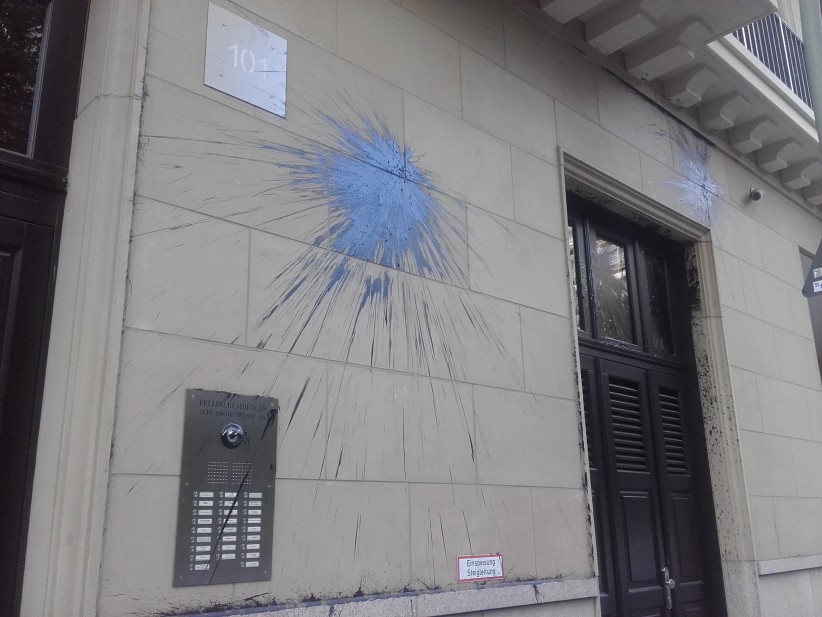
Berlin’in özgürlük vadeden eski cazibesini yitirdiğini hissedebiliyoruz. Eski göçmenler ve yerlilerin tedirgin sohbetlerine katılıyoruz. Metro ve trenden, kent içinde gezinen polis gruplarından günlük yaşamda baskının kaygan biçimde, sinsice yayılmaya başladığına şahit oluyoruz. Kreuzberg çevresindeki en büyük tehditlerden biri de kentsel dönüşüm. Çok uzun bir süredir eski göçmenleri de yerinden eden kentsel dönüşüm projeleri Kreuzberg’in çevresini sarmış durumda. Oranienplatz’ın yakınındaki Jakobstrasse üzerinde geçen hafta yapılan protestoların izlerini buluyoruz, yakılan arabalar, camları kırılmış lüks siteler, boya ve sprey izleri, utanç içinde penceresinden yabancılara bakan yeni yerliler…
- Bu metin göçmen dayanışma ağları üzerine 2016 ylında gerçekleştirilen “Geride Kalanlar” görsel araştırmasından alınmıştır.
Özge Çelikaslan – Alper Şen
Artıkisler Kolektifi –Berlin 2016
Old Foreigners, New Locals
Having a passport and a Schengen visa does not mean that you will be spared police questioning at a European airport. When you get off a flight from Greece at Berlin Airport, you encounter three police officers waiting at the gate, seemingly attempting to identify people by the color of their skin, particularly those with darker complexions. As you nervously wait to see whether they will choose you or the person next to you, one of the officers approaches the young man in front of us and asks whether he is with them, pointing toward a group of white Europeans. When he says no, the officer pulls him aside. We walk past.
We attend a media meeting organized by friends from the Revolutionary Refugee Movement, one of the most active migrant movements in Germany, and from Oplatz. Bruno, who has been involved in the movement for many years, points to one of the movement’s fundamental problems: the tendency of migrants to organize themselves primarily along national lines within their own migrant communities. He repeatedly emphasizes that media should be used as a tool to break through these divisions. Bruno sought asylum in Germany from Burkina Faso nearly twenty years ago. He tells us that the conditions in the camps—what migrants experience as a second place of exile—were already marked by similar difficulties at the time. After spending two years in a camp located many kilometers outside the city, he eventually obtained a work permit and began living first in Hamburg and later in Berlin.
He never stopped working toward the political organization and politicization of migrants. He has recently been invited to a meeting in Brussels. “I can’t go,” he tells us, “but you should.” He speaks critically of what he describes as forms of false solidarity organized by NGOs. “They picked me up from my home in luxury cars, took me to meetings that lasted an hour or two, put us up in expensive hotels, fed us, gave us drinks, and then took us back home.” “They call that ‘solidarity’ too,” he says. “But only in words.
They don’t mean it from the heart…” The Oplatz movement takes its name from the eighteen-month occupation of Oranienplatz. Turgay, one of the organizers of the occupation, tells us that during the protest they organized a march with a group of approximately one hundred people to several other cities across Germany. As people joined the march along the way, the group grew to around five hundred. But perhaps that belongs under the title of another chapter… One of the concrete gains of the Oranienplatz occupation was the accommodation of approximately two hundred migrants in a former elementary school, one of the occupied buildings in the city. Although several police raids and attempts to evict the building were partially prevented, those who agreed to leave during the raids were not allowed to return. Turgay tells us that migrants who resisted the raids developed a new form of protest: The Occupation of Rooftops.
According to Bino, who began hosting a program on We Are Born Free, a radio station broadcasting on the same frequency as Reboot FM, the Oplatz movement significantly strengthened migrants politically and socially. He joined the march and came to Berlin while living in isolation in a small town in southern Germany. The emergence of the movement enabled him to break out of that isolation and become part of a collective struggle. He changed his former name, Patras Bwansi, which he describes as carrying a colonial meaning, and adopted the name Bino Byansi Byakuleka. His story is documented in a book that he co-authored: http://www.mikrotext.de/books/patras-bwansi-lydia-ziemke-my-name-is-bino-byansi-byakuleka-double-essay/
We can sense that Berlin has lost some of its former aura as a city promising freedom. We find ourselves in uneasy conversations with long-established migrants and local residents. On the underground and commuter trains, in the groups of police moving through the city, we begin to witness how repression has started to spread through everyday life in a slippery and insidious manner. Around Kreuzberg, one of the most significant threats is gentrification. For a very long time, urban redevelopment projects have been spreading throughout the neighborhoods surrounding Kreuzberg, displacing not only newer residents but also established migrant communities. On Jakobstraße, near Oranienplatz, we find traces of the protests that took place the previous week: burned-out cars, the shattered windows of luxury housing complexes, marks left by paint and spray cans, and the new residents looking shamefully through their windows at strangers outside. The city appears to be changing its inhabitants before our eyes. The occupation, the demonstrations, the camps, the migrant networks, and the autonomous spaces have all produced temporary cracks in the city’s established order. But the city is also learning how to close those cracks. The police control the streets. The housing market controls the neighborhoods. Gentrification controls the future. And migrants once again find themselves negotiating not only with borders between states, but with borders within the city itself.
- This text is drawn from the visual research project “The Residuals”, conducted in 2016, which focused on migrant solidarity networks.
Özge Çelikaslan – Alper Şen
Artıkisler Collective – Berlin 2016