Scroll down for English AI translation
 Gözünü Kırpacaksan Şimdi Kırp: Çocuklara, Korkuya, Sinemaya ve Kurguya Dair Notlar
Dünya’nın, Oktay’ın, Sevgi’nin ve Şila’nın korkunun sinemasına dair yapmış olduğu görsel akışı izlediğimde, ilk başta neyin nasıl oluşacağını, dile geleceğini öngörmenin zor olduğu ve Şila (10) ile Dünya’nın (5) şahane anlatımlarıyla sürüklediği bir video seyretmiş oldum sayenizde, herkesin emeklerine sağlık. İzlerken aldığım notlar var. Bunları biraz düzenli cümlelere dönüştürmeyi deneyeceğim.
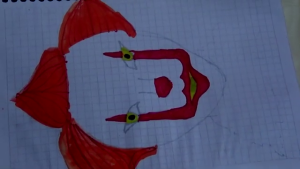
Şila, korkunun bir oyun olduğu fikri ya da varsayımı ile açılışı yapıyor. İzleyiciyi ilk cümlelerle birlikte sıradan ya da öngörülebilir bir anlatımın kırılacağına dair bir beklenti içine sokuyor. Akış boyunca da bunun farklı ölçülerde çok yükseldiği anlara tanık oldum. Şila’nın anlatımını destekleyen görseller, “Oz Büyücüsü”nü ve “Matrix”i de anarak “Kansas’a dair bir filmi” bize izletmeyeceğinizin işareti de sanki suda gidere doğru süzülen kağıtlara yazılı resmî ve köşeli kavramlar. Dünya’nın ilk başta “Pennywise” hakkında ne dediğini çok anlayamadım. Anlamam gerekir miydi, bilmiyorum. Ama ilk başta böyle girişler çok da sorun yaratmıyor bence. Anlaşılmayanlar da sonrasına dair merak uyandırıyor.
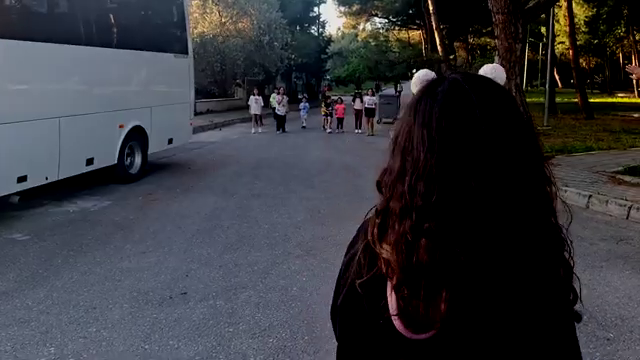
Hemen ilk başta çocukların kameraya ya da kamera gözüne dair çok farkında ve doğal davranışları, bize bir gözlemci kamerasıyla çocuklara bakmadığımızı hissettiriyor. Çocukların ve yaşı ileri insanların kameraya karşı doğal bir uzlaşma hâli olduğunu düşünürüm. Bunun farklı nedenleri var elbette ama çocuklar tarafından bakarsak kameranın şahane bir oyuncak olduğunun ve kamerayla ne yapıldığının farkındalar. Bununla beraber kameraya karşı hem bir özen hem de umursamazlık var. Bu elbette ev hâlinin de rahatlığından kaynaklı ama Şila’nın ve Dünya’nın kamera kaydı sırasında bazen Oktay’ın sorusunu ya da cümlesini beklemeden gidişleri, bu kaydetme hâlini çokça yeryüzüne indiriyor ve kaydetmenin anlamının çocuğun algısının altında bir yerde olabildiğini de gösteriyor.
Devamında Şila’nın “Pennywise”a, “Wednesday”e, “Adam’s Family”ye dair anlatımlarını ve özellikle “korkunun vücut bulmuş hâli” sözünü birkaç kez dinledim. Korku ile beslenmek, korku ile güçlenmek ve korku ile korkutmak… Bunların her biri, aslında hem korkunun özünü hem de korkunun yabancılaşmasını anlatıyor gibi. Şila’nın korkuya dair anlatımını, belki Yunan tragedyalarını betimleyen Aristoteles’un katharsis tarifine benzetebilirim. Korkunun bir gerçeklik değil, bir duygu olduğunun ve bu duyguyu yaşamanın gerçekliğe denk gelmediğinin farkında olarak bir tür katharsisi anlatıyor çocuklar sanki. Sonrasında bu düşüncenin farklı biçimlerde karşılık bulduğunu filmi izlerken birkaç kez ve en somut hali ile sizin trenle korku tüneline girdiğinizde çocukların korkuyu neşeye dönüştürdüklerinde gördüm. Katharsisi hep bir trenin tünele girmesine benzeterek tarif ederdim. Bu benzetmeyi kimden duyduğumu hatırlamıyorum. Burada da gerçekten bir korku tüneli gördüğümde gülümsedim. Her karanlık tünelin sonunda aydınlığa çıktığını bildiğimiz müddetçe tünele dalmak ne kadar keyifli…
Korkutucu olan kimden ya da neyden korkar? Korkuya karşı güçlenmek, korkuyu korkutmak… Ursula Le Guin’in “Yerdeniz” serisinde, bir tür hayalet beliriyor. Bu hayalet içine girerek yok etmek istediği bedeni takip ederken o bedenin sahibini, yani büyücüyü ve büyücünün çevresindeki tüm kozmosu da çok tedirgin ediyor / korkutuyor. Büyücü hayaletten kaçtıkça hayalet onu daha güçlü yöntemlerle ve coşkuyla takip ediyor. Bir süre sonra büyücü, hayaletten kurtulmak için hayaleti “korkutmak” gerektiğini keşfederek bu kez o hayaleti takip etmeye başlıyor. Bunu farkeden hayalet de büyücüden kaçmaya çalışıyor. Korkuyu yenmenin değil de korkuyu korkutmanın nasıl bir güç verdiğini okumak beni çok heyecanlandırmıştı. Bu anlatının çağrışımlarını, çocukların korkunun verdiği duyguya dair heyecanlı ve bazen eğlenceli anlatımlarında düşündüm. Bir yandan da çocukların, sadece gerçek olmayan şeylerin korkutucu olduğu gibi bir sonuca varıp varmadıklarından emin olamadım. Bunun iyi bir şey olduğunu düşünüyorum ama aynı zamanda eksik de buluyorum. Oktay’ın silüetinin ürkütücü bir silüetin temsiline dönüşmesi, yağmur görüntüsüne eşlik eden korkutucu müzik, dönen bir daireden çocukların çizimlerine geçiş gibi görsel korku anlatımlarının çağrışımlarının gündelik hayatın içinden çıkması / içine girmesi, çocukların kurgusal korku fikirlerinin yanı sıra bu duygunun gerçekliğine dair de ipuçları veriyor. Tek eğlenceli ölüm, rol gereği ölümdür sonuçta.
Misafir çocuğun korkusu, izleyicinin de empati kurduğu bir duyguya dönüşmüş sanki. Bu, Şila ve Dünya’nın davranışlarında, sıradışı demesem de, izleyicide karşılık bulan bir duygu durumunun izlerini gösteriyor. Şila’nın kamera kaydını kapattırmaması, bunun gerçek bir oyun/deney olduğunu ve sahneyi/deneyi Şila’nın kurduğunu izleyene de hissettiriyor. Bizim korktuğumuz şeye onlar oyun olarak bakıyorlar. Bizim korkmamız da onlara oyun gibi gelebiliyor. Bu, korkunun üstesinden gelmenin pedagojik bir yöntemi midir? Bilmiyorum. Ama çocukların bu tekinsiz hisleri cesaretle deneyimlemesinde, hem çocukların bugünün görsel anlatımına dair çokça bilinç ve kanaat geliştirmiş olmalarının hem de ebeveynler olarak Oktay ve Sevgi’nin etkisi var.
Rüya da benzer bir korku deneyimine dönüşüyor. Rüyanın gerçeklikten ayrı bir mantığı olduğunu bilmek ve uyandığında gördüğün korkunç rüyayı heyecanla anlatmak… Tragedya izlerken ağlamak, oyun bitince de oyuncuları alkışlamak. Bunlar birbirine benzeyen deneyimler sanki. Kurgudaki bu akış, Şila’nın gerçek hayatta yağmur sonrası yaşanan seli korkuyla değil coşkuyla karşılaması, dünyayı kendi oyun sahnesine dönüştürmüş gibi gösteriyor. Çocuklardaki her beklenmedik tepki ve kaydedenden fikren bir adım ilerde olduklarını hissettirmeleri bir karakterin oluşumuna bu tür anlatımın ne kadar güç verdiğinin örneği. Bir yandan da film boyunca hareket eden doğa var, bu da film boyunca kendi döngüsünü bize hatırlatan başka bir katman tüm bu akışta.
Pennywise ve çocukların anlattığı diğer korku filmleri hakkında pek bilgim yok. Çocukların anlatımı boyunca filmlerdeki karakterlere dair parça parça bilgi edindim. Şila’nın “Pennywise”ı doğrudan anlatmak yerine onun repliklerini tekrar etmesi, asimetrik bir bilgi akışı yaratıyor. Filmde birçok şeyi boşluklarla öğreniyorum. Bu boşlukları akış içinde giderdikçe filme daha da yaklaşmak olumlu bir etki yaratıyor. Bir yandan, uzun süre giderilemeyen boşluklar anlatımı takip etmeyi zorlaştırabilir. Bazı konuşmaların anlaşılmaması ve sesin düşük olması gibi teknik sorunlar da bu durumu etkiliyor.
Her durumda kurgu, çoğu zaman çocukların dünyasına dalıp çıkıyor. 10-20 saniye boyunca doğaya, çevreye size eşlik eden hayvanlara bakarak izleyiciye nefes aldırıyor ve ardından tekrar o dünyaya giriyor. Akış ilerledikçe Şila’nın korkuyu başka duygularla tarif etmesi, korkunun çağrışımlarından yola çıkarak onu tanımlamaya çalışması, korkuyu bir yapboza dönüştürüyor. Şila ne hissettiğini anlamaya çalışırken korkutmanın gücünü de keşfediyor diye düşündüm. Korkudan korkmamayı öğrenmekten çok, korkutmanın bir tür güce dönüşmesi, annesini, babasını kardeşi Dünya’yı, arkadaşlarını, bu videoyu izleyen bizi ve hatta bazen kendisini korkutmak istemesi, misafir çocuğun korktuğunu görürken mutlu olması mevcut duruma ve korkunun duygusuna dair bir tür egemenlik kurma isteğinden kaynaklanıyor olabilir. Bir yandan telefondaki korkutucu yüz efektleri, yara makyajı gibi bazı korkutma dekorları, bu duyguyu çok kolay ulaşılabilir tüketim malzemesine dönüştürürken çocukların korkuyu yeryüzüne indirdiğini, W. Benjamin’in “Mekanik Yeniden Üretim Çağında Sanat Eseri” makalesindeki gibi çamura buladığını, korkunun kutsallığını bozduğunu düşündürdü.
Tüm bu akış boyunca Şila’nın ve Dünya’nın kamera karşısındaki davranışları izleyiciye filtresiz halde kolayca geçiyor. Dünya’nın sevimli ve zeki davranışları filmin anlatımının bazen önüne geçme ihtimalini de barındırıyor. Birkaç yerde Dünya’nın ne anlattığına değil, ne kadar şirin olduğuna odaklandım. Antoni Muntadas, “Çeviri Üzerine Açık Radyo” videosunu kurgusunu yaptırırken çok güzel uyuklayan kedinin olduğu bir sahneyi “Filmden rol çalıyor kedinin sevimli duruşu” diyerek kaldırmamı istemişti.
Dünya’nın ok atmayı öğrenmesi ve hemen davranışlarıyla okçuya dönüşmesi, şaka bıçağı ile oynadığı oyunlar, izleyeni tedirgin ettiği kadar neşelendiren anlar yaratıyor. Bir görüntünün birbiriyle çelişen iki duyguyu içermesi, şiddet potansiyeli olacak anlatımın oyun/kurgu/eğlenceye dönüşebildiği anlar, diyalektiğe ulaşmadan tezin ve antitezin kendi başlarına güçlerini eksiltmeden güçlü bir etki yaratıyor. Önceki diyaloglarımızda da bu anlatım ortaya çıkardı: Uzlaşmadan ve kendi duygundan feragat etmeden yan yana durabilmenin etiği ve estetiği sonsuz bir akış yaratabilir. Şila ve Dünya’nın filmlerinin yönetmenliğini ve oyunculuğunu ego ustalığıyla yapıyor olması, kurgu yapmayı bile bazen gereksiz kılacak bir akıcılık sağlıyor. Bu durum birçok yerde Oktay’ı ve Sevgi’yi çocuklarla eşit, bazen de onların işçileri yapıyor.
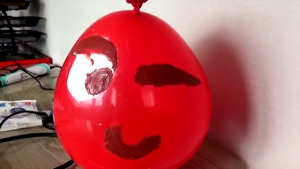
Bir filmin yapımına ve kurguya dair bilgileri, anlatımdaki ustalıkları, çocukların kurgusal korkunun nasıl üretildiğinin çokca farkında olduklarını gösteriyor. Yara makyajı yapmaları ve korkutucu görüntü efektlerini kullanmaları bunun örnekleri. Kırmızı balonun kurgusal çağrışımlarından kaynaklanan korku ile gerçek hayatta balon patlamasının yarattığı refleks korkusu bu akışta en çok neşelendiğim yerlerden biri oldu. Birden fazla çatışmalı duygunun iç içe geçtiği anlatımda, özellikle Dünya’nın gülerek ve tedirgin olarak korkuyu deneyimlemesi, yukarıda örneğini verdiğim iki zıt ya da çelişkili duygunun tavizsiz varlığını yaratıyor. Aklıma 1956 senesinde yapılan “Kırmızı Balon” filmi geldi (https://www.youtube.com/watch?v=6TKmzkS5Ph4). Çocuğu yetişkinler dünyasında şiirselleştiren, bugünün dünyasına göre bana göre artık abartılı bir çocuk hakları filmi. Bu filmi birkaç kez “politically correct” olduğu için çocuklarla izlemeyi denedim, genellikle sıkıldılar ve filmi zor bitirebildik. “Kırmızı Balon” filmindeki sempatik arkadaş balonla Şila ve Dünya’nın dünyasında korku filmi objesi kırmızı balonu yan yana düşünmek ve sonunda Dünya’nın balonları patlatarak fiziksel / gerçek korkuyu kontrollü bir şekilde deneyimlemesi tüm bu düşüncelerin sonucu olarak çok etkili.
Bedenin bir uzvunun korku unsuru olabildiğine dair Şila’nın eliyle yaptığı oyunlar, çocukların çektikleri kısa filmlerde tüm korku klişelerinin üzerinden geçmeleri, korkunun görselde, duyguda ve oyundaki gücünü çocukların keşfettikleri her an bir tür güçlenme deneyimi olabilir. Bir yerde çocuklardan birinin ağladığını duymak ve ardından Sevgi’nin anlatımı, daha önce bahsettiğim asimetrik bilgi akışındaki bazı boşlukları dolduruyor ve doğaya, kamera dışındaki gerçekliğe tekrar bir geri dönüş sağlıyor. Oktay’ın konuşmalarında Şila’nın gülmesi, aslında film boyunca çocukların yetişkinlerle eğleniyor olduklarını düşünmek (bunu Oktay’ın ve Sevgi’nin ciddi duruşunu çocukların biraz alaya aldıkları anlamında yazdım) filmin olası yetişkin-çocuk hiyerarşisini de olumlu anlamda sarsıyor bence.
Sonlara doğu “Squid Game” ile meşhur olan Kırmızı Işık – Yeşil Işık oyununu çocukların uyarlaması ile filmi zihnimde bitirdim. Arada “Squid Game”deki o oyunu yöneten kocaman otomatik-heykel çocuğu da gözlerim aradı. Oyun bitince film de bitti sanki. Belki o yüzden sonrasındaki konuşmaları dinlerken biraz zorlandım. Filmin sonunda Şila’nın makyajlı performansı çok eğlenceli, güçlü bir kapanış jeneriği hissi verdi.
Şimdilik izlediklerimi böyle özetleyebilirim galiba. Çocukların kameraya yaptıkları bazı anlatımlar biraz uzun geldi; daha hızlı akıtma olasılığını düşündüm. Belki sesleri tam duyamadığım için yabancılaştım. Bazı yerlerde görüntünün ışığını da açmak iyi olabilir. Sonuçta film boyunca ucundan kıyısından büyülendim, eğer Walter Benjamin’in tarif ettiği sinema büyüsünden ya da “Yerdeniz”deki büyücü Ged’den hala bugüne bir şey kaldıysa. Hepinizin eline aklına sağlık.
Alper Şen – Kasım 2026
Blink Now If You’re Going to: Notes on Children, Fear, Cinema, and Editing
When I watched the visual flow of the film about the cinema of horror made by Dünya, Oktay, Sevgi, and Şila, I found myself watching a video that, at first, was difficult to predict in terms of what would take shape and how things would find their voice. Thanks to Şila (10) and Dünya (5), whose wonderful storytelling carried the film along, I was drawn into an experience that unfolded in unexpected ways. Congratulations to everyone for their efforts. I took some notes while watching, and I will try to put them into somewhat more structured sentences here.
Şila opens with the idea, or assumption, that fear is a game. From her very first sentences, she creates an expectation that an ordinary or predictable form of storytelling is about to be disrupted. Throughout the film, I witnessed moments when this expectation was fulfilled to varying degrees, sometimes quite intensely. The images accompanying Şila’s narration, together with the references to “The Wizard of Oz” and “The Matrix”, seem to signal that you are not about to show us “a film about Kansas”. Perhaps this is also suggested by the official-looking, angular concepts written on the papers floating down the drain in the water. At first, I couldn’t quite understand what Dünya was saying about “Pennywise”. Was I supposed to understand? I’m not sure. But I don’t think such openings are necessarily a problem. Things we don’t immediately understand can also arouse curiosity about what is to come.
Right from the beginning, the children’s awareness of the camera, or the camera’s eye, and their natural behaviour in front of it make us feel that we are not watching them through the detached gaze of an observational camera. I have always thought that children and older people share a certain natural rapport with the camera. There are, of course, different reasons for this, but from the children’s perspective, they are aware that the camera is a wonderful toy and that they know what can be done with it. At the same time, there is both a certain attentiveness and a certain indifference towards the camera. This undoubtedly has something to do with the comfort of being at home. Yet the moments when Şila and Dünya sometimes move on without waiting for Oktay to finish his question or sentence during the recording make the act of filming feel much more grounded in everyday life. They also show that the meaning of recording may exist somewhere beneath the child’s own perception of what is happening.
I listened several times to Şila’s accounts of “Pennywise”, “Wednesday”, and “The Addams Family”, particularly her expression, “the embodiment of fear.” Being nourished by fear, growing stronger through fear, and frightening others through fear… Each of these seems to describe both the essence of fear and the process through which fear becomes alienated. I might compare Şila’s account of fear to Aristotle’s description of catharsis in relation to Greek tragedy. It is almost as if the children are describing a kind of catharsis, while remaining aware that fear is not a reality but an emotion, and that experiencing this emotion is not the same as encountering the reality itself. As I watched the film, I saw this idea take shape in different ways on several occasions. Most concretely, I saw it when the children transformed fear into joy as you entered the tunnel of fear on the train. I have always described catharsis by comparing it to a train entering a tunnel. I cannot remember where I first heard this analogy. So when I actually saw a tunnel of fear here, I smiled. As long as we know that every dark tunnel eventually leads us into the light, how enjoyable it is to plunge into one…
Who or what is the frightening one afraid of? Becoming stronger in the face of fear, frightening fear itself… In Ursula K. Le Guin’s “Earthsea” series, a kind of shadow or ghost appears. As it pursues the body it wants to enter and destroy, it deeply unsettles and frightens not only the person inhabiting that body, the wizard, but also the entire cosmos surrounding him. The more the wizard tries to escape the ghost, the more powerfully and enthusiastically it pursues him. Eventually, the wizard discovers that the only way to get rid of the ghost is to frighten it. He begins pursuing the ghost himself, and the ghost, realising what is happening, tries to escape from the wizard. I was very excited when I first read about the kind of power that comes not from overcoming fear, but from frightening fear itself. I thought about the echoes of this story while listening to the children’s enthusiastic and sometimes amusing accounts of the feelings fear evokes in them.
At the same time, I wasn’t entirely sure whether the children had concluded that only things that are not real can be frightening. I think this is a good thing, but I also find it somewhat incomplete. The transformation of Oktay’s silhouette into the representation of a frightening figure; the scary music accompanying the images of rain; the transition from a rotating circle to the children’s drawings, all these visual expressions of fear seem to emerge from everyday life and then return to it. Alongside the children’s fictional ideas about fear, they also offer clues about the reality of the emotion itself. After all, the only enjoyable death is a death performed as part of a role.
The fear experienced by the visiting child seems to have become an emotion with which the viewer can also empathise. The behaviour of Şila and Dünya reveals traces of an emotional state that resonates with the viewer, even if I wouldn’t necessarily call it extraordinary. Şila’s insistence on not stopping the camera recording makes the viewer feel that this is a real game or experiment, and that Şila herself is the one setting up the scene or designing the experiment. They see as a game something that frightens us. Our fear, in turn, might seem like a game to them. Is this a pedagogical way of overcoming fear? I don’t know. But I think both the children’s considerable awareness and understanding of today’s visual culture and the influence of their parents, Oktay and Sevgi, play a role in enabling them to experience these unsettling feelings with such courage.
Dreams, too, become a similar kind of experience of fear. Knowing that dreams operate according to a logic different from reality, and excitedly recounting a frightening dream after waking up… Crying while watching a tragedy and applauding the actors when the performance ends. These seem to be experiences that resemble one another. The flow of the editing, together with Şila’s response to the flood that occurred after the rain in real life, meeting it with excitement rather than fear, makes it seem as though she has transformed the world into her own playground. Every unexpected reaction from the children, and every moment when they make us feel that they are intellectually one step ahead of the person recording them, demonstrates how much this kind of storytelling contributes to the formation of a character. At the same time, nature is constantly moving throughout the film, reminding us of its own cycle and adding another layer to the entire flow.
I don’t know much about “Pennywise” or the other horror films the children talk about. Through their accounts, I gradually picked up fragments of information about the characters in these films. Rather than describing Pennywise directly, Şila repeats his lines, creating an asymmetrical flow of information. I learn many things in the film through gaps and omissions. As these gaps are gradually filled in during the course of the film, I find myself drawn further into it, which has a positive effect. On the other hand, gaps that remain unfilled for too long can make it difficult to follow the narrative. Technical issues, such as some conversations being difficult to understand and the sound being too low, also contribute to this problem.
In any case, the editing repeatedly takes us in and out of the children’s world. It allows the viewer to catch their breath by spending 10–20 seconds looking at nature, the surroundings, and the animals accompanying you, before taking us back into that world. As the film progresses, Şila begins to describe fear through other emotions, trying to define it by following its associations. In doing so, she turns fear into a kind of puzzle. I thought that while Şila was trying to understand what she was feeling, she was also discovering the power of frightening others. Rather than simply learning not to be afraid of fear, she seems to discover that frightening others can itself become a source of power. Her desire to frighten her mother, father, her sister Dünya, her friends, us watching the video, and sometimes even herself, and her happiness when she sees the visiting child getting scared, may stem from a desire to establish a kind of control over the situation and the emotion of fear.
On the other hand, certain props and devices used to create fear, such as the frightening face filters on the phone and the special-effects makeup used to create wounds, turn this emotion into something that can be consumed and accessed very easily. At the same time, they made me think that the children are bringing fear down to earth, getting it covered in mud, much as Walter Benjamin describes in his essay “The Work of Art in the Age of Mechanical Reproduction”, and in the process stripping fear of its sacredness.
Throughout this entire sequence, Şila’s and Dünya’s behaviour in front of the camera reaches the viewer almost completely unfiltered. Dünya’s charming and intelligent behaviour also carries the possibility of occasionally overshadowing the film’s own narrative. In a few places, I found myself focusing less on what Dünya was saying and more on how adorable she was. When Antoni Muntadas had me edit his video, “On Translation: Açık Radyo”, he asked me to remove a scene featuring a cat sleeping very beautifully, saying, “The cat’s adorable appearance is stealing the scene from the film.”
Dünya learning to shoot arrows and immediately turning into an archer through her behaviour, the games she plays with a toy knife, and the moments that make the viewer both uneasy and amused create some particularly striking scenes. When an image contains two conflicting emotions, when a narrative with the potential for violence transforms into play, fiction, or entertainment, it can produce a powerful effect without having to reach a dialectical synthesis. Thesis and antithesis retain their individual force, without diminishing one another.
This kind of storytelling also emerged in our previous conversations: the ethics and aesthetics of being able to exist alongside one another without reaching a compromise or renouncing one’s own feelings can generate an endless flow. Şila and Dünya direct and perform in their own films with such mastery of their egos that the resulting fluidity sometimes makes even the act of editing seem unnecessary. In many places, this dynamic turns Oktay and Sevgi into equals of the children, and sometimes even into their assistants.
The knowledge of filmmaking and editing, together with the children’s mastery of storytelling, shows just how aware they are of the ways in which fictional fear is produced. Their use of wound makeup and frightening visual effects are examples of this. One of the moments I enjoyed most in the film was the contrast between the fear generated by the fictional associations of the red balloon and the reflexive fear caused by a balloon bursting in real life. In a narrative where multiple conflicting emotions are intertwined, Dünya’s experience of fear, laughing while simultaneously feeling uneasy, creates the uncompromising coexistence of two opposing or contradictory emotions that I mentioned earlier. I was reminded of the 1956 film “The Red Balloon” (https://www.youtube.com/watch?v=6TKmzkS5Ph4). It is a film that poeticises childhood within the adult world and, in my view, has become an exaggerated children’s-rights film by today’s standards. I tried watching it with children several times because it seemed “politically correct,” but they generally got bored, and we had difficulty getting through the film. Thinking about the sympathetic companion balloon in “The Red Balloon” alongside the red balloon, now an object of horror in Şila and Dünya’s world, and finally seeing Dünya experience physical, real fear in a controlled way by popping the balloons, was particularly powerful for me as a culmination of all these thoughts.
Şila’s games with her hand, showing how even a part of the body can become an element of fear, and the children’s exploration of all the clichés of horror in the short films they make, suggest that every moment in which they discover the power of fear in images, emotions, and play can become an experience of empowerment. At one point, hearing one of the children crying, followed by Sevgi’s account, fills in some of the gaps in the asymmetrical flow of information I mentioned earlier and brings us back once again to nature and the reality beyond the camera. Şila laughing during Oktay’s conversations also made me think that, throughout the film, the children are having fun with the adults. (I mean this in the sense that the children are gently making fun of Oktay’s and Sevgi’s somewhat serious demeanour.) I think this also positively unsettles the film’s potential adult-child hierarchy.
Towards the end, I mentally brought the film to a close when the children adapted the Red Light – Green Light game from “Squid Game”. In between, I also found myself looking for that enormous mechanical doll-like figure that directs the game in “Squid Game”. It felt as though the film ended when the game did. Perhaps that is why I found it a little difficult to follow the conversations that came afterwards. Şila’s made-up performance at the end of the film was great fun and gave me the feeling of a powerful closing sequence.
I suppose this is how I can summarise what I have watched for now. Some of the children’s direct-to-camera accounts felt a little long, and I wondered whether they could have been paced more quickly. Perhaps I felt somewhat disconnected because I couldn’t hear their voices clearly enough. In some places, it might also be worth increasing the brightness of the image.
All in all, I was enchanted, at least in some small way, throughout the film, if anything remains today of the cinematic magic Walter Benjamin described, or of The Wizard Ged from “Earthsea”. My congratulations to all of you for your work, your thought, and your imagination.
Alper Şen – November 2026