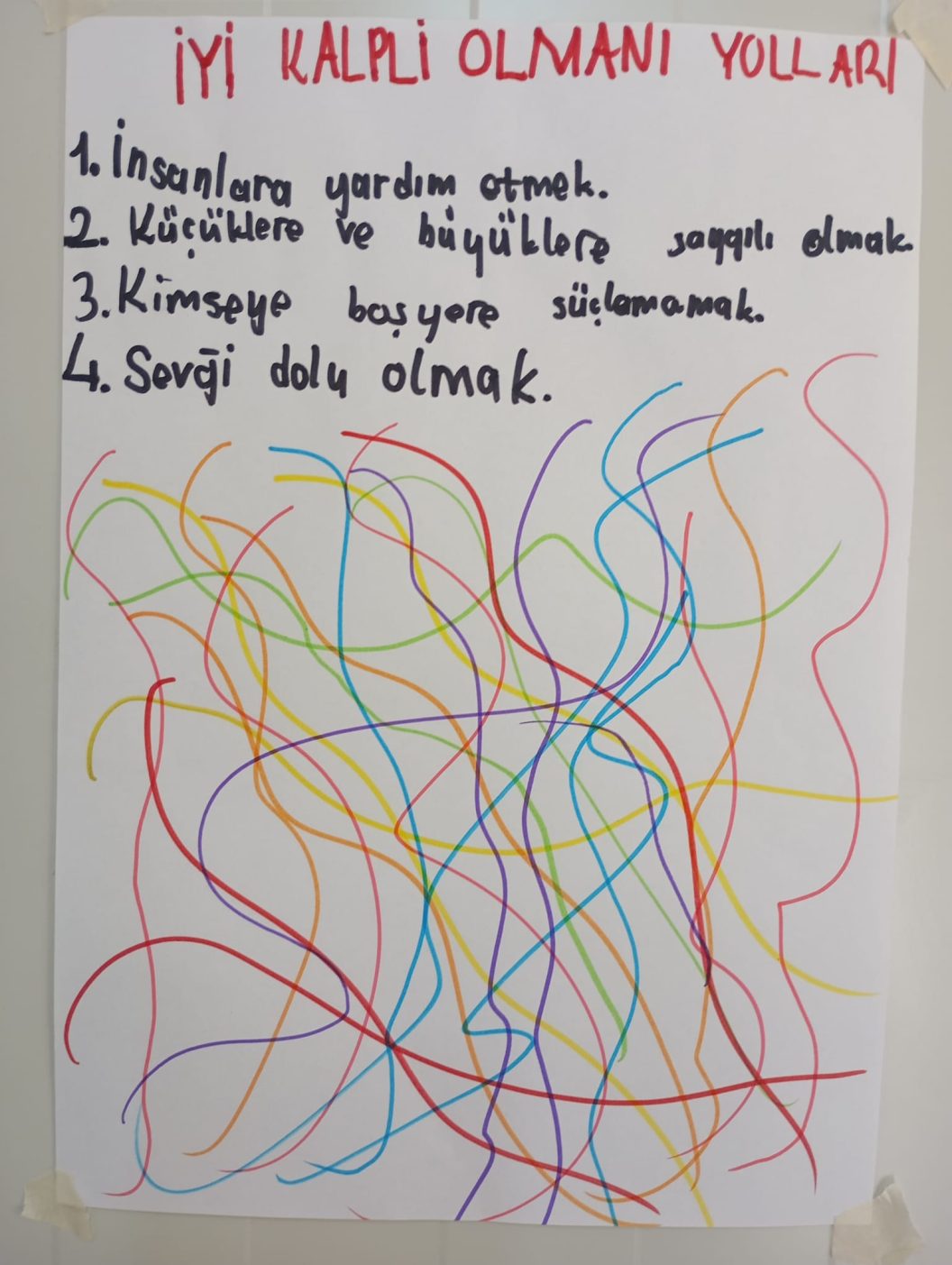
(Scroll down for English AI Translation)
Kapitalizme Karşı Hayat Bilgimiz
Andorra’dan Adıyaman’a Depremi Düşünmek
Max Frisch’in “Andorra” (1) isimli tiyatro oyununu okuduğumda 15 yaşındaydım. Lisede Almanca dersinde, böylesi dersleri belki de kazara vermek durumunda kalan hocamız Johannes Müller bize bu tiyatro oyununun Almancasını tüm yabancılaşmalarımıza rağmen sabırla okutuyordu. Derste anlamadığımız şeylerle çoğu zaman dalga geçme eğilimindeydik. Hocamız ise sabırla bize her defasında “farklı” yazarlardan okumalar verirdi.
Andorra, önyargılarla ve ayrımcılıkla sarmalanan toplumsal davranış kodlarına rağmen, Andi isimli bir gencin hayalî Andorra kentinde verdiği varoluş mücadelesini konu alıyordu. O zamanlardan bugüne dersten bir an aklıma kazınmış durumda… “Andorra”da ayrımcılığın en görünür olduğu bir sahnede yaşanan çatışmaları hocamız “deprem gibi” diyerek yorumlamıştı. Bir deprem anının çok kaotik ve sarsıcı olması gerektiğini düşünmüştüm o sırada. Hocamızın da gülümseyerek metaforun ne demek olduğunu bu sahne ile birlikte anlattığını anımsıyorum: “Oyunda deprem olmuyor zaten. Deprem gerçekte trajik bir felakettir; ancak deprem sonrasındaki ilk dakikalar, herkesin aynı acıyla ve çaresizlikle doğa karşısında eşitlendiği, hatta romantik sayılabilecek bir andır.” gibi bir söz söylemişti. Bunu pek anlayamamıştım: “Deprem nasıl romantik ve eşitleyici bir felaket olabilir?” Oysa sonuçta ortada kurmaca bir anlatı ve depremin kendisi değil, metaforu vardı ve Max Frisch’i anlatan hocamızın derdi depremden çok, toplumun ahlaki ve vicdani çöküşünü anlatabileceği bir metafor kurmaktı.
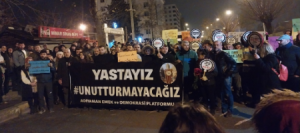
6 Şubat depremlerinden birkaç gün sonra yaşananları takip ederken ve felaketin boyutunu anlamaya çalışırken, bu tiyatro oyunu ve dersteki konuşmalar parça parça aklıma gelmişti. Ama yaşananlar bir kurmaca ya da metafor değildi; gerçeğin en acı taraflarına dair herhangi bir kurmaca düşünmek bile sinir bozucuydu. Yine de oyundaki gibi tüm sınıf ve kimlik çatışmalarının şiddetli bir depremle kısa süreliğine de olsa kaybolduğunu hatırlarken, yaşananların yeni bir yaşamı inşa edebilecek ipuçları barındırabileceğini de düşünmeye çalışıyordum. Bu nedenle deprem sonrasında yaşadıklarımıza dair zihnimde kalanları gördüklerimin, okuduklarımın çağrışımlarıyla, Adıyaman’daki çocukların ve yetişkinlerin çekimlerinden derlenen video pasajlarla ve birlikte çalıştığım arkadaşların düşünce yoldaşlığı ile oluşturmaya çalışacağım.
FİSA Çocuk Hakları Merkezi’nin depremden birkaç ay sonra Adıyaman’da kurduğu birimde çocuklarla medya atölyeleri yapmak için Adıyaman’a gelip gitmeye başladım. En trajik hâliyle yaşanan bir deprem sonrasında herkesin eşit olabildiği bir anı düşünerek çocuklarla bir şeyler yapmayı planlamak, ilk başta zorlayıcı birçok duyguyu beraberinde getiriyor. Yine de başka bir dünyayı hayal edenlerin böylesi yıkım alanında ne yapması gerektiği sorusuna cevaplar aramak gerekiyordu. O zamanlar böyle çok katmanlı bir soruya net bir cevabım yoktu; hâlâ da olduğunu söyleyemem. Ancak en çok deneyimlediğim şey, Adıyaman’a gelmeden önce yapılandırdığım her çalışmanın ve atölyenin, Adıyaman’da çocuklarla ve ekiple yaptığımız görüşmeler sonucunda bambaşka şeylere dönüşmesiydi.
Yapay Zekâ ve Hikâye Anlatıcısının Ölümü
Deprem sonrasında “Andorra” oyununu bir arkadaşıma anlattığımda önce kısa süreli bir sessizlik yaşamıştık. Arkadaşım telefona bir şeyler yazıp beklemeye koyulmuş, bir süre sonra da telefondaki yazıları okuyarak, “Söylediklerin doğruymuş, Max Frisch’in böyle bir tiyatro oyunu varmış.” demişti. “Yapay zekâ ya da Google ile doğrulamak” o dönemlerde birçoğumuzun gündelik iletişim diline yeni girmişti ve benim de “doğru bir bilgi verdiğim” onaylanmıştı. Sonrasında ne konuştuğumuzu pek anımsamıyorum. Ancak bugünün yeni bilgi hiyerarşisinde ve post-gerçekçilik çağında hikâye anlatıcılığının ne anlam ifade etmesi gerektiğine dair sorularım artmıştı. Sonrasında ben de kendimden şüphe ederek, Max Frisch’in Andorra oyunundaki deprem metaforunun ne anlam ifade ettiğini yapay zekâya sormak zorunda hissettim. Aldığım cevap, en azından zihnimde bir hikâye kurmadığımı kendime ispatlamıştı ve nedense rahatlamıştım (2):
“Deprem metaforu, Andorra toplumunun görünürde sağlam olan ahlaki düzeninin aslında önyargılar, yalanlar ve kolektif suç üzerine kurulu olduğunu; bastırılan gerçeklerin ortaya çıkmasıyla bu düzenin kaçınılmaz biçimde çöktüğünü simgeler. Böylece deprem, fiziksel bir yıkımdan çok vicdanın ve toplumsal değerlerin yıkılışını temsil eder.”
Bir yandan da “Başka bir şey anlatmak için böyle bir bilgiyi/hikayeyi uydurmuş olsaydım ne olurdu?” diye kendime sormadan edemedim. Yıllar önce İrfan Aktan’ın Express dergisinde Mehmed Uzun’un bir hikâyesinden alıntılarla yazdığı makalesinde, bir dengbêjin (Ape Qado) bugünün bilgi ve iletişim dünyasında ne anlam ifade ettiğine dair sözleri aklıma gelmişti. Köyden köye gezen Qado, bir hafıza tazeleyici olduğu kadar, anlattığı hikayelerle gerçeklikten öte bir duygunun ve düşüncenin tanıklığını anlatır (3):
“Bana, gözlerime bak dinleyici… Allahın lanetlediği o kırmızı kar zamanında bu gözler gördü. Bu gözler, bu yürek şahit. Bugünden çok daha berbat, insanın nefesinin bile donduğu bir günde, sokakta, bir grup aç insanın gözü bir kediye ilişti. Zaman musibetliydi, zaman musibetlerin olağan hale geldiği bir zamandı, kedinin bile iştah kabarttığı bir zamandı. Açlıktan gözleri dönmüş insanlar kediyi yakalamak için hareketlendi. İnsanlar kedinin peşine düştü, kedi kaçtı. Açlar kediyi kovaladı, kedi gözlerinde müthiş bir korku, kaçtı, son gücüyle karların üzerinden bir dama sıçradı. Açların en genci de, kedi gibi, dama tırmandı. Ah zaman, kötü zaman, çılgın zaman. Artık kaçabileceği bir yeri yoktu. Son bir gayretle, gözlerine ölümün korkusu sinmiş o zavallı küçük mahlûkat, karşı dama ulaşmak umuduyla kendini boşluğa fırlattı. Zaman, kırmızı kar zamanıydı. En olağandışı şeylerin bile olağan hale geldiği zamandı. İnsanın ağzından çıkan nefesin bile çıkar çıkmaz halkalar halinde donduğu bir zamandı. Kedicik de dondu. İki damın arasında, öyle dondu kaldı. Evet, evet, havada, boşlukta, yerden, insanlardan uzak, öyle dondu kaldı. Bu gözler bunu gördü, buna şahit…”
Öykünün bitmesinden sonra sert akraba: ‘Qado, işin gücün bizi elâleme rezil etmek, yapma, yalanın da bir haddi hesabı olmalı. Bu kadar da yalan olmaz, Qado. O kediyi öyle havada, orta yerde bırakma. Onu ya ilk dama geri götür ya da diğer dama ulaştır!’
‘Hayır’ diyor Ape Qado da, gülümseyerek, ‘o kedi öyle havada donmuş kalacak…’”
Walter Benjamin, “Hikâye Anlatıcısı” kitabında (4) modern yaşamla birlikte deneyim aktarma geleneğinin ve ortak yaşam kültürünün kaybolduğundan söz ederken, bilgeliğin yerini bilginin aldığını anlatır. Bu elbette modernitenin kaçınılmaz sonucudur; çünkü kediler havada asılı kalamaz. Bununla birlikte bilgi, mülkiyet ve tüketim nesnesine dönüşür. Topluluklar uluslaşırken sınırlar ortaya çıkar. Sınırlardan geçmek için pasaporta, vize alabilmek için de belirli bir mülkiyete ihtiyaç duyan hikâye anlatıcısı da artık “uydurduğu” hikâyelerle birlikte yok olmaya mahkûmdur. Walter Benjamin ya da Mehmed Uzun hikaye anlatıcılığının bir iletişim aracı olduğu zamanlarda bilgiyi bir veriden öte, bizlerin bu bilgiyi öğrenme sürecinde geçirdiğimiz zamanla daha çok ilgilidir. Dengbej ya da hikaye anlatıcısı, anlattığı öykünün sonucundan çok, eğer mevzu “öğrenmekse”, o sırada geçirdiğimiz zamanın değerini, o anki duygumuzun ve iletişim tarzımızın bilgi ile doğrudan bağlantılı olduğunu ve bilgiyi de dönüştürdüğünü tarif eder.
Peki öyleyse, sınırsız bilgi ve neden-sonuç rasyonelliği telefonlarımızın içine kadar gömülmüş ve hepimizin mülkiyetindeyse, neden depremlerde on binlerce insan ölür? Neden bazı binalara hiçbir şey olmazken bazıları un ufak olur? Doğru hatırladığıma şükrettiğim Andorra oyunu, binaların değil, toplumsal düzen içindeki önyargıların, hiyerarşilerin ve eşitsizliklerin yıkımından söz ediyorsa, biz bu yıkım alanında ne yapmalıyız? İnsanların depremden sonra hayatlarına devam etmeye çalıştıkları konteyner kentlerde atölyeler yaparken havada donmuş bir kedi, bu yıkım alanında zamanı donduruyor mu, yoksa dönüştürüyor mu?
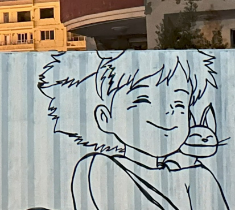
“Biz eskiden kedi ve kuş beslemiştik. Ama karşı komşumuzun kedisi ile iyi geçinemiyordu kedimiz. İki kuşumuz vardı. Onların da yavrulayacağını düşünüyorduk ama depremden sonra babam kuşları saldı.” (5)
Kapitalizme Çizik Atan Dayanışma
Depremden bir yıl sonra yapmaya cesaret edebildiğimiz, yaşananlara dair görsel belgeleme çalışmasında deprem anını yaşayan insanlar depremin hemen ardından kurabildikleri dayanışma ağlarından söz ediyorlardı. Yaptığımız tüm görüşmelerde 6 Şubat ve sonrasına dair her cümle hem iç dökerek, hem de hafızayı zorlayarak ortaya çıkıyor gibiydi. Yaşanmış olan büyük acılarla birlikte, neyi hatırladığımızdan çok, neyi nasıl hatırlamamız gerektiği sorusuna verilen cevaplardan biriydi bu dayanışma ağları:
“…Bir yılın sonunda en azından alışma diyebileceğimiz bir süreçteyiz. Hâlâ bir belirsizlik var; temel ihtiyaçları giderme ve temel yaşam rutinlerini yerine getirme konusunda eksiklikler sürüyor. Bu durum tüm toplum için geçerli. Dolayısıyla burada bu eksikliği dayanışmayla gidermeye çalışıyoruz. Günlük rutin hayatımızı, yaptığımız işleri sürdürmek, mesleğimizi toplumsal olarak yapmak durumundaydık… Sadece kendimizle ilgili rutinleri yaptığımızda yaşam eksik kalıyor. Bu sorunlarla ilgilenmek ve çözüm bulmak gibi bir sorumluluğunuz ortaya çıkıyor.” (6) Aydın Şirin
“…Yaklaşık bir yıl geçti depremin üzerinden. Deprem kelimesinin kendisi olumsuz. Ama bu olumsuzluklara rağmen depremin ve afetin insanlara kattığı artı değerler de var. Bu süreçte toplumlar arasındaki dayanışmanın ne kadar kıymetli olduğunu gördük. Ülkede insanların siyaseten bu kadar kutuplaştığı bir ortamda, afetle birlikte bir araya gelmenin başka bir anlamı var. Depremden sonra telefon rehberimdeki kişi sayısı binin üzerinde artmış. Bu aslında hayata tutunmak için büyük bir neden. Diyorsunuz ki: ‘Bin kişi beni aramış, gelmiş, dayanışmada bulunmuş!’ Bu çok kıymetli…” (7) Zeynel Polat
Adıyamanlı bir arkadaşın şaşkınlıkla ve sinirle söylediği bir söz aklıma geliyor: “Düşünsene, cebinde bir tomar para var ve o an bu para hiçbir işe yaramıyor.” Depremin yaşandığı ilk anlarda bu cümleyi, kapitalizmin çöküşünün belki de en trajik betimlemesi olarak hatırlıyorum. Bir yandan da depremle birlikte başka bir ekonomik sisteme geçilmedi; aksine, mevcut sistemin belki de daha sert ve daha vahşi bir biçimde yeniden inşa edilişine tanıklık ettik. Ancak yine aynı soruyu tekrarlamak gerekiyor: Depremden sonra neyi hatırlayacağız ya da neyi hatırlamamız gerekecek?
Bundan yaklaşık on yıl önce Atina’da, yedi katlı ve mülkiyet sorunları nedeniyle kullanılmayan bir otel, göçmenlerle dayanışma grupları tarafından işgal edilmişti. “City Plaza Oteli” adıyla bilinen bu bina, yaklaşık altı ay boyunca 400 kadar göçmene ev sahipliği yaptı. Paranın değil, ortak emeğin ve dayanışmanın geçerli olduğu altı ayın sonunda bina boşaltılmak zorunda kalındı. Dayanışma ekibinden Olga, er ya da geç bu binayı boşaltmak zorunda kalacaklarını söylüyor, ancak şunu da ekliyordu :
“Burası elbette göçmenlerle dayanışmamızı göstermemiz açısından önemli bir yer. Ama aynı zamanda kapitalizm altında özel mülkiyetin ne anlam ifade edebildiğini de burada tartışabiliyoruz. Böyle durumlarda en azından kapitalizmin temel kanunlarına tırnaklarını geçirebiliyorsun ve ‘Neden?’ diye sorabiliyorsun… City Plaza Oteli bir çözüm değil; sadece nasıl olabileceğine dair bir örnek.”(8)
Deprem sonrası yapabilecekleriniz uzaktan ne kadar sınırsız görünse de birçok lojistik ve bürokratik nedenden dolayı imkanlarınız çokca sınırlı. Zamanın ve mekanın belirsiz olduğu bir sürece doğru yol alırken yapabileceğimiz tek şey her şeye hazırlıklı olabilmek. Yine de sonuçtan çok sürecin kendisinin, Olga yukarıda sorduğu “Neden?” sorusunu sorabilecek bir anlamının ve içeriğinin olması gerekiyordu.
Öğrenme Sürecini Ters-Yüz Etmeye Dair
Bu düşüncelerle Adıyaman’a her gidişimde, aslında mücadele edilmesi gerekenin kapitalizmin kendisi değil, kapitalizmin içine gömülü düşünme ve bilme pratikleri olduğu fikri daha belirginleşiyordu. Bu nedenle çocuklarla ne yapmamız gerektiği sorusu bir yandan somutlaşırken bir yandan da belirsizleşiyordu. Somutlaşan şey elimizdeki medya ekipmanlarıydı; el kameralarımız, fotoğraf makinelerimiz ve ses kayıt cihazlarımız vardı. Belirsizleşen ise mevcut bilginin iktidarını kırabilecek ve başka bir söz söylemeden önce bildiklerimizi nasıl unutarak kendimizi çocukların bildiklerine emanet edebileceğimizdi.
“Unlearning” (9) kavramının ne kadar süredir sosyal bilimlerde bir yöntem olarak kullanıldığını tam olarak bilemiyorum. Bunu yapay zekâya sormak yerine, bu kavramın en azından kendi bildiklerimi ne ölçüde sarsması gerektiğini düşünmek ve “Eğer bildiğim bir şey yoksa çocuklara ne anlatacağım?” sorusuna cevaplar aramak daha önemli geliyor. Öncelikle bildiğim şeyleri azaltmam gerekiyordu:
-
Çocuklarla medya atölyesi yapacağız.
-
Çocukların bu atölyeler süresince medya ürünleri üretmelerinde kolaylaştırıcılık yapacağız.
-
Ortaya çıkan medya ürünlerinin de çocukların onayıyla yaygınlaştırılmasını sağlayacağız.
Neden “unlearning” kavramının bu çalışmalar için önemli olduğu sorusuna Adıyaman’a her gidişimde cevaplar arıyordum. Çünkü bu depremle birlikte enkazın altında eski bildiklerimiz de kalmış gibiydi. Şimdiye dek yaşadıklarımız ve deneyimlerimiz elbette aklımızdaydı. Ama zihnimiz deneyim ve bilgiyle doluysa, bu bilgi yığınının iktidarını çocuklarla yaptığımız atölyelerde sempatik bir dayatmayla mı sunacaktım? “Yeni bir yaşamı, yeni bir iletişim dilini ve yeni bir dünyayı hayal etmek için ben aslında pek de bir şey bilmiyorum; ama sizin bildiklerinizi çok merak ediyorum.” Bu sözü kendime tekrar edip duruyordum. Bu ikilemi FİSA Çocuk Hakları Merkezi ekibinden Ebru Ergin de eğer bir “Tabula Rasa” varsa bu bizim zihnimiz olamaz, ama mekanın ve gündelik yaşamın kendisi olabilir diyerek yanıtlıyordu:
“…(Adıyaman’daki) merkezin açılışını yaparken konteynerler boyanacaktı. Pek çok gönüllü arkadaş gelmişti destek için. Çocuklarla konteynerlarda boyama çalışması yapacaklardı. Ama bir saat sonra çocuklar fırçaları bıraktılar. Elleriyle boyaları konteynerın duvarlarına sürmeye başladılar. Çocukların kendi iradelerini sisteme dahil ettikleri bir andı. Öyle keyif almışlardı ki, o coşku içinde fırçayla yapılacak bir darbe bile yetersizdi çocuklar için. Nasıl boyanacağına dair yönergeler hepsi artık kenardaydı ve tamamen alan çocuklara kalmıştı. İstedikleri gibi, özgürce, bazen temalı bazen temasız ve inanılmaz bir boyama eylemine geçtiler. ‘Bir şey yapmalı mıyız? ‘Yok yapmamalıyız, artık kontrol çocuklarda ve istedikleri gibi boyasınlar.’ Şimdi gidip baksanız o boyaların bazıları silindi ama gerçekten halen rengarenk ve karmaşık bir çalışma görürsünüz.”(10)
Çocuk Hakları Merkezi İnşası // FİSA Çocuk Hakları Merkezi Adıyaman – Temmuz 2023
Benzer bir “Tabula Rasa” hali çocuklarla yapılacak tüm çalışmaların içeriği için de söz konusuydu. Yapılan tüm görüşmelerde çocukları gerçekten dinleyebilmek için her şeyi biliyor ve hiçbir şey bilmiyor olmak gerekiyor. Şaşırmak, merak etmek, heyecanlanmak, kaygılanmak, üzülmek, kahkaha atmak, yorulmak ve sonra her defasında tekrar baştan başlamak; buraya neden geldiğini her zaman aklında tutarak, cevaplardan çok sorularının olması gerektiğini düşünerek birkaç ofis konteynerinden oluşan bu küçük mikrokozmosu varlığımızla değil, çocukların önerileriyle oluşan eylemlerde şekillendirmek ve öğretme-öğrenme hiyerarşisini ters-yüz edebilmek:
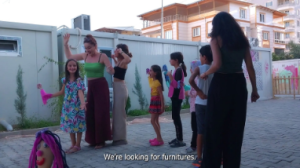
“Çocuklar yeniden mahallesine, okuluna, parkına oyun alanlarına dönerken, yeni arkadaşlar edinirken bu süreci onlarla yaşamaya çalıştık. Baştan sona kurgulanmış bir şey değildi çalışmalarımız bu yüzden. Kendiliğinden gelişen çok şey oldu. Sahneye çıkıp çocuklarla dans etmek, atölyede birlikte yaptığımız takıları yakalarımıza takıp oradan çıkmak, ritim atölyesinde hep beraber alkışlamak, ya da bir filmi hep beraber üzüntüyle ya da coşkuyla izlemek… Elektrikler kesildiğinde hepimiz aynı sorunu orada yaşıyorduk. Bir rapor yayınladığımızda raporun içeriğini yaptığımız panelde anlatırken çocuklar bizi duydu, biz de onları duyduk. Ortak yaşam herhalde bu demekti. Bu, öğrendiğimiz bir süreç oldu. Çocuklar bize yine bunu öğrettiler. Eğer o yaşamın dışında kalırsanız hiçbir şey cevap vermiyor. O hayatın içinde olmanız gerekiyor. Beraber o hayatın içinde olduğumuzda yaşadıklarımız da hepimize iyi gelen bir süreç oluyor.” (11)
Peki biz kimdik? Yönetmen, uzman, danışman, atölye yürütücüsü? Nereye gidiyorduk? Sahaya, alana mı, yoksa Adıyaman’da Aşağı Esentepe Mahallesi’ne mi? Kimlerle görüşecektik? Mağdurlarla mı, çocuklarla mı, yerel halkla mı; yoksa Murat, Ayşe, Özlem, Berat, Ali ve Azad’la mı?
Böylesi atölyelerin yerleşik hiyerarşisinde çoğu zaman bir ya da birkaç eğitmen ve onun peşinden giden çocuklar olur. Bir tür “Beni takip edin” pratiğidir böylesi atölyeler. Bunu nasıl dönüştürebilirdik sorusuna cevap verirken her defasında aklıma Tarkovsky’nin “Stalker / İz Sürücü” (12) filmi geliyordu. Eğer atölyelerde uygulanabilecek teknik bir yöntem biliyorsam, bu yöntemi baştan sona bir kural gibi anlatmak yerine, yönteme dair ipuçları verebilirdim. Çocukların beni takip etmesini istemek yerine onların bu ipuçlarını kendi tarzlarına ve düşünce akışlarına göre nasıl anlayıp yorumladıklarını takip ederek onları anlamaya çalışarak peşlerinden gitmek bu eğitmen hiyerarşisini bozabileceğimiz yöntemlerden biri olabilirdi.
Bilgi vermek yerine masallar ve öyküler anlatmak mı gerekiyordu? Bu tür düşünceler fazla idealist ya da ütopik miydi? Bilenlerin ve başka uzmanların karşısında karikatüre dönüşür müydük? Kapitalizmin sahasının dışına çıkan her top, bilinmeyen oyunlara alan açıyor ve yeni kurallara ihtiyaç duyuyordu. “Aslında çok şey biliyorum (Andorra oyunu gibi), ama çocuklarla yapacağımız sınırlı süreli atölyelerde bilginin ve doğru olmanın iktidar alanının dışına çıkabilir miyiz?” sorusunu yalnızca kendime değil, birlikte çalıştığım arkadaşlarıma yöneltiyordum; onların da güvenini kazanmam gerekiyordu.
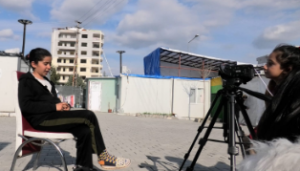
Seçtiğimiz ekipmanlar bu nedenle bize çok yardımcı olmuştu. Çocuklara kameraların ve diğer ekipmanların nasıl kullanılacağını anlatmak bir dakikadan kısa sürüyordu. Üstelik her çocuğun özellikle cep telefonları sayesinde kamera kullanımına dair bilginin de ötesinde kendilerine özgü tercihleri ve görme biçimleri vardı. Peki neyi kaydedecektik? Neyi filme alacaktık? Ya da gerçekten film yapmamız mı gerekiyordu?
“… Diyelim ki ‘yoksulluk’ üzerine bir araştırmada bir kamera, yoksulluğun ‘imajlarını’ tespit ederek kurgulayabilir ve bunu ‘çevreyi’, ‘mekânı’ ve ‘zamanı’ görüntü hâline getirerek yapar. Bu imajların tasnifine, yani ‘düşünülmesine’, sinemanın daha çok erken dönemlerden beri taktığı bir ad vardır: montaj. Oysa sinema, kendi özü olan montajı, başka bir deyişle modern dünyayı kavrayabilme konusundaki biricik ve temel şansını televizyon yararına çoktan terk etmiştir.” (13)
Ulus Baker, “Duygular Sosyolojisi” metninde sosyolojinin ölü bir bilim dalına dönüştüğünü ve tüketici analizlerini bilmek isteyen şirketlere, dolayısıyla kapitalist sisteme teslim olduğunu söyler. Ona göre sosyolojiyi yeniden diriltebilecek olan şey, duyguların toplumsal karşılıkları üzerine düşüneceğimiz yaklaşımdır ve bu yaklaşımın en etkili araçlarından biri video kameradır. Kamera bir gösterme değil, görme aracıdır; görmek de bu nedenle düşünmenin öncülüne dönüşür. Aynı şekilde ses kayıt cihazlarını da dinletme değil, duyma araçları olarak düşünebiliriz.
Bu nedenle, eğer kurgu ya da montaj gösteriye dönüşen bir anlatıyı ya da kanaati barındırıyorsa, Ulus Baker’in “Duygular Sosyolojisi” anlatımında “kurguda düşünme” önerisiyle de vedalaşarak, bildiklerimizi de unutarak, kurguya girmeden, yalnızca kaydederek görme üzerine tekrar tekrar düşünmenin; görüntüyü filme dönüştürüp onu bir sosyal medya ya da festival metasına çevirmeden anlamanın yöntemlerini kurcalamak gerekiyordu.
Başka Bir Kadraj Mümkün ve “Merhaba Arkadaşlar!”
2023 Haziran ayından itibaren, 8-13 yaş aralığında yaklaşık 30 çocukla medya atölyelerine FİSA Çocuk Hakları Merkezi’nden arkadaşlarla birlikte başladığımızda, çocuklara kameraya ilişkin teknik bilgileri nasıl anlatmamız gerektiği sorusu bir yöntem arayışına dönüşmüştü. Doğru bilinen her şeyin aslında hareketli imaj dünyasında bir antitezinin olduğu ya da olabileceği öngörüsüyle ve çocukların zaten kendilerine özgü tarzları olduğunu da gözlemleyerek “hatalar” yapmaya başladık.
Ters ışıkta kendimi kaydettiğimde, çocuklara neden hata yaptığımı bulamadığımı söylerken, 1980’lerdeki TRT spotu “Bay Yanlış ile Doğru Ahmet”in yeni versiyonlarını çekiyormuşuz gibi hissediyordum. Her defasında çocuklar ya ışığın ya da kadraja aldığım nesnenin yanlış olduğunu eğlenerek anlatıyorlardı. Ben de onlarda her defasında daha yaratıcı teknikler görüyordum. Ancak yine de kendi kötü kadrajlarımı hemen terk etmek istemiyordum. “Kaydederken size göre bir kez hata yaparsam bu hata olur. Ama bu hatayı tekrarlarsam bu bir tarza dönüşür. Demek ki ters ışıkta bir şeyler çekmeyi seviyormuşum.” Dolayısıyla doğru diye tek bir şey yoktu. Çünkü herkesin kendi tarzına göre bir doğrusu vardı. Birbirimize benzesek de hepimiz az çok farklıydık. Bu da hata değil, belki de zenginlik demekti. Bu zenginlik içerisinde mesela “Video kamera ile röportaj nasıl yapılır?” sorusuna “Kamerayı kullanan kişi kayıt esnasında sessiz olur ya da kameranın önündekine soru sorar, kendisi konuşmaz” gibi kesin cevaplar vermiş olsaydık, 9 yaşındaki Hüseyin’in bu bilgiyi tersyüz eden yaratıcı “hatasına” tanık olmayacaktık.
Adıyaman 1. BirArada Çocuk Şenliği – Adıyaman 2024
Asıl zenginlikse bu yıkıntılar içerisinde kadraj ararken ortaya çıkıyordu. Yukarıda alıntıladığım Atina’daki işgal evi örneğinde olduğu gibi, “Biz bu kapitalist düzeni değiştiremeyiz, ama ona güzel çizikler atabiliriz.” düşüncesinden de ilhamla, gözlerimizin gördüğü ile kameranın gördüğü arasındaki ayrımı bir güçlendirme aracına dönüştürmemiz gerekiyordu: “Şu anda çevremizde gördüklerimiz çok üzücü ve sevimsiz görüntüler olabilir. Her yerde yıkıntılar var ve bu yıkıntıları kaldıracak, kenti yeniden inşa edecek güçte değiliz. Çevremizdeki kötü görüntüleri değiştiremesek de, bu kenti yönetemesek de kameranın kadrajını yönetebiliriz. Çünkü kameranın kadrajını tüm bu yıkıntılar içerisinde bahçede yeni açmış çiçeklere, gün doğumuna, her gün farklı şekillerde ilerleyen bulutlara, arkadaşımızın bize hediye ettiği bilekliğe çevirebiliriz. Kendi dünyamızı da tüm bu yıkıntılar içerisinde güzel görüntüler inşa ederek, ışığı bazen önümüze bazen arkamıza alarak kurabiliriz belki…”
Bu yöntem işe yaradı mı, bilmiyorum. Bunu tam anlamıyla bilmek mümkün değil. Yine de atölye katılımcılarından 10 yaşındaki Damla’nın konteyner kentteki bir karahindiba çiçeğini kadrajına alırken tohumlarını üflemesi ve kendisinin de bu karahindiba gibi her koşulda hayatına devam eden biri olmak istediğini söylemesi, bu üç yıl boyunca öğrendiğim en değerli hayat bilgilerden biri olmuştu.
Karahindiba Çiçeğine Dair // Video: Damla Göksu, 2024 – Adıyaman K11 Konteyner Kent
Atölye boyunca çocukların kamera kullanımında kendilerince benimsedikleri tarzı anlamaya çalışmak bildik film yapma ezberlerini bozmak adına çok değerliydi. Kamerayı alıp kendi başlarına konteyner kentte yaptıkları çekimlerin neredeyse hepsi “Merhaba Arkadaşlar!” cümlesi ile başlıyordu. Her çocuğun takip ettiği bir Youtube yayıncısı vardı ve Vlog yapma konusunda hepimizden daha çok deneyim ve fikir sahibiydiler. Ancak burada ufak bir mesafenin tüm bu süreci nasıl dönüştürdüğüne de tanık olmuştuk. Çocuklarla kamera çekimlerini birlikte yaptığımızda, çoğu zaman kamerayı nasıl kullandıklarını yetişkinlere ve diğer arkadaşlarına göstermek amacıyla çekim boyunca sessiz ve hata yapmama çabasıyla ekipmanları çekingen kullanıyorlardı.
K11 Konteyner Kenti Tanıyalım // Video: Amine Asmin Berk, 2024 – Adıyaman K11 Konteyner Kent
Zaman içerisinde, belki de “Stalker / İz Sürücü” filminden ilhamla, kamerayı çocuklara verdikten sonra geri çekilip biraz uzaktan onların kamerayı ve kadrajı kendi başlarına keşfetmelerine alan açtığımızda çekimlerin tarzının dönüştüğünü farketmiştik. Öncelikle neredeyse her biri bir Youtube yayıncısına dönüşüyor ve sürekli kaydettiklerine ya da o gün gördüklerine dair bir şeyler anlatmaya başlıyorlardı. Atölyelerin çıktıları, yetişkinlerle kimi zaman yüz yüze paylaşmaya çekindikleri bir çok duygu ve düşünceyi kendi başlarına kameraya anlattıkları kayıtlara dönüşmüştü. Bu nedenle her atölye sonrası çocukların çektiklerini izlemek kadar, kameraya anlattıklarını dinlemek de bizler için başka bir bilgiye, bir anlamda Ulus Baker’in “Duygular Sosyolojisi”nde bahsettiği video-imajın tek başına özgürlükçü anlatımının aracı olabildiği varsayımına denk düşüyordu. 9 yaşındaki Muhammed’in kendi başına yaptığı kamera çekiminde aniden Narin Güran’ın o gün bulunduğunu televizyonda gördüğünü anlatması ve bunun kendisini ve arkadaşlarını çok üzdüğünden bahsetmesi, “kameraya iç dökme” pratiğinin belki de en sarsıcı örneği olarak aklımızdan çıkmayacak. Kameraya konuşmak, kişinin aynı anda kendi başına ve kamuyla konuşması anlamına geliyorsa, bir kayıt cihazı olarak kameranın yönetmenin belirlediği kadrajlarla birlikte duygu ve düşüncesinin akışının aracı olduğunu ortaya çıkarıyordu.
Bir Dergi Yapma Deneyimi Olarak “Hayat Bilgimiz”
Medya atölyelerinde çocukların kamera ve ses kayıt cihazlarıyla ürettikleri çok sayıdaki kayda bakarken, bunları nasıl bütünlüklü ve hiyerarşisi olmayan bir yapıda sunabileceğimiz sorusuna cevaplar aramak durumundaydık. Çocukların bu deneyimlerine tanıklık etmek kuşkusuz her şeyden önce bizim için çok değerliydi. Bu ürünleri çocuklara nasıl geri döndüreceğiz sorusuna verilecek ilk cevap, film ya da filmler yapmaktı. Bunun için çocuklarla birlikte kurgu masasına oturup birlikte kurgu yapmak gerekiyordu ve böylesi kalabalık bir kurgu ekibiyle çalışmanın pratik zorlukları vardı.
Bir başka zorluk, hatta tuzak ise tüm bu çalışmaların sosyal medya görünürlüğüydü. Bu çalışmaların sosyal medyada yer alması, görme pratiklerinin bir gösteriye ve “like/dislike” dünyasına girmesi anlamına geliyordu. Çocukların çalışmaları kadar bizi de, belki de onlardan daha fazla, “güzel” gösterecek durumlarla karşı karşıya kalacaktık. Sosyal medyada görünürlüğün faydasının kime hangi koşullarda olacağını öngörmeden böylesi paylaşımları yapmamak belki de daha iyiydi. Yapılan bu filmlerin ya da görsel anlatımların bir filme dönüşmesi, ardından sunulması, paylaşılması ve bu paylaşımların takip edilmesi gerekiyorsa her bir adımı planlayarak atmak gerekiyordu.
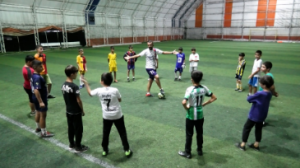
Bunun bir örneğini Adıyaman’da, oğlan çocuklarının futbol maçlarını kameraya almalarının ardından bu kayıtları kurgulayıp çocuklara ulaştırdığımızda gözlemlemiştik. Düzenli futbol maçları yapmak oğlan çocuklarının fikriydi. Biz de konteyner kentlere yakın bir halı sahada spor eğitmenlerinin desteği ile yaklaşık 3 ay boyunca düzenli olarak futbol maçları organize etmeye başlamıştık. Çocukların spor yapabilecekleri alanı ve zamanı onların istekleri doğrultusunda ortaklaşa yaratabilmek hepimize iyi gelmişti. Her futbol maçının ardından hazırladığımız bir video ile maç günü yaşananları çocuklarla paylaşıyorduk. Ancak futbol maçlarının klipleri kısa sürede eril futbol dilinin bir aracına dönüşebiliyordu ve “Birlikte spor yapmak bir tür kardeşliktir” gibi kutuplaşan dünyada görece naif söylemlerin sosyal medya dilinde hızla kaybolabildiğine de tanık olmuştuk. Öyleyse baştan başlamak gerekiyordu. Medya araçlarının en başından başlayacaksak, neresinden başlayacaktık? Mesela bir dergiyle…
Bu fikir aslında çocuklarla yaptığımız ilk atölyelerde somutlaşmıştı. Çünkü Adıyaman’da deprem sonrasında yeni bir bilgiyle karşı karşıyaydık. Öyleyse bu dergi de yeni bilginin çocuklar tarafından derlendiği ve yeni biçimlere dönüştüğü bir alan olmalıydı. Böylece “Hayat Bilgimiz” dergisi, atölyelere katılan tüm çocukların ortak katılımıyla ortaya çıkmış oldu:
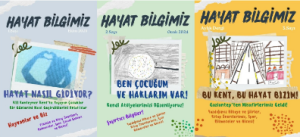
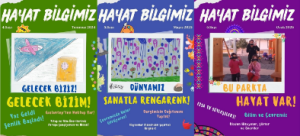
“Bizler Adıyaman K11 Konteyner Kent’te yaşayan çocuklarız. Burada yaşamaya başladığımız günlerden beri birlikte oyunlar oynamayı, kitap okumayı, hayaller kurmayı, sevindiğimiz ve üzüldüğümüz şeyleri birbirimize anlatmayı ve hep beraber bir şeyler yapmayı seviyoruz. Ne olursa olsun çocuk olmak çok eğlenceli bir şey ve biz de yetişkinler gibi her gün yaşadıklarımızdan, okuduklarımızdan ve izlediklerimizden bir şeyler öğreniyoruz. Bir gün etkinlik yaptığımız yetişkinlerle konuşurken, gün boyu yaşadıklarımızdan edindiğimiz bilgilerden oluşan bir dergi çıkarıp bu bilgileri sizlerle paylaşmaya karar verdik. Etkinlikler boyunca resimler çizdik, kamerayla çekimler yaptık, oyunlar oynadık ve her gün yeni şeyler öğrendik. Bu öğrendiklerimiz de sizlerle paylaşmak istediğimiz hayat bilgimize dönüştü. Umarız dergimizi seversiniz.”(14)
Bu dergi bir anlamda “ne kadar eski kafalı olduğumuzu” gösteriyordu. Belki de alt metninde yok olan hikâye anlatıcılarını, doğru bilgi yerine bize iyi gelecek bilgiyi, masalı yeniden çağırıyorduk. Ya da bugünün dünyasını Ray Bradbury’nin “Fahrenheit 451” romanındaki gibi distopik betimlerken, televizüel imajların hegamonik etki alanından çıkıp okuyarak ve yazarak, sosyal medyadaki ya da ekran karşısındaki potansiyel izleyicilerin beğenme / takip etme iktidarından uzaklaşarak çocukların dünyasına ait bir mikrokozmos oluşturma niyetiydi (15). Herkese ve her şeye yer vardı bu dergide. Yazılacakların ve hayal edilen şeylerin bir sonu ya da sınırı yoktu; yalnızca bir sonraki sayısı vardı. Yaklaşık iki buçuk yıl içerisinde Hayat Bilgimiz dergisinin altı sayısı çocukların hazırladığı içeriklerle yayımlandı :
“Hayat Bilgimiz” dergisinin yapım süreci aramızda çok tartıştığımız bir konuydu. Dergi yapmak özgün bir fikir değildi ve çocuklar açısından da işlevsel olacağından emin olamamıştık. Ancak bizim tartışmamızın ötesinde, dergi yapmanın çocuklar için bambaşka bir anlamı vardı. İlk etapta çocuklar için en anlamlı şeylerden biri, kendi sözlerinin altında isimlerinin yazıyor olmasıydı. Burada çocuklar, yaptıkları her şeyin, bıraktıkları her izin görünür olmasını istiyorlardı. Çünkü görünür olan ya da burada ayakta duran neredeyse hiçbir şey yoktu. Dergi çalışması, medya atölyesindeki video çalışmalarından önce bir giriş gibi olmuştu. Beraber üretmek, beraber dil geliştirmek ne demek? Dergi, bu sorulara verilecek cevabın bir temrini gibiydi. Bu çocukların hepsi telefona ulaşabilen, çekim yapan; yani teknolojinin farkında olan çocuklar. Ama dergi atölyeleri doğrudan teknolojik bilgi gerektiren atölyeler değildi. Bir aletten söz etmiyorduk. Herkese eşit uzaklıkta duran bir atölyeydi. Sen üretirsen oradaydı.”(16)
Yapılan her medya ve sanat atölyesinde final ürünlerindeki sanatsal değeri hedeflemektense zamanın kendisi ilmek ilmek işlenecek / inşa edilecek rengarenk bir dokumaya dönüşüyordu. Dergi yapımında da bu nedenle fikrin ortaya atılmasından dergilerin basılı halini çocukların dağıtmasına kadar her aşamanın dergilerin içeriğinden çok daha fazla bir değeri vardı.
“Hayat Bilgimiz” Dergisine Dair // 2023-25 / Adıyaman K11 Konteyner Kent
Devrimci Unutuş mu, “İsias Ortak Davamız”mı?
Yitirdiklerimizi anımsadığımız ve andığımız her anda zaman duruyor. Bunun belki de en keskin örneğini Deprem’in 1. Yıldönümü Anması’nda yaşamıştık. Saat 4.17 ile somutlaşan o durmuş zamanın, yas sürecinin içinden geçmeyi denedik. Denedik diyebilirim, bunun en ağır duygusunu sevdiklerini yitirenler yaşıyordu, biz sadece yanlarında olabildik. Bir yandan da zaman durmuyordu ve böylesine durağan kalmaya meyilli bir zamanda hareket edemezsek düşünsel bir entropiye yenik düşecek olmanın kaygısını taşıyorduk. Duyguları ve düşünceleri medya ve sanat atölyeleri aracılığı ile yeniden inşa edebilmenin ve bunun somut karşılıklarını görmenin, her şeyi bir atölye saati sınırları içinde kurgulamanın ötesinde tüm zamanı birlikte yaşayabilmenin ve üretmenin kendisinin bir sanatsal ve eylem değeri vardı. Bu nedenle “devrimci unutuş” tüm bu atölyelerde zihnimizde döndürdüğümüz bir kavram olmuştu.
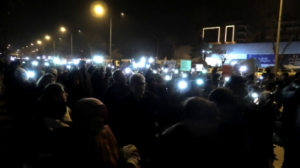
“…A. Mahir’in ‘Bunca acının ve yitirdiğimiz onca yoldaşımızın yarattığı ağırlığı nasıl taşıdığımızı ben de bilmiyorum. Şimdi fark ediyorum ki yaşaman gerekiyor, ayakta kalman gerekiyor. Hafızanın yükünü hafifleten bizzat mücadeledir. Hafızanın yarattığı yükü bütün ağırlığıyla yaşamıyoruz. Sadece içinden geçiyoruz çoğu zaman. Çünkü o ağırlığı hissettiğin an yaşam durur’ derken tam da kastettiği bu devrimci unutuştur.”(17)
“Devrimci Unutuş”, yapılan atölyelerde ezber bozabilecek bir düşünce pratiği sunuyor olsa da “Andorra” oyunundaki gibi yıkımın aslında fiziksel bir yıkım olmadığını ve depremin “kaçınılmaz bir felaket” olmadığını bilerek hak mücadelesinin sürdürebilmek Adıyaman’da bir başka eylemliliği de beraberinde getiriyor / getirmesi gerekiyor. “Andorra”daki deprem metaforunun şifresini çözerken Adıyaman’da Grand İsias Otel’in depremle birlikte yıkılmasını ve 26’sı çocuk 72 kişinin ölümündeki sorumluları “kaçınılmaz felaket”in ötesinde düşünmek gerekiyor. Oyundaki “kaçınılmaz felaketin” ne anlam ifade ettiğini yeniden yapay zekaya sordum. Bana yine deprem metaforu üzerinden cevap verdi. Siz bunu sadece Grand İsias Oteli özelinde değil, hayatını kaybeden on binlerce kişi için düşünebilirsiniz:
“Deprem nasıl yerin altındaki fay hatlarının kırılmasıyla oluşuyorsa, oyunda da yıllardır gizlenen yalanlar ve önyargılar sonunda ortaya çıkar. Kriz anında bu “sağlam” görünen düzen çöker. Deprem çoğu zaman önceden engellenemeyen bir felaket gibi algılanır. Oyunda felaket aslında kaçınılmaz değildir; karakterlerin sessizlikleri onu adım adım hazırlar. Bu nedenle deprem metaforu, “doğal” görünen bir yıkımın aslında insanların eylemlerinin sonucu olduğunu düşündürür.” (18)
6 Şubat 2023 depremleri cezasızlık tartışmalarının da sıkça yaşandığı uzun dava süreçlerine neden oldu. FİSA Çocuk Hakları Merkezi ve 2016 yılında KHK ile kapatılmış olan Gündem Çocuk Derneği, yaklaşık 20 yıldır “Çocuklar İçin Adalet” başlığı ile çocuk haklarını konu alan birçok davanın takipçisi ve kimi zaman da çocuklar ya da aileler adına müdahil oldu. Dernek, Grand İsias Otel Davası’na da “tüm çocukların yaşam hakkı için” hukuki müdahil olmak istedi, ancak mahkeme heyeti tarafından bu talep reddedildi. Yine de tüm süreç ailelerle, depremden etkilenenlerle, Adıyaman Ağır Ceza Mahkemesi’nde takip edilerek her duruşma öncesi çağrı videoları yayınlandı ve her duruşma sonrası bilgi notları hazırlandı. Belki de bu nedenle Deprem’in 1. Yıldönümü Anması’nda, zamanın durduğu o anda Grand İsias Oteli yıkıntılarının önüne gidip yitirdiğimiz tüm çocukları anmak, oradaki varlığımıza bir başka eylem nedeni oluşturuyordu.
İsias Ortak Davamız // FİSA Çocuk Hakları Merkezi 2023-25 / Adıyaman
FİSA Çocuk Hakları Merkezi, yaklaşık 2 yıl süren ve otel sahiplerinin ve kamu görevlilerinin ayrı ayrı yargılandığı Grand İsias Oteli davalarının sürecini takip ederken tüm bu süreçleri kalıcı ve görünür kılmayı ve adalet savunucuları için rapor oluştururken bir kaynak oluşturmayı amaçladı. Bu nedenle unutma ve hatırlama tüm bu süreç içerisinde yan yana ilerledi:
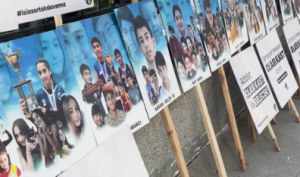
“Devletin çocuk koruma mekanizması zaten iyi işlemeyen bir mekanizmaydı ve depremden sonra o mekanizma da yok olmuştu. Her şeyi yapmamız gerekiyor gibi bir duyguya yöneltiyor raporlama ve izleme yapmak. Bu krizin ve ihlallerin derinleştiği ve görünmez olduğu bir zamandayız. Burada aslında yükümlülük sahibi devlet, ama depremden sonra ortada bir mekanizma yoktu. İyileşme süreci sağlıklı ilerlemiyor zaten. Grand İsias Oteli davaları sırasında unutamadığım görüntülerden biri, karar duruşmasından çıktığımız bir andı. Orada bir ağaç vardı. Ailelerin tuttuğu ve çocuklarının fotoğraflarının olduğu pankartlar arka arkaya bir ağacın etrafında dizilmişlerdi. Fotoğrafını çekmiştim, unutmak istemedim o görüntüyü. Böyle bakıp ne hissetmem gerektiğini bilmediğim bir andı. (19)”
Yeni Mekanlarda Hafızayı Yenilemek
Yaklaşık 3 yıl boyunca Adıyaman’da K11 Konteyner Kent’te ya da FİSA Çocuk Hakları Merkezi’nde yaptığımız atölyeler çoğunlukla ofis konteyneri olarak adlandırılan, 10 – 15 metrekarelik kapalı alanlarda gerçekleşiyordu. Daha geniş ve rahat mekanlarda atölyeler yapmak hepimizin isteğiydi. Bir yandan da her şeyden önce mekanın güvenliği ön plandaydı. Yapılacak atölyelerden önce yıkıntılarla ve tozla bezenmiş kentte bir mikrokozmos gibi konteynerlerin elektrik tesisatından zeminine dek her şeyini güvende tutmamız gerekiyordu. Bu küçük alanların kış günleri görece zayıf aydınlatmaları atölyelerdeki en büyük dezavantajımızdı. Medya atölyelerinde kamera ile yapabileceğimiz şeyler sınırlı hale gelmişti. Dışarıda çekim yapamazdık, soğuktu ve hava erken kararıyordu.
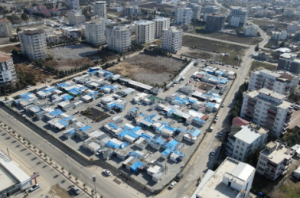
Ancak zamanla imkanların kısıtlılığı yaratıcılığa alan açmaya başlamıştı. Çocuklar için video kameraların en eğlenceli özelliği kameraların zoom yapabilmesiydi. Bu özellik kamerayı aniden şahane bir oyuncağa dönüştürmüştü. “Görme algısının üstüne çıkabilmek, göremediğimizi görebilmek” bu zoom özelliğini teoride anlamlandırmak için düşündüğümüz sözcükler olmuştu. Böylece atölye alanlarında “ayrıntı bulmaca” oyunu ortaya çıkmıştı. Duvarlardaki bir desende, yerde ilginç biçimli bir taşta onlarca ayrıntı saklıydı ve bu ayrıntılar “Andorra”daki deprem metaforu gibi olmasa da hayatın ilginç anlarına dair hatıralar ya da metaforlar barındırıyordu. Lambanın camındaki çizgiler bir arkadaşımızın tokasına, ağaçların bazı yaprakları lezzetli bir meyveye, yerdeki taşlar ise dinozorların fosillerine benziyordu. Betonların arasındaki yarıklar da meğer karıncaların yuvasıydı. Düşündükçe her ayrıntının bir hikayesini ve bize özgü metaforlarını keşfediyorduk. Hepsinden önemlisi artık o ofis konteyneri, demir plakalarla kaplı bir kutu olmanın ötesinde bir yerdi. Sonra bu oyunları her atölye alanında çeşitlendirdik. Hayat Park’ta bu ayrıntı bulma atölyeleri artık bize yeni hatıralar ve yeni mikrokozmoslar sunuyordu.
Hayatın İlginç Ayrıntıları – Hayat Parkı Video Atölyesi Kasım 2025 – Adıyaman
Tüm bu süreç boyunca atölyeye katılan çocukların bu konteyner kentlerin dışında başka bir kenti nasıl hayal ettikleri her zaman aklımızdaki sorulardan biriydi. Bizim de başka bir kent hayalimiz vardı, ama bu kentteki yeni mekanlar yeni bir hafızaya alan açacaksa, çocuklar gelecekte hangi mekanların hafızasını oluşturmalıydılar? Böylece “Hayat Parkı”, yeni bir kolektif mekan hayali ile somutlaşmaya başladı.
“Orası onların kenti, mahallesi, sokağıydı, oyun alanıydı, dedesinin evinin bahçesiydi, babasının dükkanıydı. O yüzden de tekrar ortak bir hafıza için, ortak geçmişi yansıtabilecek ya da onunla bağlantı kurulabilecekleri alanlara, iyi vakit geçirebilecekleri mekanlara ihtiyaçları vardı. Çocukların gelip biraz vakit geçirdiği, kendilerini iyi hissettiği, bulunduğu konteyner alanlarından çıkıp şartların uygun verdiği kadarıyla vakit geçirip akranlarıyla bir araya geldiği, oyunlar kurduğu, küçük yaş grubu için kaydıraktan kayıp bütün gelişimsel özelliklerini destekleyecek bir alan olabilir mi? sorusuna imkanlarımız doğrultusunda, çocuklarla ve Şehir Dedektifi ekibiyle birlikte tasarımını oluşturduğumuz, Adıyaman Belediyesi’nin desteği ile bir park inşasıyla cevap vermiş olduk. İsminden, içindeki oyun araçlarından, oturacak yerlere dek onlara sorarak bu parkın inşasını gerçekleştirmeye çalıştık. Gözlemlediğimiz, çocukların neyi kaybettiklerinin çok farkında olmasıydı. Bizim için de ‘yeniden hayat kurmak, yeniden inşa etmek’ meselesine çok denk düştü. Onlarla birlikte bir inşa sürecini yaşamamıza izin verdiler, çok sağ olsunlar. Tüm bu çabanın ve gözlemlerin sonucunda ortak emekle bir park inşa edildi ama süreç hala kendi kendine, yeni deneyimlere açık bir şekilde devam ediyor Hayat Parkı’nda.” (20)
Hayat Park // 2023-25 / Adıyaman FİSA Çocuk Hakları Merkezi
“Tek Kesin Tedavi Dünyayı Değiştirmek”
Tüm bu deneyimler silsilesinin ardından, her defasında yaşadığımız şehirlere daha fazla ve daha az şey bilerek dönmek, en azından benim için sarsıcıydı. Atölyelerin ilk günlerinde çocuklar yaşadıkları gündelik sorunları bizimle paylaşırken, atölyenin son günlerinde biz de kendi gündelik sorunlarımızı çocuklarla paylaşır hâle gelmiştik. Koşullarımız aynı olduğu için gün içinde kesilen suyun ve elektriğin hepimiz için ortak sorun olmasının ötesinde, “eğitmen” ya da “profesyonel” gibi hiyerarşik tanımlamalara da bir çizik atabilme şansımız oluyordu.
Yukarıdaki başlığı, II. Dünya Savaşı sırasında Katalonya’daki bir psikiyatri kliniğinden ilhamla yaşadığı “tedavi” deneyimlerini anlatan sanatçı Cynthia Cruz’un makalesinden aldım. Savaş süresince travma yaşayan bireyleri tedavi etmek amacıyla kurulan bu psikiyatri merkezi, bir süre sonra kimin “hasta“, kimin “doktor” ya da “yemekhane görevlisi” olduğunun belli olmadığı; mevcut tedavi süreçlerindeki hiyerarşik bilgiyi ve bu bilginin iktidarını bozarak ortak bir iyileşme için, önce “hastalık” olarak adlandırılan şeyleri yeniden tanımlamayı amaçlayan bir yapıya dönüşüyor:
“Hastayı değil kurumu tedavi etmeyi amaçlayan Tosquelles ve Kurumsal Psikoterapi, devrimci çalışmalar yaparak kurumların, kültürün ve toplumun genelinin mikrokozmosları olduğu yönündeki anlayışlarını hayata geçirdiler; dolayısıyla bir kültürün mikrokozmosunu iyileştirmek, bütün bir kültürü ‘işgalden kurtarma’ çalışmasını başlatmak, onu kapitalizmin ve iktidarın etkisiyle girdiği yollardan çıkararak iyileştirmek demekti.(21)”
“Saha“ya giden profesyonellerin, tüm bu afet bölgelerindeki iyi niyetlerine rağmen sürdürdükleri hiyerarşik iletişim yöntemleri, aynı zamanda başka bir yabancılaşmayı da beraberinde getiriyor. Proje ömrü kadar hayatlarımız varmışçasına yürütülen tüm çalışmalar, bu alandaki herkesi başka bir yapay zekâ diline ve bilgi üstünlüğüne sürüklüyor. Bununla birlikte böylesi yöntemlerle mevcut sisteme karşı bazı pratikleri uygulamaya çalışmak da Tosquelles’in Kurumsal Psikoterapi çalışması ya da “City Plaza Oteli” deneyiminde olduğu gibi, tekrarlanabilecek deneyimler olmuyor; yalnızca mevcut düşünme biçimlerini tartışmayı çalışıyor. Ancak bu deneyimler başka özgün deneyimlere çağrışımlar içeriyor, ilmek atıyor ve mevcut anlayışlara farklı renklerde “Neden?” sorusunu sorarken kendisine özgü kozmosundan cevaplar barındırıyor (22). Böylesi deneyime ve yeni bilgiye açık olma isteği, sanatın ve medya ürünlerinin bildik kalıplarını da sarsabiliyor. Üretim aşamasının değerini ortaya çıkartan, hiyerarşiden uzak ortaklaşa zaman geçirme pratiklerinin her biri öncelikle kendi düşünce ve uygulama kalıplarımıza çizik atıyor. Bu nedenle Adıyaman’da yaşadıklarımızı da tekrar edemeyeceğiz, ancak başka zamanlarda başka koşullarda yapacaklarımıza dair ipuçları barındıracak.
Adıyaman 2. BirArada Çocuk Şenliği // Adıyaman – 2025
Asıl zorlayıcı olan, bu tür yöntemlerin, kapitalist düşünceyi eleştirsin ya da savunsun, mevcut bilginin iktidarına karşı söylemler de önerdiği için kolayca küçümsenebilmesi; “saha“da ise bu hiyerarşinin sağladığı konfor alanlarından vazgeçmenin zor olduğu bir düzende önyargı duvarına çarpmak oluyor. Bu nedenle bir afet bölgesinde kolektif ve güvenli bir alan inşa etmek, inşa edilen bu alanı tüm canlıları ile birlikte paylaştığımızı bilmek, gündelik yaşamlarımızı birlikte bir hayat kurguladığımız çocuklar ve ebeveynler ile oluşturmak, özetle kendi hayat bilgimizi çocuklarla birlikte yenileyebilmek, bugün değil ama belki belirsiz bir gelecekte başka dünyaları da mümkün kılıyordur:
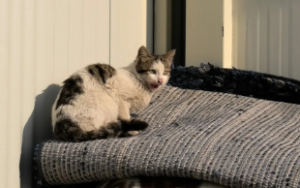
“Her sabah işe gitmeden önce çantamı hazırladım, durağa yürüdüm, otobüse bindim, işe geldim, çocuklarla atölyeler yürüttüm, alanda beraber çalıştığımız diğer örgütlerden arkadaşlarla iletişimde oldum, merkezdeki kedilerin, tavşanın bakımını yaptım. Böyle bir düzenim oldu. Benim için çok önemli olduğunu bildiğim yeri de korumaya çalıştım. Bunun için kendi kaynaklarımı da kullandım. Bu bana her zaman çok iyi hissettirdi. Gündelik yaşam alışkanlıklarını yitirmemek ikincil travma ve tükenmişlik dediğimiz duyguları azaltan şeyler olabiliyor. Bazen zorlayıcı koşullarda olsak da atmosferi zihnimde en azından değiştirmeye çalışıyorum. Bir gün başka bir yerde yine bir afet durumu olabilir. Bunlar benim ceplerimde olan düşünceler olacak açıkçası. (23)”
Bu yıkıntılar içindeki sistemi biz değiştiremeyiz; ama ne kadar basit ve sıradan çekimler yapıyor olsak da kadrajımızı yönetebiliriz, yerde bulduğumuz taşları rengarenk boyayabilir, çiçeklendirebiliriz. Hafızamızı yeniden oluştururken, çocuklarla birlikte sanatın ne anlam ifade ettiği bilgisini de oluşturabiliriz. Taşa, kile, kağıda şekil vermekten ya da hafıza kartını doldurmaktan öte, bizim için sanatın anlamı zamana birlikte şekil verebilmek oldu. Bu üç yıllık zaman, hepimizin dokunduğu ve şekillendirdiği bir heykele dönüşebiliyorsa ortaklaşa emeğimizin bir anlamı vardır.
“Normal koşullarda bir öğrenci mesela bir at çizerken o çizimin ata ne kadar benzediğini değerlendirerek geri bildirim verirdik. Buradaysa “Benzemiş mi, benzememiş mi?” gibi geri bildirim vermek yerine “Bu resim senin içine sindi mi, sen beğendin mi?” sorularını resim yapan çocuklara sormak daha önemliydi. Her resme dair geri bildirim vermek ve çocukların çalışmalarını olumlayarak onaylamak çocuklara iyi geliyordu. Yapılan her resmi çocuklarla birlikte alkışlamak bu çalışmada kullandığımız geri bildirim yöntemlerinden biriydi. Çocuklar için böyle onaylar almak, fark edildiklerinin ve iyi bir şey yaptıklarının hem yetişkinler hem de grup tarafından fark edilmesi resim ya da kilden heykel yapmak kadar değerliydi. (24)”
Sanat Atölyeleri Sergisi – 2025 // FİSA Çocuk Hakları Merkezi Adıyaman
Atölyelerin son dönemlerinde 13 yaşındaki Zeynep Ceren Bal “Hayat Bilgimiz” dergisinin “Dünyamız Sanatla Rengarenk” sayısına bir şiir yazıp getirmiş ve şiirini verirken, “Bu şiiri internete bakarak yazmadım, aklıma geldiği gibi yazdım” deme ihtiyacı hissetmişti. Çalışmalarımızı tamamlayıp Ankara’ya döndüğümüzde bir arkadaşımız bu şiiri bestelemek ve yapay zeka desteği ile şarkıya dönüştürmek istediğini söyledi. Çıkan sonuç, öncelikle Zeynep’i sonra da bizleri çok heyecanlandırmıştı. Bir anlamda yapay zeka ile giriştiğimiz bilgi hiyerarşisi mücadelesini de barış içinde sonuçlandırabilmiştik.
Sanat ve Özgürlük // Şiir: Zeynep Ceren Bal, Müzik ve Yapay Zeka Uygulama: Serkan Ceylan // 2026 – Adıyaman
Adıyaman’da FİSA Çocuk Hakları Merkezi’nin yaklaşık üç yıl boyunca sürdürdüğü çalışmalar bana çok şey öğretti. Hâlâ da öğretmeye devam ediyor. Ekipteki tüm arkadaşların açık fikirli, önyargısız, her türlü dayanışmaya ve tartışmaya açık duruşları olmasaydı, böylesine yoğun bir deneyimi birlikte yaşamak mümkün olmayacaktı. Tüm bu çalışmaların veriye dönüştüğü tarafları olduğu gibi veriye dönüşmeyecek ve farklı yerlerde ve zamanlarda başka insanlarla yeniden üretilebilecek hikayelerle bu süreci tamamlamış olduk. FİSA’nın Adıyaman’daki merkezinin inşası sırasında bahçeye ağaçlar da dikmiştik. Çocuklar bu ağaçları gördüklerinde “Bizim buradan hemen gitmeyeceğimizi anlamışlardı (25)” Biz de merkezdeki kediler, köpekler, tavşanlar ve ağaçlarla beraber 3 yılı yaşadık. Elbette zor zamanlardan da geçtik tüm bu süreçte ve neyi anımsamamız gerektiğini de çocuklarla birlikte keşfetmiş olduk. Havada bırakmadığımız kediler, parmaklarımızda şekillenen kil parçalarında hayal ettiğimiz mekanlar ve başka bir dünyaya bakan kadrajlar için dostlukla, dayanışmayla…
Dipnotlar:
1. Andorra, Max Frisch, 1961, https://www.youtube.com/watch?v=VRQwzjgYnJM
2. “Max Frisch’in Andorra tiyatro oyununda deprem metaforu ne anlam ifade eder?” sorgusunun cevabı: https://chatgpt.com/s/t_6a70567e1ad4819191372a1ddccb190f
3. “O Kedi Havada Donmuş Kalacak” – İrfan Aktan, Express Dergisi, Sayı 66 – Kasım 2006, sf. 45
4. Hikaye Anlatıcısı, Walter Benjamin, Heretik Yayıncılık, 2019
5. Hayat Bilgimiz Dergisi, Sayı 1 – “Hayat Nasıl Gidiyor?”, Ekim 2023, FİSA Çocuk Hakları Merkezi, Adıyaman, sf. 14
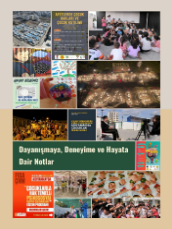
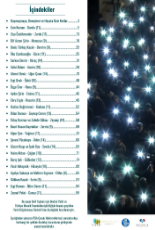
6. Dayanışmaya, Deneyime ve Hayata Dair Notlar, FİSA Çocuk Hakları Merkezi, 2025, Aydın Şirin, sf. 17
7. Dayanışmaya, Deneyime ve Hayata Dair Notlar, FİSA Çocuk Hakları Merkezi, 2025, Zeynel Polat, sf. 99-101
8. GerideKalanlar 8 – Birlikte Yaşıyoruz, Dayanışmamız Kazanacak, Artıkişler Kolektifi – 2016 https://artikisler.net/geridekalanlar-8/
9. “Unlearning” kavramını Türkçe’ye “Öğrenmemek” olarak çevirmek anlam kaybı yaratıyor. Bunun yerine, “Şimdiye dek deneyimlediğimiz kitabî öğrenme sürecini başa sarıp deneyimle ya da hikayelerle yeni bilgilere alanlar açmak” ya da “Büyürken öğrenegeldiklerimizi yeni bir eleştirel perspektifle kenara bırakmak ve yeni bir yaşam perspektifi edinmek” olarak bir tanımlama düşünebiliriz.
10. Dayanışmaya, Deneyime ve Hayata Dair Notlar, FİSA Çocuk Hakları Merkezi, 2025, Ebru Ergin, sf. 51
11. Dayanışmaya, Deneyime ve Hayata Dair Notlar, FİSA Çocuk Hakları Merkezi, 2025, Esin Koman, sf. 9-10
12. Stalker / iz Sürücü, Yönetmen: Andrey Tarkovsky, 1979 https://www.youtube.com/watch?v=HO6f2SUkww0
13. Ulus Baker, Duygular Sosyolojisi, Beyin Ekran. Derleyen: Ege Berensel, Birikim Yayınları, 2011, sayfa: 42-47. https://artikisler.net/duygular-sosyolojisi-towards-a-sociology-of-affects/
14. Hayat Bilgimiz Dergisi, Sayı 1 – “Hayat Nasıl Gidiyor?”, Ekim 2023, FİSA Çocuk Hakları Merkezi, Adıyaman, sf. 3
15. Fahrenheit 451, Ray Bradbury, İthaki Yayınları, 2021
16. Dayanışmaya, Deneyime ve Hayata Dair Notlar, FİSA Çocuk Hakları Merkezi, 2025, İlke Cambazoğlu, sf. 28-29
17. “Bu Kimin Travması?”- Helin İlkiz, Selaheddin Biyani – PolitikArt – 20/05/2025
18. “Max Frisch’in Andorra tiyatro oyununda deprem metaforu ne anlam ifade eder?” sorgusunun cevabı: https://chatgpt.com/s/t_6a70567e1ad4819191372a1ddccb190f
19. Dayanışmaya, Deneyime ve Hayata Dair Notlar, FİSA Çocuk Hakları Merkezi, 2025, Ezgi Orak, sf. 13
20. Hayat Bilgimiz Dergisi, Sayı 6 – “Bu Parkta Hayat Var!”, Ocak 2026, Esin Koman – FİSA Çocuk Hakları Merkezi, Adıyaman, sf. 3
21. Tek Kesin Tedavi, Dünyayı Değiştirmek, Cynthia Cruz, Çeviri: Hayrullah Doğan, 1.06.2020, E-Skop, https://www.e-skop.com/skopbulten/tek-kesin-tedavi-dunyayi-degistirmek/5778
22. Hastaneyi Tedavi Etmek: La Borde’un Gösterdikleri, Elif Okan Gezmiş, Birgün Gazetesi, 19.12.2021
https://www.birgun.net/makale/hastaneyi-tedavi-etmek-la-borde-un-gosterdikleri-369898
23. Dayanışmaya, Deneyime ve Hayata Dair Notlar, FİSA Çocuk Hakları Merkezi, 2025, Dilan Dursun, sf. 57
24. Dayanışmaya, Deneyime ve Hayata Dair Notlar, FİSA Çocuk Hakları Merkezi, 2025, Yasir Aktoprak, sf. 84
25. Dayanışmaya, Deneyime ve Hayata Dair Notlar, FİSA Çocuk Hakları Merkezi, 2025, İlke Cambazoğlu sf. 30, Naim Aktan, sf. 73
——————
Our Knowledge of Life Against Capitalism
Thinking About the Earthquake from Andorra to Adıyaman
I was fifteen when I read Max Frisch’s play Andorra (1). In high school German class, our teacher, Johannes Müller, who perhaps had ended up teaching such classes almost by accident, patiently had us read the play in its original German, despite all our estrangement from the language. We often tended to make fun of the things we did not understand in class. Our teacher, however, patiently continued to give us readings by “different” writers.
Andorra tells the story of a young man named Andri and his struggle for existence in the fictional town of Andorra, despite the social codes of behavior that are deeply entangled with prejudice and discrimination. One moment from those classes has remained engraved in my mind all these years. In a scene in Andorra where discrimination becomes particularly visible, our teacher described the conflicts unfolding on stage as being “like an earthquake.” At the time, I imagined that an earthquake must be something extremely chaotic and unsettling. I remember our teacher smiling and explaining what he meant by the metaphor in relation to that scene: “There is no earthquake in the play, of course. An earthquake is a tragic disaster in real life; but the first few minutes after an earthquake can be a moment when everyone is equalized before nature by the same pain and helplessness—perhaps even a moment that could be described as romantic.” I did not really understand this. “How can an earthquake be a romantic and equalizing disaster?” I wondered. Yet, after all, what we were dealing with was a fictional narrative, and it was not the earthquake itself but its metaphor that mattered. My teacher, while introducing us to Max Frisch, was less interested in earthquakes than in constructing a metaphor through which he could speak about the moral and ethical collapse of society.
A few days after the earthquakes of February 6, 2023, as I followed what was happening and tried to grasp the scale of the disaster, fragments of that play and those conversations from class began to return to me. But what had happened was neither fiction nor metaphor; even attempting to imagine a fictional narrative about the most painful aspects of reality was disturbing. And yet, remembering how, as in the play, all class and identity conflicts seemed to disappear, at least temporarily, in the face of a devastating earthquake, I tried to think that what had happened might also contain clues for constructing a new way of living. For this reason, I want to bring together what has remained in my mind from what we experienced after the earthquake—with the associations triggered by what I saw and read, with fragments of video recorded by children and adults in Adıyaman, and with the intellectual companionship of the friends I worked alongside.
A few months after the earthquake, I began travelling back and forth to Adıyaman to conduct media workshops with children at the unit established there by the FİSA Child Rights Center. Trying to plan something with children while imagining a moment in which everyone could become equal in the aftermath of an earthquake experienced in its most tragic form initially brought with it many difficult emotions. Yet it was necessary to search for answers to the question of what those who imagine another world should do within such a landscape of devastation. At the time, I had no clear answer to such a multilayered question; I still cannot say that I do. What I experienced most strongly, however, was that every activity and workshop I had carefully structured before arriving in Adıyaman transformed into something entirely different as a result of the conversations we had with the children and the team there.
Artificial Intelligence and the Death of the Storyteller
A few months after the earthquake, when I told a friend about Andorra, we first fell into a brief silence. My friend typed something into their phone and waited. After a while, reading what appeared on the screen, they said, “What you said was true. There really is a play by Max Frisch called Andorra.” The practice of “verifying something with artificial intelligence or Google” had only recently begun to enter the everyday language of many of us, and my claim that I had “given correct information” had now been confirmed. I do not remember much about what we talked about afterward. But I began to have more questions about what storytelling should mean within today’s new hierarchy of knowledge and in an age of post-truth. Later, doubting my own memory, I felt compelled to ask artificial intelligence what the earthquake metaphor in Max Frisch’s Andorra actually meant. The answer reassured me that, at least, I had not invented the story in my own mind, and for some reason I felt relieved (2):
“The earthquake metaphor symbolizes the collapse of Andorran society’s seemingly solid moral order, which is in fact built upon prejudice, lies, and collective guilt; with the emergence of suppressed truths, this order inevitably collapses. Thus, rather than representing a physical disaster, the earthquake represents the destruction of conscience and social values.”
At the same time, I could not help asking myself: “What if I had invented such information—or such a story—in order to tell something else?” I remembered an article written years earlier by İrfan Aktan in Express magazine, in which he quoted passages from a story by Mehmed Uzun and reflected on what a dengbêj, Ape Qado, might mean in today’s world of information and communication. Travelling from village to village, Qado is not only a keeper and renewer of memory; through the stories he tells, he bears witness to an emotion and a way of thinking that exceed factual reality (3):
“Look into my eyes, listener… These eyes saw it during the time of the red snow, when God had cursed the earth. These eyes, this heart, bear witness. It was a day far worse than today, a day when even a person’s breath froze. Out in the street, a group of hungry people caught sight of a cat. It was a time of calamity, a time when calamities had become ordinary, a time when even a cat could make one’s mouth water. Driven mad by hunger, the people moved to catch the cat. They chased after it, and the cat ran. The hungry pursued it; terror filled its eyes. With the last of its strength, it leapt onto a roof across the snow. The youngest of the hungry climbed onto the roof, just like the cat. Ah, what a time, a terrible time, a mad time. There was nowhere left for it to escape. In one final effort, the poor little creature, death etched into its eyes, threw itself into the void in the hope of reaching the opposite roof. It was the time of the red snow. A time when even the most extraordinary things had become ordinary. A time when even the breath coming out of a person’s mouth froze into rings the moment it emerged. The little cat froze, too. Between the two roofs, it simply froze there. Yes, yes, it remained frozen in midair, in the void, far from the ground, far from the people. These eyes saw it. These eyes bore witness…”
After the story ended, a stern relative said:
“Qado, all you ever do is shame us in front of other people. Stop it. There has to be a limit to your lies. This is too much, Qado. Don’t leave that cat hanging there in midair. Take it back to the first roof, or let it reach the other one!”
Ape Qado smiled and said:
“No. That cat will remain frozen there, suspended in midair…”
Walter Benjamin, in his book The Storyteller (4), speaks of the disappearance of the tradition of transmitting experience and of a shared culture of living with the advent of modern life, arguing that knowledge has taken the place of wisdom. This is, of course, an inevitable consequence of modernity; after all, cats cannot remain suspended in midair. At the same time, knowledge becomes an object of ownership and consumption. As communities become nations, borders emerge. The storyteller, who needs a passport to cross borders and a certain degree of property in order to obtain a visa, is now also destined to disappear, along with the stories he or she “invents.”
For Walter Benjamin and Mehmed Uzun, in times when storytelling functioned as a means of communication, knowledge was understood as something beyond mere data; it was more closely connected to the time we spent in the process of learning that knowledge. The dengbêj, or storyteller, describes not so much the outcome of the story being told as the value of the time we spend in the act of “learning,” the way our emotions and forms of communication at that moment are directly connected to knowledge and, in turn, transform it.
So then, if limitless information and the rationality of cause and effect have been embedded inside our phones and are supposedly all within our possession, why do tens of thousands of people die in earthquakes? Why are some buildings left standing while others are reduced to rubble? If the play Andorra, which I am grateful to have remembered correctly, speaks not of the destruction of buildings but of the collapse of prejudices, hierarchies, and inequalities within the social order, what are we supposed to do in this landscape of destruction? When we conduct workshops in container settlements where people are trying to continue their lives after an earthquake, does a cat frozen in midair freeze time within this landscape of destruction, or does it transform it?
“We used to have a cat and birds. But our cat didn’t get along well with the cat next door. We had two birds. We thought they would have babies too, but after the earthquake my father let the birds go.” (5)
Solidarity That Makes a Scratch Against Capitalism
One year after the earthquake, when we finally found the courage to undertake a visual documentation project about what had happened, the people who had experienced the earthquake spoke about the networks of solidarity they had managed to establish immediately afterward. In all the interviews we conducted, every sentence about February 6 and its aftermath seemed to emerge through a combination of confession and an effort to force the memory to return. Alongside the immense pain that had been experienced, these networks of solidarity were also an answer to the question not so much of what we remember, but of how we should remember:
“…We are at least at a stage, after a year, that we might call a process of getting used to it. There is still uncertainty; shortcomings remain when it comes to meeting basic needs and carrying out basic routines of life. This situation applies to society as a whole. Therefore, we are trying to overcome this deficiency here through solidarity. We had to continue our daily routines, continue the work we were doing, carry out our professions as part of society… When we only attend to our own routines, life remains incomplete. You find yourself taking on a responsibility to address these problems and find solutions.” (6) — Aydın Şirin
“…It has been about a year since the earthquake. The word ‘earthquake’ itself is negative. But despite these negative aspects, the earthquake and the disaster have also brought certain added values to people. During this process, we saw how precious solidarity between communities can be. In a country where people are so politically polarized, coming together in the face of a disaster has another meaning. The number of people in my phone contacts increased by more than a thousand after the earthquake. That is actually a great reason to hold on to life. You say to yourself: ‘A thousand people have called me, come to me, stood in solidarity with me!’ That is incredibly valuable…” (7) — Zeynel Polat
I remember something a friend from Adıyaman once said with astonishment and anger: “Imagine having a bundle of money in your pocket and, at that very moment, that money being completely useless.” I remember this sentence from the first moments of the earthquake as perhaps one of the most tragic descriptions of the collapse of capitalism. At the same time, the earthquake did not lead to a transition to another economic system; on the contrary, we witnessed the existing system being reconstructed, perhaps in an even harsher and more brutal form. Yet the same question must be asked again: What will we remember after the earthquake, or what will we be required to remember? About ten years ago in Athens, a seven-story hotel that had been unused because of property disputes was occupied by migrant solidarity groups. Known as the City Plaza Hotel, the building housed around 400 migrants for approximately six months. At the end of those six months, during which money was replaced by collective labor and solidarity, the building had to be vacated. Olga, from the solidarity group, said that sooner or later they would have to leave the building, but she added:
“This is, of course, an important place for demonstrating our solidarity with migrants. But at the same time, it is also a place where we can discuss what private property can mean under capitalism. In situations like this, at least you can get your claws into the fundamental laws of capitalism and ask, ‘Why?’… The City Plaza Hotel is not a solution; it is simply an example of how things could be.” (8)
No matter how limitless the possibilities of what you can do after an earthquake may appear from a distance, your actual possibilities are severely constrained by numerous logistical and bureaucratic reasons. As we move toward a process in which both time and space are uncertain, the only thing we can do is to be prepared for everything. Nevertheless, it was necessary for the process itself, rather than the outcome, to have a meaning and substance from which we could ask the “Why?” question that Olga raised above.
On Turning the Learning Process Upside Down
With these thoughts, every time I went to Adıyaman, the idea became increasingly clear to me that what needed to be confronted was not capitalism itself, but the practices of thinking and knowing embedded within capitalism. For this reason, the question of what we should do with the children was becoming both more concrete and more uncertain. What became concrete were the media tools we had at our disposal: our handheld cameras, still cameras, and audio recorders. What became uncertain was how we could break the power of existing knowledge and, before attempting to speak another word, unlearn what we thought we knew and entrust ourselves to what the children knew.
I do not know exactly how long the concept of “unlearning” (9) has been used as a method in the social sciences. Rather than asking artificial intelligence about it, I find it more important to think about the extent to which this concept should at least unsettle what I believe I know, and to search for answers to the question: “If I know nothing, what will I teach the children?” First of all, I needed to reduce the amount of what I thought I knew:
- We will conduct a media workshop with the children.
- We will facilitate the children’s production of media works during these workshops.
- We will ensure that the resulting media works are disseminated with the children’s approval.
Every time I went to Adıyaman, I searched for answers to the question of why the concept of “unlearning” was important for this work. Because with this earthquake, it seemed as though the things we had previously known had also been buried beneath the rubble. Everything we had experienced and lived through was, of course, still in our minds. But if our minds were already filled with experience and knowledge, was I going to impose this accumulation of knowledge—albeit through a sympathetic form of instruction—upon the children in our workshops? “I actually know very little about how to imagine a new life, a new language of communication, and a new world; but I am very curious about what you know.” I kept repeating this sentence to myself. Ebru Ergin, from the FİSA Child Rights Center team, responded to this dilemma by suggesting that if there was a “Tabula Rasa,” it could not be our minds, but perhaps the space itself and everyday life:
“…(In Adıyaman,) when we were preparing to open the center, the containers were going to be painted. Many volunteers had come to support us. They were going to paint the containers together with the children. But after an hour, the children put down their brushes. They began spreading the paint directly onto the walls of the containers with their hands. It was a moment when the children incorporated their own agency into the system. They were enjoying themselves so much that, in the midst of that enthusiasm, even a stroke made with a brush was insufficient for them. All the instructions about how the containers should be painted were now set aside, and the space was completely left to the children. They began painting however they wanted, freely—sometimes thematically, sometimes without any theme at all—and embarked on an incredible act of painting. ‘Should we do something?’ ‘No, we shouldn’t. The children are in control now; let them paint as they wish.’ If you went and looked at it now, some of the paint would have faded, but you would still see a truly colorful and chaotic work.” (10)
Building the Child Rights Center // FİSA Child Rights Center Adıyaman — July 2023
A similar state of “Tabula Rasa” applied to the content of all the work we would undertake with the children. In every conversation, in order to truly listen to the children, we had to both know everything and know nothing. To be surprised, curious, excited, anxious, sad, to laugh, to become tired, and then to start all over again each time; to always keep in mind why we had come here; to think that we should have more questions than answers; to shape this small microcosm, consisting of only a few office containers, not through our own presence but through actions generated by the children’s suggestions; and to turn the teaching-learning hierarchy upside down:
“We tried to live through this process with the children as they returned to their neighborhoods, their schools, their parks and playgrounds, and made new friends. That is why our work was not something planned from beginning to end. Many things developed spontaneously. Dancing with the children on stage, putting on the jewelry we had made together in the workshop and leaving with it around our necks, clapping together during the rhythm workshop, or watching a film together and sharing our sadness or excitement… When the electricity went out, we were all experiencing the same problem there. When we published a report and explained its contents at a panel, the children heard us, and we heard them. I suppose that was what living together meant. It became a process through which we learned. Once again, the children taught us this. If you remain outside that life, nothing makes sense. You have to be inside that life. When we are inside that life together, what we experience becomes a process that is good for all of us.” (11)
So who were we? Directors, experts, consultants, workshop facilitators? Where were we going? To the field, to the site, or to Aşağı Esentepe neighborhood in Adıyaman? Whom were we going to interview? Victims, children, local residents—or Murat, Ayşe, Özlem, Berat, Ali, and Azad?
In the established hierarchy of such workshops, there is usually one or several instructors, followed by children. It is a kind of “Follow me” practice. As I tried to answer the question of how we could transform this, I repeatedly thought of Tarkovsky’s film “Stalker” (12). If I knew a technical method that could be applied in the workshops, instead of explaining that method from beginning to end as though it were a rule, I could offer clues about it. Rather than asking the children to follow me, I could follow them—trying to understand how they interpreted these clues according to their own ways of thinking and their own flows of thought. This might have been one of the ways in which we could disrupt the hierarchy of the instructor. Did we need to tell fairy tales and stories instead of providing information? Were these kinds of thoughts too idealistic or utopian? Would we turn into caricatures in the presence of those who knew more and other experts? Every ball that went beyond the boundaries of capitalism opened up space for unknown games and required new rules. “I actually know quite a lot—as with the play Andorra—but can we move beyond the domain of power created by knowledge and correctness during the limited-time workshops we will conduct with the children?” I directed this question not only to myself but also to the friends I was working with; I also needed to earn their trust.
The equipment we chose was therefore extremely helpful. Explaining to the children how to use the cameras and other equipment took less than a minute. Moreover, thanks especially to mobile phones, every child already had their own preferences and ways of seeing that went beyond merely knowing how to operate a camera. So what were we going to record? What were we going to film? Or did we really need to make a film at all?
“…Let us suppose that in a study on ‘poverty,’ a camera could identify and edit the ‘images’ of poverty by transforming the ‘environment,’ ‘space,’ and ‘time’ into images. There is a name that cinema has given to the classification of these images—in other words, to ‘thinking’ them—since its earliest days: montage. Yet cinema has long since abandoned montage, its very essence, or in other words its unique and fundamental opportunity to comprehend the modern world, in favor of television.” (13)
In his text “The Sociology of Emotions“, Ulus Baker argues that sociology has become a dead discipline, surrendering itself to companies that want to know consumer analyses and, consequently, to the capitalist system. According to him, what can bring sociology back to life is an approach through which we reflect on the social counterparts of emotions, and one of the most effective tools for such an approach is the video camera. The camera is not a tool for showing but a tool for seeing; seeing, therefore, becomes a precursor to thinking. In the same way, we can think of audio recorders not as tools for making others listen, but as tools for hearing.
For this reason, if editing or montage contains a narrative or an opinion that has become a spectacle, it was necessary to say goodbye to Ulus Baker’s proposition of “thinking through editing” in The Sociology of Emotions, and instead, by also unlearning what we thought we knew, to repeatedly think about ways of seeing through recording alone, without entering into editing; to search for ways of understanding the image without turning it into a film and transforming it into a commodity for social media or the festival circuit.
Another Frame Is Possible and “Hello Friends!”
When we began media workshops in June 2023 with approximately thirty children between the ages of eight and thirteen, together with our colleagues from the FİSA Child Rights Center, the question of how we should explain the technical aspects of working with cameras to the children gradually turned into a search for a method. Guided by the assumption that everything considered to be correct might actually have, or could potentially have, an antithesis within the world of moving images—and having observed that the children already had their own distinctive styles—we began deliberately making “mistakes.”
When I recorded myself against the light and told the children that I could not figure out what I had done wrong, I felt as though we were making new versions of the 1980s TRT television spot “Mr. Wrong and Right Ahmet.” Each time, the children would happily explain that either the light or the object I had placed within the frame was “wrong.” And each time, I began to see more creative techniques in what they were doing. Still, I did not want to immediately abandon my own bad framing. I would say: “If I make a mistake once, according to your standards, while recording, then it is a mistake. But if I repeat that mistake, it becomes a style. So apparently I like shooting things against the light.”
There was therefore no single thing called “correct.” Everyone had their own version of what was right according to their own style. Although we resembled one another, we were all more or less different. And perhaps this was not a mistake but a form of richness. Within this richness, for example, if we had given definitive answers to the question “How do you conduct an interview with a video camera?”—such as, “The person operating the camera remains silent during the recording, or asks questions to the person in front of the camera but does not speak themselves”—we would never have witnessed the creative “mistake” of nine-year-old Hüseyin, who turned this knowledge upside down.
Adıyaman 1st Together Children’s Festival — Adıyaman, 2024
The real richness, however, emerged as we searched for frames within these ruins. Inspired, as in the example of the occupied house in Athens that I quoted above, by the idea that “We cannot change this capitalist order, but we can leave some beautiful scratches on it,” we needed to turn the distinction between what our eyes saw and what the camera saw into a means of empowerment:
“What we see around us right now may be very sad and unpleasant. There are ruins everywhere, and we do not have the power to remove them or rebuild the city. Even if we cannot change the unpleasant images around us, even if we cannot govern this city, we can control the frame of the camera. Because within all these ruins, we can turn the camera’s frame toward newly blossomed flowers in a garden, toward the sunrise, toward clouds moving differently every day, or toward a bracelet a friend has given us. Perhaps we can also construct our own world within all these ruins by creating beautiful images, sometimes placing the light in front of us and sometimes behind us…”
I do not know whether this method worked. It is impossible to know this fully. Nevertheless, when ten-year-old Damla, one of the workshop participants, framed a dandelion in the container settlement, blew its seeds into the air, and said that she wanted to be someone who, like that dandelion, continued living under all circumstances, it became one of the most valuable pieces of knowledge of life I had learned during those three years.
On the Dandelion Flower // Video: Damla Göksu, 2024 — Adıyaman K11 Container Settlement
Throughout the workshops, trying to understand the styles that the children developed for themselves in using the camera was extremely valuable in terms of disrupting the conventional assumptions of filmmaking. Almost every recording the children made on their own in the container settlement after taking the camera began with the words, “Hello friends!” Each child followed a particular YouTube creator, and they had more experience and more ideas about vlogging than any of us. But here, too, we witnessed how a small shift in the conditions could transform the entire process. When we filmed together with the children, they were often hesitant in using the equipment, trying to remain silent throughout the recording and avoid making mistakes, largely because they wanted to demonstrate to adults and to their friends how well they knew how to operate the camera.
Let’s Get to Know K11 Container Settlement // Video: Amine Asmin Berk, 2024 — Adıyaman K11 Container Settlement
Over time, perhaps inspired by “Stalker”, we noticed that the style of the recordings changed when, after handing the camera to the children, we stepped back and gave them some distance and space to discover the camera and the frame on their own. First of all, almost every one of them would transform into a YouTube creator, constantly talking about what they were recording or what they had seen that day.
The outputs of the workshops became recordings in which they spoke directly to the camera, on their own, about many feelings and thoughts that they were sometimes reluctant to share face-to-face with adults. For this reason, after each workshop, listening to what the children said to the camera was just as important for us as watching what they had filmed. In this sense, it corresponded to another form of knowledge—to the assumption, in a way, that Ulus Baker discusses in “The Sociology of Emotions”, that the video-image can itself become a means of a liberating form of expression.
We will not forget the perhaps most striking example of this practice of “unburdening oneself to the camera”: during a recording that nine-year-old Muhammed made on his own, he suddenly began talking about how he had seen Narin Güran on television that day and how deeply saddened he and his friends had been by what they had seen. If speaking to the camera means speaking simultaneously to oneself and to the public, then the camera, as a recording device, revealed itself as a medium through which the flow of emotions and thoughts could unfold alongside the frames determined by the filmmaker.
“Hayat Bilgimiz” as an Experiment in Making a Magazine
As we looked through the large number of recordings that the children had produced with cameras and audio recorders during the media workshops, we had to search for answers to the question of how we could present these materials as a coherent, non-hierarchical structure. Witnessing these experiences of the children was undoubtedly valuable to us above all else. The first answer to the question of how we would return these works to the children was to make a film—or films. This would require sitting at the editing table with the children and editing together, and there were practical difficulties involved in working with such a large editing team. Another difficulty, and perhaps a trap, was the social media visibility of all these works. Placing these works on social media meant that practices of seeing would enter a world of spectacle and “like/dislike.” We would encounter situations in which the children’s work—and perhaps ourselves even more than the children—could be made to look “beautiful.” Without being able to foresee who would benefit from visibility on social media and under what conditions, perhaps it was better not to make such posts at all.
If these films or visual narratives were to be transformed into films, and then presented, shared, and followed through these forms of circulation, each step had to be planned carefully from the beginning. We had observed an example of this in Adıyaman when, after the boys recorded their football matches, we edited the footage and delivered the recordings back to them. Organizing regular football matches had been the boys’ idea. With the support of sports instructors, we began organizing regular matches for approximately three months at a small artificial-turf football field near the container settlements. It was good for all of us to collectively create a space and time in which the children could engage in sports according to their own wishes.
After each football match, we prepared a video and shared what had happened on match day with the children. Yet the clips from the football matches could quickly become vehicles for a masculine football language, and we also witnessed how relatively naïve statements such as “Playing sports together is a kind of brotherhood” could rapidly disappear within the language of social media in an increasingly polarized world.So perhaps we needed to start again from the beginning.If we were going to begin with the media tools themselves, where would we begin? Perhaps with a magazine…
The idea actually took shape during the very first workshops we conducted with the children. In the aftermath of the earthquake in Adıyaman, we were confronted with a new kind of knowledge. If so, then this magazine also had to become a space where this new knowledge could be collected by the children and transformed into new forms. Thus, the Hayat Bilgimiz magazine emerged through the collective participation of all the children who took part in the workshops:
“We are the children living in K11 Container City in Adıyaman. Ever since we started living here, we have loved playing games together, reading books, dreaming, sharing the things that make us happy and sad, and doing things together. No matter what, being a child is a lot of fun, and just like adults, we learn something every day from what we experience, read, and watch. One day, while talking with the adults who were organizing activities with us, we decided to create a magazine made up of the knowledge we gained from what we experienced throughout the day and to share this knowledge with you. Throughout the activities, we drew pictures, filmed with cameras, played games, and learned new things every day. What we learned became the life knowledge that we wanted to share with you. We hope you enjoy our magazine.” (14)
In a sense, this magazine demonstrated “how old-fashioned we really were.” Perhaps, beneath the surface, we were calling back the storytellers who had disappeared, bringing back a kind of knowledge that might do us good rather than merely provide us with correct information, perhaps even calling the fairy tale back into existence. Or perhaps, while describing today’s world through dystopian images reminiscent of Ray Bradbury’s “Fahrenheit 451″ novel, the intention was to move beyond the hegemonic sphere of influence of televisual images and, through reading and writing, to create a microcosm belonging to the children’s world—away from the power of the potential audience on social media or in front of screens to like and follow (15).
There was room for everyone and everything in this magazine. There was no end or boundary to what could be written or imagined; there was only the next issue. Over approximately two and a half years, six issues of Hayat Bilgimiz were published, consisting of content produced by the children. The process of producing Hayat Bilgimiz was something we discussed extensively among ourselves. Making a magazine was not an original idea, and we were not sure whether it would actually be useful for the children. Yet beyond our own discussions, making a magazine had a completely different meaning for the children. At first, one of the most meaningful things for them was seeing their names written beneath their own words. Here, the children wanted everything they did and every trace they left behind to be visible. Because there was almost nothing visible or standing here.
The magazine project became an introduction, a kind of threshold, before the video work in the media workshops. What does it mean to produce together, to develop a language together? The magazine was like an exercise in answering these questions. All of these children had access to phones and were already making recordings; in other words, they were aware of technology. But the magazine workshops were not workshops that directly required technological knowledge. We were not talking about a particular device. It was a workshop equally accessible to everyone. If you produced something, it was there. (16)
In every media and art workshop we conducted, rather than aiming for artistic value in the final products, time itself gradually became a colorful fabric, woven and constructed thread by thread. For this reason, in making the magazine, every stage—from the moment the idea was proposed to the moment the children distributed the printed copies—had a value far greater than the content of the magazines themselves.
On the “Hayat Bilgimiz” Magazine // 2023–25 / Adıyaman K11 Container Settlement
A Revolutionary Forgetting or “Isias Is Our Common Cause”?
Whenever we remember and commemorate those we have lost, time comes to a standstill. Perhaps we experienced the sharpest example of this during the commemoration of the first anniversary of the earthquake. We tried to pass through the mourning process embodied by the stopped time of 4:17. I say tried, because those who had lost their loved ones were experiencing the deepest weight of this grief; we could only be beside them. At the same time, however, time was not standing still. And in a period so inclined toward remaining frozen, we were anxious that if we could not move, we would succumb to a kind of intellectual entropy. Beyond reconstructing emotions and thoughts through media and art workshops, and beyond seeing their concrete manifestations, there was an artistic and activist value in being able to experience and produce the entire period together rather than constructing everything within the limited boundaries of a workshop session. For this reason, “revolutionary forgetting” became a concept that we repeatedly turned over in our minds throughout all these workshops.
“…When A. Mahir says, ‘I do not know how we carry the weight created by all this pain and by so many comrades we have lost. Now I realize that you have to live, you have to remain standing. It is the struggle itself that lightens the burden of memory. We do not experience the weight created by memory in its entirety. Most of the time, we simply pass through it. Because the moment you fully feel that weight, life comes to a standstill,’ this is precisely the revolutionary forgetting he is referring to.” (17)
Although “Revolutionary Forgetting” offers a practice of thought capable of breaking established patterns within the workshops, knowing—as in Andorra—that the destruction is not merely physical, and that an earthquake is not an “inevitable disaster,” also brings with it, or should bring with it, another form of activism in Adıyaman: the need to continue the struggle for rights. While decoding the earthquake metaphor in Andorra, we need to think beyond the notion of an “inevitable disaster” about the collapse of the Grand Isias Hotel in Adıyaman during the earthquake and about those responsible for the deaths of 72 people, 26 of them children. I once again asked artificial intelligence what the “inevitable disaster” in the play meant. Once again, it answered through the metaphor of the earthquake. You can think of this not only in relation to the Grand Isias Hotel, but also in relation to the tens of thousands of people who lost their lives:
“Just as an earthquake occurs when fault lines beneath the ground rupture, in the play the lies and prejudices that have been concealed for years eventually emerge. In a moment of crisis, this seemingly ‘solid’ order collapses. An earthquake is often perceived as a disaster that cannot be prevented beforehand. But in the play, the disaster is not actually inevitable; the characters’ silences prepare it step by step. Therefore, the earthquake metaphor suggests that a destruction that appears ‘natural’ is in fact the consequence of human actions.” (18)
The February 6, 2023 earthquakes led to lengthy legal proceedings, in which debates over impunity were also frequently raised. For nearly twenty years, under the heading “Justice for Children,” the FİSA Child Rights Center and the Gündem Çocuk Association, which was closed by government decree in 2016, have followed numerous cases concerning children’s rights and have, at times, intervened in legal proceedings on behalf of children or their families. The association also sought to intervene legally in the Grand Isias Hotel case “for the right to life of all children,” but this request was rejected by the court. Nevertheless, the entire process was followed together with the families and those affected by the earthquake at the Adıyaman Heavy Penal Court. Call videos were published before each hearing, and briefing notes were prepared after each hearing. Perhaps for this reason, during the commemoration of the first anniversary of the earthquake, going to the ruins of the Grand Isias Hotel at that moment when time had stopped, and commemorating all the children we had lost, became another reason for our presence there.
Isias Is Our Common Cause // FİSA Child Rights Center, 2023–25 / Adıyaman
As the FİSA Child Rights Center followed the legal proceedings in the Grand Isias Hotel cases, which lasted approximately two years and in which the hotel owners and public officials were tried separately, it aimed to make these processes permanent and visible, while also creating a resource for those defending justice through its reporting. For this reason, forgetting and remembering moved alongside one another throughout the entire process:
“The state’s child protection mechanism was already a mechanism that did not function well, and after the earthquake, that mechanism had also disappeared. Reporting and monitoring creates a feeling that we have to do everything. We are living through a period in which this crisis and these violations are deepening and becoming invisible. The state is actually the duty bearer here, but after the earthquake there was no mechanism left. The recovery process was not progressing in a healthy way anyway.One of the images I cannot forget from the Grand Isias Hotel trials was a moment when we were leaving the courtroom after one of the hearings. There was a tree there. The banners held by the families, bearing photographs of their children, had been placed one after another around the tree. I took a photograph because I did not want to forget that image. It was one of those moments when I did not know what I was supposed to feel when looking at it.” (19)
Renewing Memory in New Spaces
For approximately three years, the workshops we conducted in Adıyaman, either in the K11 Container Settlement or at the FİSA Child Rights Center, generally took place in enclosed spaces of 10–15 square meters known as office containers.We all wanted to conduct workshops in larger and more comfortable spaces. At the same time, the safety of the space was always our first priority. Before each workshop, in a city covered with ruins and dust, we had to ensure the safety of everything in these containers—from their electrical installations to their floors—as though they were small microcosms.The relatively poor lighting in these small spaces during the winter months was our greatest disadvantage. What we could do with cameras in the media workshops had become limited. We could not film outside: it was cold, and it got dark early.
Over time, however, the limitations of our circumstances began to create space for creativity. For the children, one of the most entertaining features of the video cameras was their ability to zoom. This feature suddenly transformed the camera into a wonderful toy.“Going beyond the perception of vision, being able to see what I cannot see” became the phrases we used to theoretically make sense of this zoom function. Thus, a “find the detail” game emerged within the workshop spaces.Dozens of details were hidden in a pattern on the walls or in an unusually shaped stone on the ground. And although these details did not contain metaphors in the same way as the earthquake metaphor in Andorra, they carried their own metaphors of the joyful moments of life. The lines on the glass of a lamp looked like a friend’s hair clip; some of the leaves on the trees resembled delicious fruit; the stones on the ground looked like dinosaur fossils. The cracks between the concrete, it turned out, were ant colonies. The more we thought about them, the more we discovered stories and metaphors of our own within each detail. Most importantly, that office container was no longer merely a box covered in metal plates. It had become a place.We then diversified these games in every workshop space. At Hayat Park, these “finding the details” workshops began to offer us new memories and new microcosms.
The Interesting Details of Hayat — Hayat Park Video Workshop, November 2025 — Adıyaman
Throughout this entire process, one of the questions that remained constantly in our minds was how the children participating in the workshops imagined another city beyond these container settlements.We had our own dream of another city. But if new spaces in this city were going to create room for a new memory, what spaces should the children create memories of in the future? Thus, “Hayat Park” began to take shape as a concrete realization of a dream of a new collective space.
“That was their city, their neighborhood, their street, their playground, their grandfather’s garden, their father’s shop. That is why they needed spaces where they could once again create a shared memory, spaces that could reflect or connect them with their shared past, and places where they could spend time together and feel good. Could there be a place where children could come and spend some time, feel good, leave the container areas where they were living when conditions allowed, come together with their peers, create games, and, for younger children, slide down a slide and have a space that would support all aspects of their development? Within the possibilities available to us, we answered this question by designing a space together with the children and the Şehir Dedektifi team, and constructing a park with the support of the Adıyaman Municipality. We tried to build the park by asking the children about everything—from its name and the play equipment it would contain to the places where they would sit. What we observed was that the children were deeply aware of what they had lost. For us, this resonated strongly with the idea of “building life again, rebuilding.” They allowed us to experience a process of construction together with them, and we are deeply grateful to them for that. As a result of all these efforts and observations, a park was built through collective labor. But the process is still continuing at Hayat Park, developing organically and remaining open to new experiences. (20)”
Hayat Park // 2023–25 / FİSA Child Rights Center, Adıyaman
“The Only Certain Cure Is to Change the World”
After this entire sequence of experiences, returning each time to the cities where we lived, knowing both more and less than before, was unsettling—at least for me. During the first days of the workshops, the children would share the everyday problems they experienced with us. By the final days, we had also begun sharing our own everyday problems with the children.
Because our circumstances were similar, beyond the fact that interruptions to water and electricity during the day were a common problem for all of us, we also had the opportunity to put a scratch in hierarchical definitions such as “instructor” or “professional.” I took the title above from an article by the artist Cynthia Cruz, in which she describes her experiences of “treatment,” inspired by a psychiatric clinic in Catalonia during the Second World War. Established to treat people experiencing trauma during the war, this psychiatric center eventually transformed into a structure in which it was no longer clear who was the “patient,” who was the “doctor,” or who worked in the “canteen.” By disrupting the hierarchical knowledge of existing treatment processes and the power embedded within that knowledge, it sought to redefine what had initially been called “illness” in order to pursue a form of collective healing:
“Tosquelles and Institutional Psychotherapy, which sought to treat not the patient but the institution, put into practice their revolutionary understanding that institutions, culture, and society as a whole are microcosms; therefore, healing the microcosm of a culture meant initiating the work of ‘liberating’ an entire culture from occupation, healing it by taking it away from the paths it had entered under the influence of capitalism and power.” (21)
The hierarchical methods of communication maintained by professionals who go into the “field,” despite their good intentions in all these disaster-affected regions, also produce another form of alienation. All the work carried out as though our lives had a duration no longer than the lifespan of a project pushes everyone involved toward another kind of artificial-intelligence language and a presumed superiority of knowledge. At the same time, attempting to put certain practices against the existing system into effect through such methods does not, as in Tosquelles’ work on Institutional Psychotherapy or the experience of the City Plaza Hotel, necessarily become a repeatable experience. Rather, it becomes an attempt to question existing ways of thinking. Yet these experiences contain traces and threads that evoke other original experiences. They ask the question “Why?” of existing understandings in different colors, while carrying within them answers that emerge from their own particular cosmos. (22)
This willingness to remain open to experience and new knowledge can also unsettle the familiar conventions of art and media production. Each of these practices of spending time together, away from hierarchy and focused on the value of the production process itself, first of all scratches at our own established patterns of thought and practice. For this reason, we will not be able to repeat what we experienced in Adıyaman. But it will contain clues about what we may do at other times, under different circumstances.
Adıyaman 2nd Together Children’s Festival // Adıyaman — 2025
What is truly challenging is that such methods can easily be dismissed because they propose discourses against the power of existing knowledge, whether they criticize or defend capitalist thought. In the “field,” meanwhile, we encounter a wall of prejudice within a system in which it is difficult to give up the comfort zones provided by this hierarchy.
For this reason, building a collective and safe space in a disaster-affected region; understanding that this space is shared with all living beings; constructing our everyday lives together with the children and parents with whom we are imagining a life in common; and, in short, renewing our own knowledge of life together with the children—perhaps all of this can make other worlds possible, not today, but perhaps at some uncertain point in the future:
“Every morning before going to work, I packed my bag, walked to the bus stop, took the bus, arrived at work, conducted workshops with the children, stayed in contact with friends from the other organizations with whom we worked in the field, and took care of the cats and the rabbit at the center. I developed this kind of routine. I also tried to protect the place that I knew was very important to me. I used my own resources for this as well. This always made me feel very good. Not losing our everyday routines and habits can help reduce what we call secondary trauma and burnout. Even when we are in difficult circumstances, I try, at least in my mind, to change the atmosphere. One day there may be another disaster somewhere else. These will honestly be the thoughts I carry in my pockets.” (23)
The system in these ruins may be beyond our power to change; but no matter how simple or ordinary the shots we are making may be, we can control our frame. We can paint the stones we find on the ground in bright colors, or turn them into flowers. As we rebuild our memory, we can also develop, together with the children, an understanding of what art can mean. For us, art came to mean more than giving shape to stone, clay, paper, or filling a digital memory; it meant being able to give shape to time together. If these three years can become a sculpture that all of us have touched and shaped, then our collective labor has meaning.
“Under normal circumstances, for example, when a student draws a horse, we would evaluate the drawing by considering how much it resembles a horse and give feedback accordingly. Here, however, rather than asking questions such as ‘Does it look like one or not?’, it was more important to ask the children who made the drawings, ‘Are you satisfied with this picture? Do you like it?’ Giving feedback on every drawing and affirming and acknowledging the children’s work was beneficial for them. Applauding every drawing together with the children was one of the feedback methods we used in this work. Receiving such recognition was as valuable to the children as making a drawing or a sculpture out of clay. It was important for them to feel that they had been noticed, and that both the adults and the group recognized that they had done something good. (24)”
Art Workshops Exhibition – 2025 // FİSA Child Rights Center, Adıyaman
Towards the end of the workshops, 13-year-old Zeynep Ceren Bal wrote a poem for the Hayat Bilgimiz magazine’s issue “Our World Is Colorful Through Art” and, as she handed it to us, felt the need to say, “I didn’t write this poem by looking at the internet; I wrote it as it came to my mind.” When we completed our work and returned to Ankara, one of our friends said that they wanted to compose the poem and turn it into a song with the help of artificial intelligence. The result first excited Zeynep, and then all of us. In a sense, we had managed to bring the struggle over the hierarchy of knowledge that we had entered into with artificial intelligence to a peaceful conclusion.
Art and Freedom // Poem: Zeynep Ceren Bal; Music and AI Application: Serkan Ceylan, 2026 – Adıyaman
The nearly three years of work carried out by the FİSA Child Rights Center in Adıyaman taught me a great deal. It continues to teach me. Without the open-minded, non-judgmental attitudes of everyone on the team, and their willingness to engage in solidarity and discussion, it would not have been possible to experience such an intense process together. We have brought this process to an end with both aspects that could be transformed into data and stories that could not be reduced to data, but that could be reproduced with other people in other places and at other times.
During the construction of FİSA’s center in Adıyaman, we also planted trees in the garden. When the children saw these trees, “they understood that we were not going to leave this place anytime soon.” (25) We, too, lived through those three years together with the cats, dogs, rabbits, and trees at the center. Of course, we went through difficult times throughout this process, and together with the children we also discovered what we needed to remember. For the cats we did not leave frozen in mid-air, for the spaces we imagined in pieces of clay taking shape between our fingers, and for the frames looking toward another world—with friendship and solidarity…
Notes
1. Andorra, Max Frisch, 1961, https://www.youtube.com/watch?v=VRQwzjgYnJM
2. The answer to the query “What does the earthquake metaphor mean in Max Frisch’s play Andorra?”: https://chatgpt.com/s/t_6a70567e1ad4819191372a1ddccb190f
3. “That Cat Will Remain Frozen in Mid-Air” – İrfan Aktan, Express Magazine, Issue 66, November 2006, p. 45.
4. The Storyteller, Walter Benjamin, Heretik Publishing, 2019.
5. Hayat Bilgimiz Magazine, Issue 1 – “How Is Life Going?”, October 2023, FİSA Child Rights Center, Adıyaman, p. 14.
6. Notes on Solidarity, Experience and Life, FİSA Child Rights Center, 2025, Aydın Şirin, p. 17.
7. Notes on Solidarity, Experience and Life, FİSA Child Rights Center, 2025, Zeynel Polat, pp. 99–101.
8. GerideKalanlar 8 – We Live Together, Our Solidarity Will Prevail, Artıkişler Collective, 2016, https://artikisler.net/geridekalanlar-8/
9. Translating the concept of “unlearning” into Turkish as “öğrenmemek” (“not learning”) results in a loss of meaning. Instead, it may be understood as “rewinding the book-based learning process we have experienced so far and making room for new forms of knowledge through experience or stories,” or as “setting aside, from a new critical perspective, what we have learned throughout our lives and acquiring a new perspective on life.”
10. Notes on Solidarity, Experience and Life, FİSA Child Rights Center, 2025, Ebru Ergin, p. 51.
11. Notes on Solidarity, Experience and Life, FİSA Child Rights Center, 2025, Esin Koman, pp. 9–10.
12. Stalker, directed by Andrei Tarkovsky, 1979, https://www.youtube.com/watch?v=HO6f2SUkww0
13. Ulus Baker, Sociology of Affects, Beyin Ekran. Compiled by Ege Berensel, Birikim Publications, 2011, pp. 42–47. https://artikisler.net/duygular-sosyolojisi-towards-a-sociology-of-affects/
14. Hayat Bilgimiz Magazine, Issue 1 – “How Is Life Going?”, October 2023, FİSA Child Rights Center, Adıyaman, p. 3.
15. Fahrenheit 451, Ray Bradbury, İthaki Publications, 2021.
16. Notes on Solidarity, Experience and Life, FİSA Child Rights Center, 2025, İlke Cambazoğlu, pp. 28–29.
17. “Whose Trauma Is It?” – Helin İlkiz, Selaheddin Biyani, PolitikArt, 20 May 2025.
18. The answer to the query “What does the earthquake metaphor mean in Max Frisch’s play Andorra?”: https://chatgpt.com/s/t_6a70567e1ad4819191372a1ddccb190f
19. Notes on Solidarity, Experience and Life, FİSA Child Rights Center, 2025, Ezgi Orak, p. 13.
20. Hayat Bilgimiz Magazine, Issue 6 – “There Is Life in This Park!”, January 2026, Esin Koman, FİSA Child Rights Center, Adıyaman, p. 3.
21. The Only Certain Cure Is to Change the World, Cynthia Cruz, translated by Hayrullah Doğan, 1 June 2020, E-Skop, https://www.e-skop.com/skopbulten/tek-kesin-tedavi-dunyayi-degistirmek/5778
22. “Treating the Hospital: What La Borde Reveals,” Elif Okan Gezmiş, BirGün, 19 December 2021.
https://www.birgun.net/makale/hastaneyi-tedavi-etmek-la-borde-un-gosterdikleri-369898
23. Notes on Solidarity, Experience and Life, FİSA Child Rights Center, 2025, Dilan Dursun, p. 57.
24. Notes on Solidarity, Experience and Life, FİSA Child Rights Center, 2025, Yasir Aktoprak, p. 84.
25. Notes on Solidarity, Experience and Life, FİSA Child Rights Center, 2025, İlke Cambazoğlu, p. 30; Naim Aktan, p. 73.